


|
Getting your Trinity Audio player ready...
|
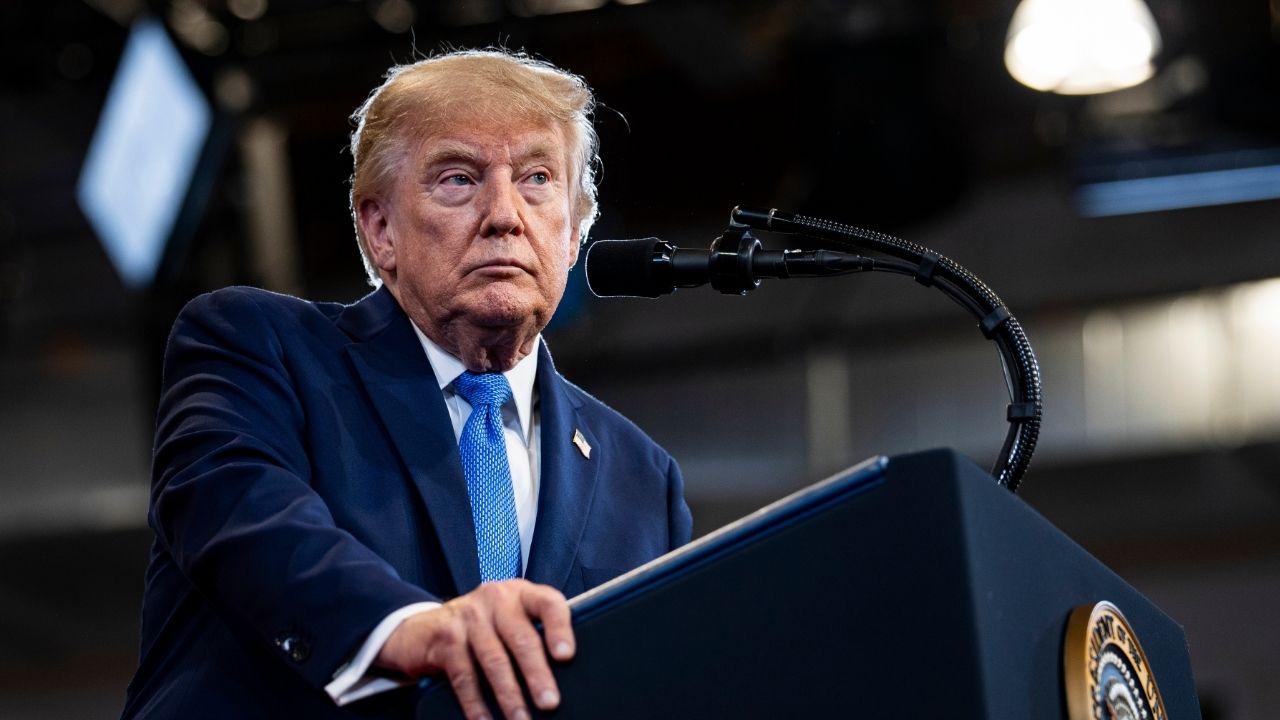
This spring, President Donald Trump easily dispensed with Republicans who had crossed him in a display of raw power that seemed to underscore his iron grip on the party’s base. One by one, Sen. Bill Cassidy of Louisiana, Rep. Thomas Massie of Kentucky and Sen. John Cornyn of Texas all fell to challengers backed by Trump.
The spring of retribution, however, has given way to a more complicated summer.
A series of losses by Trump-endorsed candidates has eroded his winning record, raising fresh questions about whether a president approaching lame-duck status can still exert as much control as he wants over his party’s voters.

Here are some of those races.
When Voters — and Candidates — Ignore the President
Trump sees himself as a kingmaker who can elevate a candidate above the pack. That was not what happened Tuesday night in Florida’s 19th Congressional District. There, the president picked Catalina Lauf, a Florida transplant aligned with the Make America Healthy Again movement, only to see her lose to a local media mogul, Jim Schwartzel.
His seal of approval was also not enough to prop up Rep. Cory Mills, R-Fla., whose campaign for reelection foundered under a cloud of investigations involving his treatment of women. Trump endorsed Mills in February. On Wednesday, after Mills lost to a former local news anchor, the president posted on Truth Social that he had tried to persuade Mills to drop out of the race but was unable to do so.
Mills is not the only lawmaker Trump has been unable to push out of a campaign. Another embattled ally, Rep. Max Miller, R-Ohio, also shrugged off the president’s warnings about his scandal-plagued run for reelection.
And one more loyalist, Rep. Andy Ogles, R-Tenn., lost his bid for reelection this month after he faced a backlash for anti-Muslim and anti-immigrant remarks.
Trouble in Races for Governor
The president has particularly struggled this year to pick winners in gubernatorial races. His initial picks have lost in five statewide contests in recent months.
— In Wyoming on Tuesday night, a rancher and veterinarian who promised to lower the temperature of the state’s intraparty brawls beat a Trump-backed candidate who vowed to stock the state government with “bulldogs.”
— Last week, election denier Mike Lindell fell short in his Trump-supported bid to be the Republican nominee for governor in Minnesota.
— Earlier in the summer, candidates whom Trump endorsed faltered in governors’ races in Iowa and Georgia. His initial pick for governor lost in South Carolina, too.
Trump has, however, picked the winners in key battlegrounds for governor. A longtime ally, Rep. Andy Biggs, handily beat a more moderate Republican in Arizona. And the president’s pick for governor in Michigan, John James, will face Jocelyn Benson, the secretary of state, in November.
Another Test in South Carolina
Sen. Darline Graham of South Carolina — who was appointed by Gov. Henry McMaster to temporarily fill the vacancy left open by the death of her brother, Lindsey Graham — is running for a full term with the support of Trump. But she did not earn enough votes to avoid a runoff and had a rocky debate performance Tuesday night.
Trump is heading to Myrtle Beach, South Carolina, to campaign for her Friday.
—
This article originally appeared in The New York Times.
By Jess Bidgood/Al Drago
c. 2026 The New York Times Company