
|
Getting your Trinity Audio player ready...
|
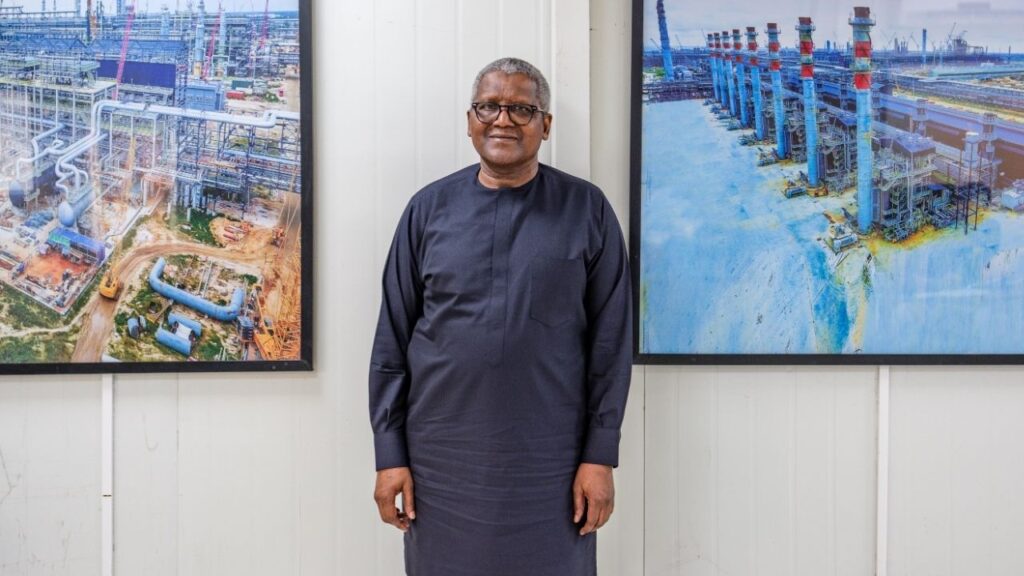
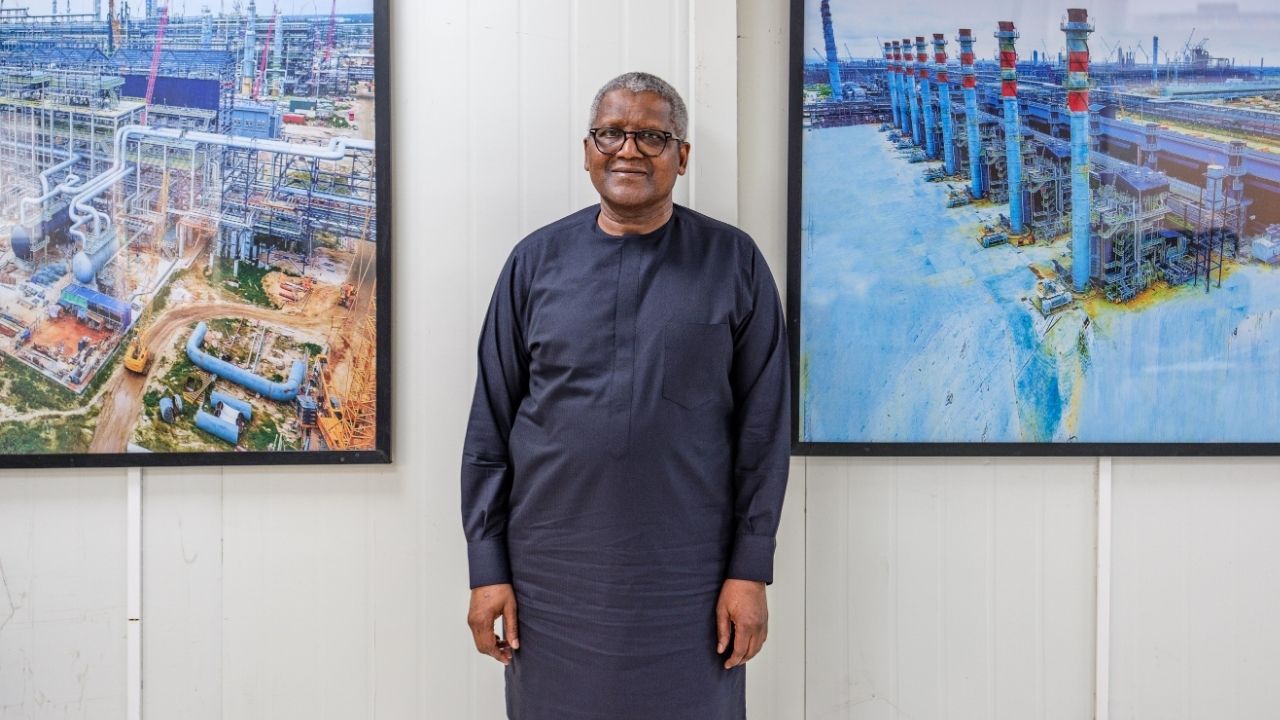
DAKAR, Senegal — Africa’s wealthiest man, Aliko Dangote, is more than $5 billion richer these days, and he partly has the war in Iran to thank for his new windfall.
Dangote, 69, made much of his fortune in Nigeria by manufacturing basics, such as salt, sugar and cement. Now, the engine driving his wealth is his new $20 billion oil refinery in Lagos, which has seen a spike in demand for petroleum products — both in Africa and elsewhere — since the war began in February.
Despite having abundant crude oil, Africa still relies heavily on imported fuel. Ukrainian strikes on Russian refineries and tankers have choked off Russian supplies to the continent. Oil flows from Europe and the Persian Gulf have also dropped sharply since Iran closed the Strait of Hormuz, which normally carries up to one-fifth of the world’s oil supply.

Prices for food, fertilizer and fuel have soared as a consequence, pushing some of Africa’s most vulnerable populations deeper into poverty. But Dangote and his company have been a rare exception to the rule. And his refinery, which became fully operational just weeks before the U.S. bombed Iran, is doing big business.
Jet fuel shipments from Dangote Refinery reached the U.S. market for the first time ever this year, according to the company. The Dangote Refinery was “the world’s single largest exporter of jet fuel” in April and May, said Daniel Evans, a vice president of S&P Global Energy, a market-research firm. Last month, the refinery was Europe’s largest supplier of jet fuel and diesel, according to Devakumar Edwin, a vice president of Dangote Industries.
On Tuesday, Dangote Refinery said it had secured $1 billion in financial backing from an investment group based in Dubai, United Arab Emirates, to go public on the Nigerian stock exchange. If the listing goes through, it will be Africa’s largest-ever public offering.
“When the war broke out, traders and governments from all around the world — especially in Africa — started calling us for supplies,” Edwin said. “The crude oil prices have gone up, but the product prices have increased a lot more.”
Nearly two dozen African nations produce crude oil. But the vast majority of the continent’s nearly 9 million barrels a day is exported for refining. Most domestic refineries, the majority of them state-owned, are dormant.
Nigeria in recent years, for example, has poured several billions of dollars into rehabilitating its three state-run refineries. Not a single one is currently operational.
When the U.S. and Israel launched the war on Iran on Feb. 28, many African nations found themselves in desperate need of petroleum products and scrambling to secure supplies.
East Africa got more than 65% of its refined petroleum products from the Middle East last year. By April this year, nearly a third of the gas stations in Kenya had run dry, said Matthew Tracey-Cook, a senior analyst at Platts.
“When the Iran war broke out, the Dangote Refinery was a lifeline to buyers who previously depended on the Persian Gulf for oil products,” Tracey-Cook said.
When European jet fuel import supplies were choked off by Iran, Dangote’s refinery began exporting to countries in the Mediterranean and Europe, he added. The Dangote facility has also become a key supplier of diesel and jet fuel to South Africa, a country with close ties to Iran that has historically been dependent on the Middle East for its oil products, Tracey-Cook said.
Dangote’s is not the only company in Africa benefiting from the conflict. On Togo’s Atlantic coast is the Port of Lomé, West Africa’s only deep-water port and one of the few on the continent.
The facility, which was built a few years ago with hundreds of millions of dollars of investment from the Mediterranean Shipping Co., a Swiss company, has now taken over a bigger share of the regional energy trade.
Tankers that load fuel from the Dangote refinery in Lagos sail along the West African coast to Lomé, where they off-load their cargo onto smaller vessels for onward delivery to markets across the continent.
“The Lomé port is one of the biggest winners from the impact of the disruptions at the Strait of Hormuz,” said Cham Etienne Bama, an analyst.
“Before touching down, the few minutes that we were hanging in air, at the airport, I captured images of vessels at the port,” he said, recalling the crowded vista on a recent trip to Lomé. “It was like you’re looking at the sky in the night,” he said, seeing “so many stars.”
At home in Nigeria, Dangote has long been criticized as a monopolist, and he has come under even more intense scrutiny since fully opening his refinery.
Nigerians had hoped that the refinery would end their reliance on imported fuel and bring down costs. But fuel prices in Nigeria have only surged.
—
This article originally appeared in The New York Times.
By Saikou Jammeh/Taiwo Aina
c. 2026 The New York Times Company