
|
Getting your Trinity Audio player ready...
|
OAKLAND PARK, Fla. — State Rep. Angie Nixon, a progressive firebrand who ran such an underdog campaign that she could not afford a single television ad, won the Democratic Senate nomination in Florida on Tuesday in a shocking upset.
With her defeat of Alex Vindman, a candidate with establishment backing who raised more than 16 times as much campaign money, Nixon, a democratic socialist, continued the left’s winning streak this year in Democratic primaries.
Florida had appeared impervious to the prevailing political winds in recent election cycles, with Republicans doing exceptionally well in the state in 2022, in what was otherwise a strong year for Democrats. Nixon’s breakthrough victory, and losses by Republicans endorsed by President Donald Trump in several Florida congressional primaries, suggested that maybe Florida is no longer quite as immune to national trends.

Here are six takeaways from Tuesday night’s primaries in Florida, Alaska and Wyoming, and a special election in California:
(Almost) No Money? No Problem. The Grassroots Propelled the Left to Victory, Again.
Money is usually key to political campaigns in Florida, the nation’s third-largest state and home to 10 television markets. Nixon raised only $975,000, compared with Vindman’s more than $16.3 million. And she spent just $60,000 on advertising, according to AdImpact, a media tracking firm, compared to his $2.2 million.
Vindman will face questions about why his campaign did not spend more introducing him to voters. But credit Nixon, a union organizer, for knowing how to harness the enthusiasm of grassroots Democrats and volunteers — and deftly using social media — to inform them about her candidacy.
A final weekend push in South Florida, home to many Democratic voters even as much of the region has trended toward Republicans, appears to have paid off: Nixon, who is from Jacksonville, defeated Vindman in Miami-Dade County, the state’s most populous, and in neighboring Broward County, where he lives.
After a Long Hiatus, Democratic Enthusiasm Is Back. Will It Be Enough for Nixon?
Some of the most exciting elections for Florida Democrats over the past 20 years featured Black progressives named Barack Obama, who won the state twice, and Andrew Gillum, the former mayor of Tallahassee who lost a governor’s race by a hair in 2018. Nixon will surely try to learn from the coalitions they built and capitalize on the excitement that propelled her big win.
But neither Obama nor Gillum entered the general election with so little name recognition, campaign organization or money, all of which are needed to reach Florida’s giant and varied electorate.
Also: How will the democratic socialist label play? Nixon joined the Democratic Socialists of America in June, though the DSA has not endorsed her candidacy. And Florida has gotten redder since Obama won the state in the 2008 and 2012 presidential races and Gillum narrowly lost the 2018 governor’s race. Sen. Ashley Moody, the Republican incumbent who faced no serious primary opposition Tuesday, is sitting on more than $8 million in campaign funds.
Florida Could Elect Its First Black Governor. He’s a Republican.
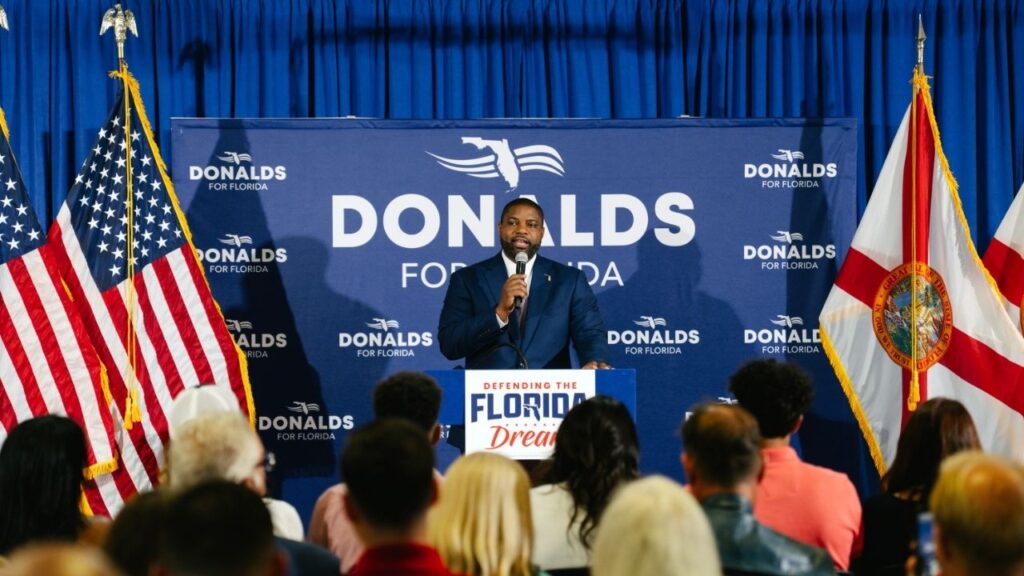
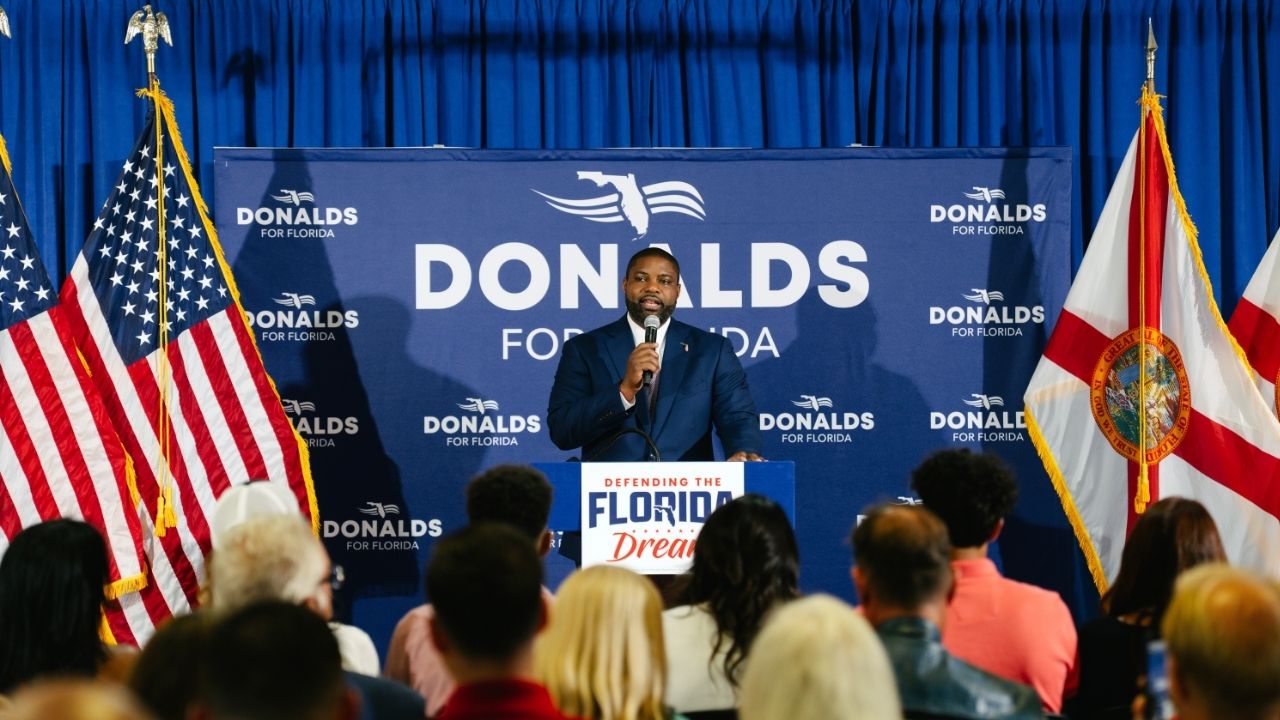
Rep. Byron Donalds, who has long had Trump’s endorsement in the president’s adopted home state, crushed his rivals in the Republican primary for Florida governor. He has far out-raised the Democratic nominee, former Rep. David Jolly, a former Republican.
But Donalds did not break 50% on Tuesday, as some Florida Republicans had hoped. And he did not win some largely white, rural counties in North Florida. Donalds is Black. Some Republicans will be looking at his underperformance in those counties with concerns about whether some white Republicans will be unwilling to vote for a Black nominee, choosing to stay home in November instead.
Donalds dismissed concerns that he had not won a majority of the vote, telling reporters he would earn that support.
“They want the same thing we all want,” he said of Republicans who voted for his rivals. “We want a Florida that is based on common sense, law and order, freedom.”
Yet Another Scandal-Plagued House Republican Loses a Primary.
Rep. Cory Mills lost the Republican primary in Florida’s 7th Congressional District to Ryan Elijah, a former local television news anchor, after Mills lost key support within his own party. Two House colleagues endorsed Elijah, saying they could not risk losing the Republican-leaning seat with a weak candidate.
Mills faced a House Ethics Committee investigation related to allegations of assault and threatening behavior toward women. His ouster followed that of Rep. Chuck Edwards of North Carolina, who was accused of sexually harassing two female former staff members and announced Aug. 5 that he would not seek reelection. The next day, Rep. Andy Ogles of Tennessee lost a primary after drawing criticism for anti-Muslim remarks.
It Wasn’t a Progressive Sweep. See Wasserman Schultz, Debbie, and Moskowitz, Jared.
Reps. Debbie Wasserman Schultz and Jared Moskowitz, both moderate, pro-Israel Democrats, easily fended off rivals after Republican gerrymandering led them to compete in new districts. Wasserman Schultz, an 11-term incumbent, overcame frustration from Black Democrats who did not want her to represent a historically Black district. Moskowitz bested a democratic socialist.
Sullivan (the Senator) and Peltola Advance to November Ballot.
Sen. Dan Sullivan, the incumbent Republican, and former Rep. Mary Peltola, a Democrat, easily advanced to the general election ballot Tuesday in Alaska’s Senate primary, setting up a highly anticipated matchup that could decide control of the Senate.
But the real intrigue was whether Dan J. Sullivan, a retired fifth-grade teacher accused by Republicans of being a Democratic plant to confuse voters and draw votes away from the other Sullivan, would join them. (The lesser-known Sullivan has denied the allegations.) Alaska’s nonpartisan primaries send the top four vote-getters to the general election, and many votes were yet to be counted.
—
This article originally appeared in The New York Times.
By Patricia Mazzei/Martina Tuaty
c. 2026 The New York Times Company