
|
Getting your Trinity Audio player ready...
|
NASA’s high-risk, high-reward attempt to save one of its space telescopes before it falls out of orbit has failed.
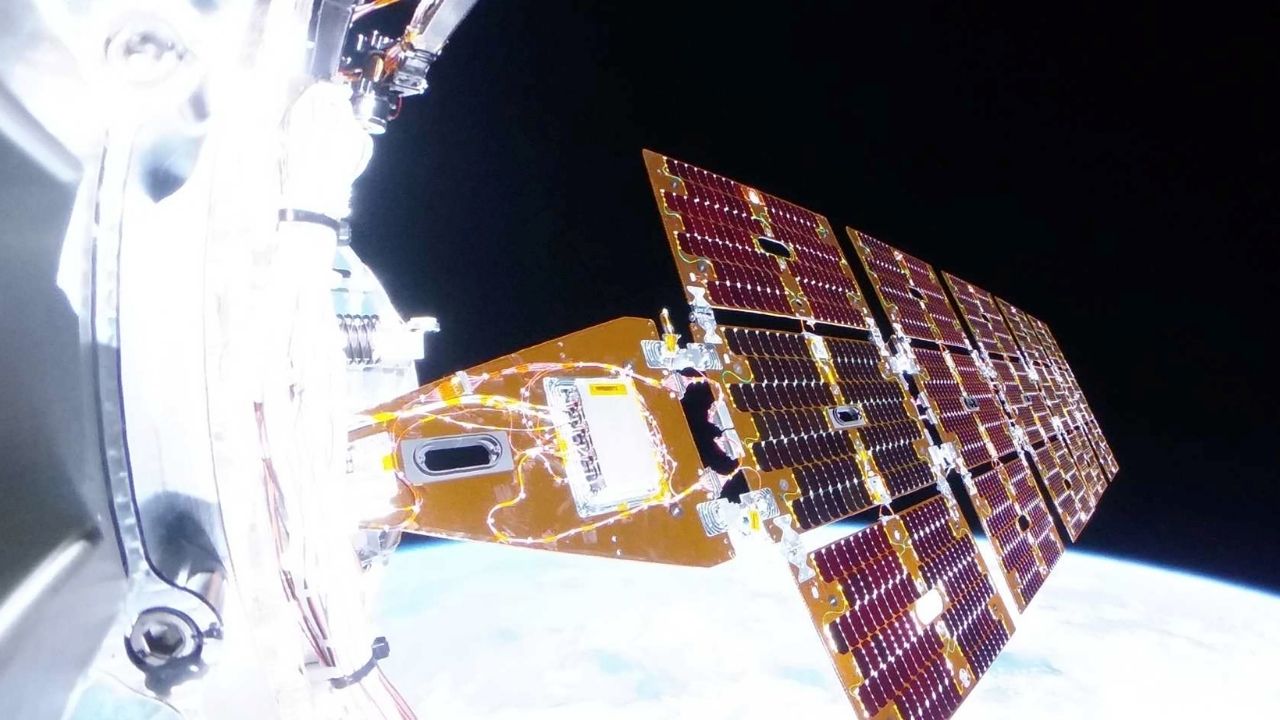
On Wednesday, NASA announced that a rescue spacecraft that was meant to grab onto the space agency’s Neil Gehrels Swift Observatory and push it into a higher altitude will not proceed. With the rescue mission called off, Swift, which has observed distant, powerful explosions in the cosmos since 2004, is expected to burn up in the atmosphere later this year.
“This is not the outcome we were working toward, but it does not change why this mission was worth attempting,” Jared Isaacman, the NASA administrator, said in a news release.

In the short time before its demise, the Swift telescope will resume its observations of gamma-ray bursts — flashes of high-energy light from cataclysmic events like the explosions of giant stars. The scientific work was paused to slow the decay of Swift’s orbit.
NASA hired a small company, Katalyst Space Technologies, of Flagstaff, Arizona, for $30 million to put together a mission to save Swift on an extremely rushed schedule. In about nine months, Katalyst built the refrigerator-size rescue spacecraft named Link, which successfully launched July 3.
Link was moving closer to Swift but unexpectedly started tumbling on July 25. Katalyst was able to slow the spin of Link, and company officials were optimistic the spacecraft would be able to proceed with their schedule delayed by just a couple of weeks.
In an interview just over a week ago, Ghonhee Lee, the CEO of Katalyst, said NASA had given “the green light to go forward for proximity operations” leading up to the capture of Swift.
He said Link would match Swift’s orbit in the coming days. “That’s a really good place to be, compared to where we were at before,” he said.
Katalyst and NASA did not respond to requests for interviews.
Link will no longer attempt to capture or boost the space telescope but will operate in the vicinity of Swift to demonstrate capabilities that could be used in the future.
In the news release, NASA officials said they still believed the rescue mission was worth the try, even though it failed.
“We were all hoping for more science from Swift,” Shawn Domagal-Goldman, director of NASA’s astrophysics division, said. “But we knew the takeaways from this mission would be worthwhile either way, and we have gained so much through the series of accomplishments up to this point.”
—
This article originally appeared in The New York Times.
By Kenneth Chang/Katalyst Space Technologies
c. 2026 The New York Times Company