
|
Getting your Trinity Audio player ready...
|
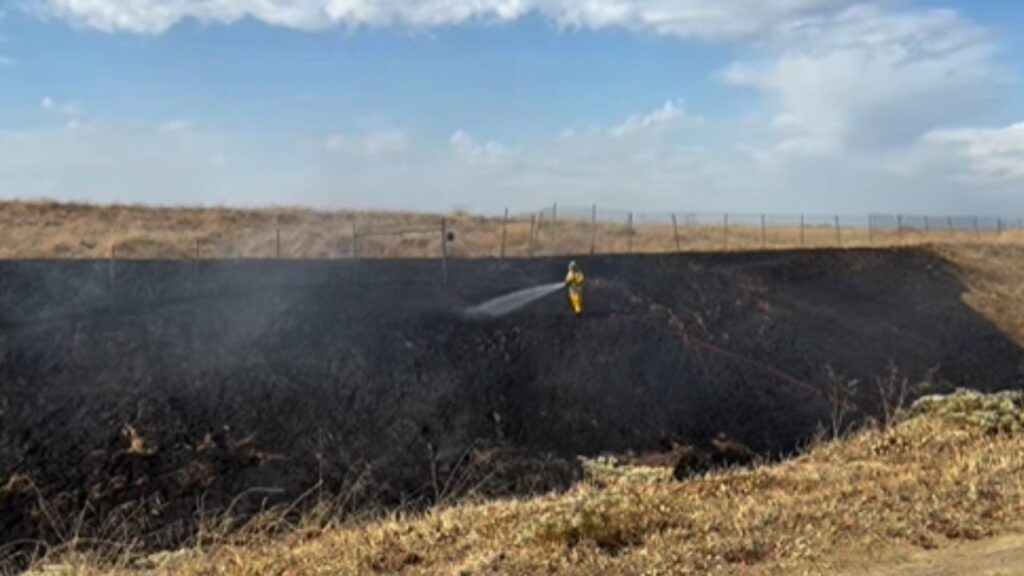
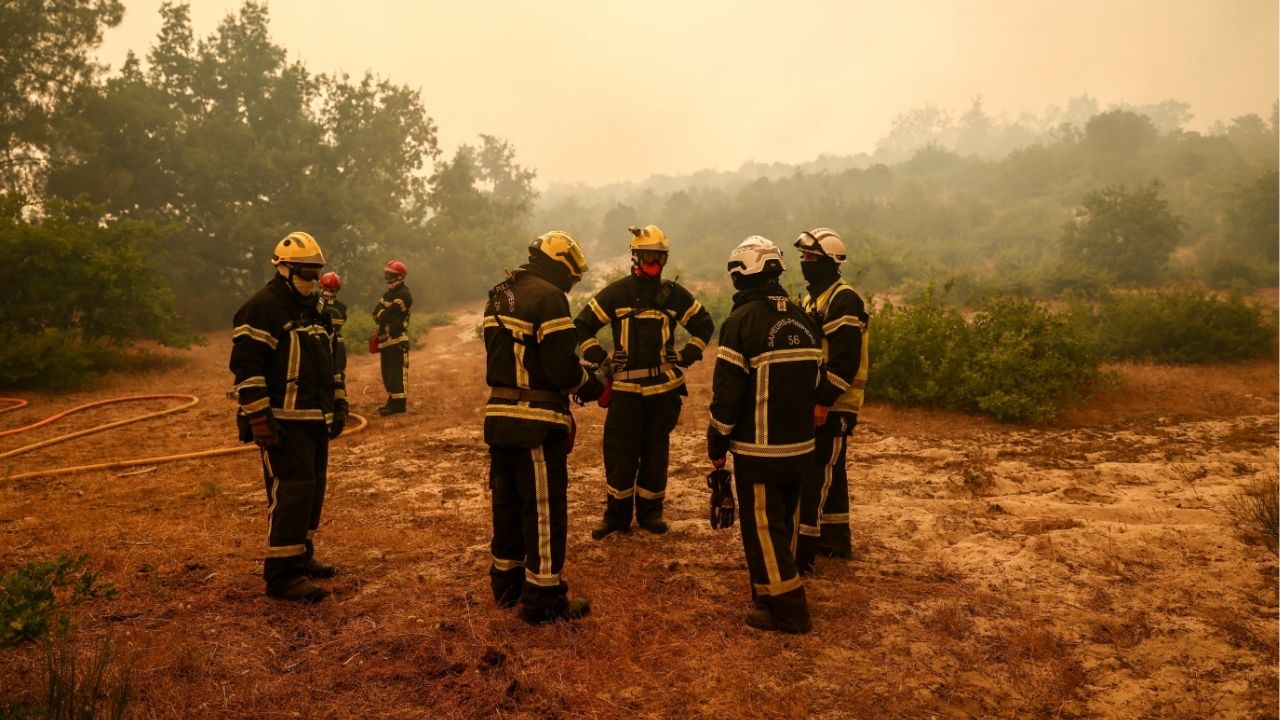
MADRID — Firefighters in Spain and France were racing against the clock Tuesday to keep ferocious wildfires near Madrid and Bordeaux in check before a scorching heat wave hits both areas, which could worsen the largest blazes the countries have faced in their modern history.
Officials in both countries welcomed an overnight respite, including rainfall and milder temperatures, which allowed firefighters to contain the spread of the fire. But they were bracing for the hours and days to come.
“It isn’t over yet, the fire is not under control,” Fabien Tuleu, an official in the southwestern Gironde area of France, repeated several times at a news conference Tuesday. The fight, he said, “is still ongoing.”

Temperatures in parts of Spain and France are expected to climb to 104 degrees Fahrenheit (40 degrees Celsius) this week — the latest in a succession of extreme heat events that have dried out vegetation, combining with strong winds to increase the risk of fires spreading. More than 300,000 acres have burned in Spain and France.
Prime Minister Pedro Sánchez of Spain said firefighters were “turning the tide” against the wildfires in the Madrid region and the surrounding areas. In the Madrid region alone, 20,000 people will be allowed to return to their towns, while shelter-in-place orders will be lifted for another 14,000, a regional official said.
But Sánchez warned that “difficult, critical hours” still lay ahead.
“A new heat wave will obviously hinder firefighting efforts and increase the risk of further fires across the country,” he said at news conference in Madrid on Tuesday.
The fires in both countries have consumed nearly 450 structures in France and several hundred estimated in Spain, highlighting the challenge faced by Europe as summers grow increasingly hot and wildfires become more widespread. The blazes have also tested the endurance of local residents.
In the Castellón province of Spain, where one fire is raging, Amparo Escribano, 53, was in tears Tuesday as the Guardia Civil stopped her from getting closer to Tales, the town where she lives and had been evacuated from Saturday.
“This is horrible,” she said, looking at flames and clouds of smoke covering the town’s bell tower in the distance. “I can’t watch this.”
The wildfire, which is north of Valencia and has scorched more than 21,000 acres in the province, remained active in some areas. Escribano fled with her parents and her son, but she left her cat behind, and authorities would not let her through to get it. She turned back toward Onda, the town where she works at a supermarket.
“I’m going to take a tranquilizer, and go to work,” she said, crying.
Flames have also come unsettlingly close to the Spanish capital and to Bordeaux, which is France’s sixth-largest city and a famed center of its wine industry. French officials said they feared that fire near Bordeaux could quickly pick up again due to an “unfavorable” weather forecast.
In a sign of that volatility, officials in the town of Lège-Cap Ferret — on an Atlantic peninsula that was one of the first areas to evacuate residents and vacationers last week — said Tuesday that there had been a significant flare-up west of the town.
Mayors of towns affected by the wildfires said the next hours would be crucial in bringing the blazes under control, as shifting weather conditions made them unpredictable.
“At night, this fire is a sleeping kitten, but during the day it becomes a huge lion,” said Fernando Casado, the mayor of Robledo de Chavela, a town west of Madrid.
France and Spain have continued to preventively evacuate people from the threatened areas. On Tuesday, about 4,000 people were evacuated from camping sites, tourist accommodations and vacation villages in Lacanau, on France’s Atlantic coast.
More than 220,000 people have been evacuated in recent days in the Gironde region. Slightly farther south, in the Landes region, 31,000 people were evacuated, but 15,000 were later allowed to return.
The Gironde blaze is the worst in France since World War II, President Emmanuel Macron of France said Monday as he visited a local fire department and warned that the fire could take weeks to extinguish. More than 90 firefighters have been injured in the Gironde fire since it broke out Wednesday.
More than 100,000 people in Spain were ordered to flee their homes or take shelter in recent days.
In Nules, a town north of Valencia that has taken in scores of evacuees, volunteers in blue vests were feeding hundreds of people Monday in a local sports hall. The Serra d’Espadà mountain range rose in the distance under a haze of smoke, as firefighting seaplanes regularly flew by.
Francisco Sánchez Sabater, 49, said he had been napping at his home in Vilavella when the fire caught him by surprise. The flames were less than 200 feet away, he said.
“If the Guardia Civil hadn’t banged on my door to wake me up, they would have found me dead,” he said. Police officers told him to grab whatever he could.
“I even left my phone inside the house,” he said, describing how he ran out and walked downhill. “Every so often I’d turn around, and the smoke was already hanging over the town.”
—
This article originally appeared in The New York Times.
By Carlos Barragán, Roser Toll Pifarré and Ségolène Le Stradic
c. 2026 The New York Times Company