



|
Getting your Trinity Audio player ready...
|
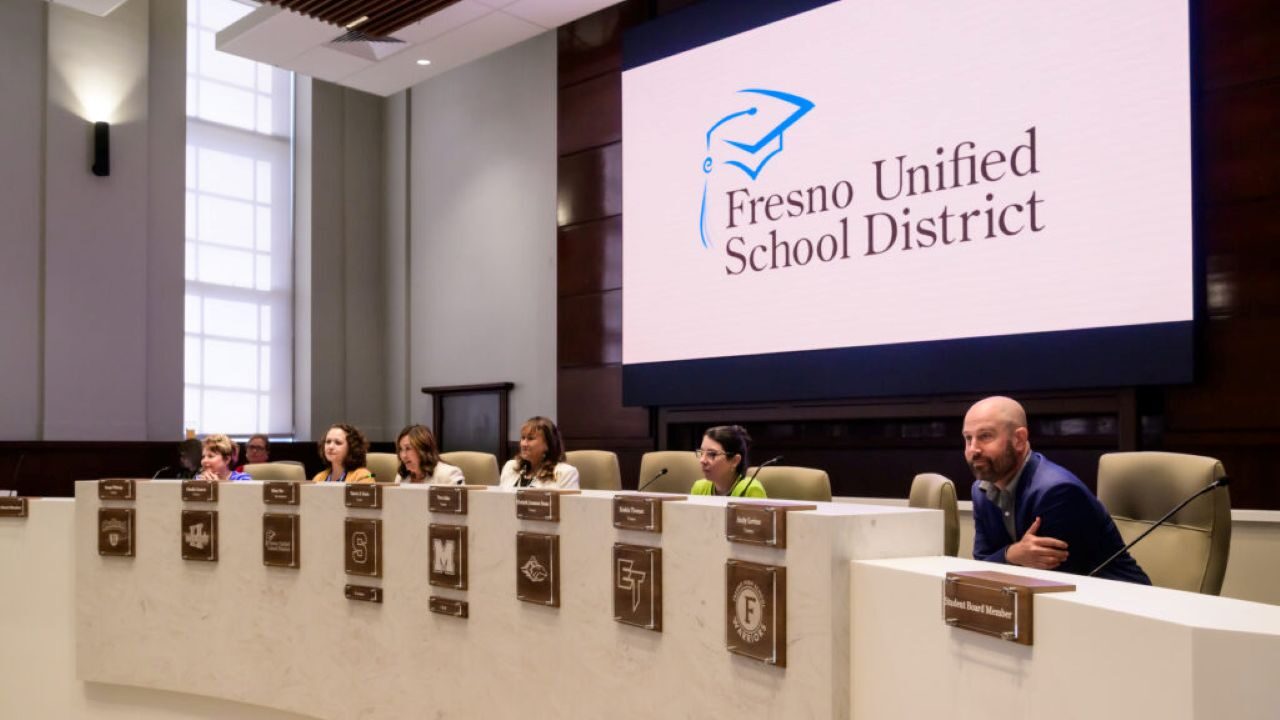
A boost of $52.5 million in state funding gave Fresno Unified School District some much-needed relief amid its budget woes.

An extra $33 million in ongoing funding and roughly $19.5 million in one-time funds cut its projected deficit from $59 million to $23 million this school year. But the additional funding did not stop the district from eliminating hundreds of positions, nor has it resolved the underlying financial pressures driving its budget problems.
As students return to school Monday, the state’s third-largest district must contend with rising special education costs, reduced mental health staffing, and a lingering deficit.

And due to external factors such as declining enrollment and rising costs that outpace state funding, the state budget just won’t solve most districts’ money issues, said Michael Fine, chief executive officer of California’s Fiscal Crisis and Management Assistance Team, or FCMAT.
This story was originally published by EdSource. Sign up for their daily newsletter.
“The state budget’s growing, but we have these other costs locally that are outpacing (funding),” Fine said.
Unlike other large urban districts such as Los Angeles Unified or Sacramento City Unified, Fresno Unified’s budget deficit has not reached the point where state or county officials have gotten involved.
More Special Ed Dollars
Across the country, school districts have seen a surge in the number of students requiring special education services, driven in part by better and earlier identification, a reduced stigma around disabilities, pandemic-era disruptions and increased behavioral or mental health needs.
Fresno Unified identified more students with disabilities and experienced increased expenses as a result. The district’s deficit grew by more than $10 million in 2025-26 because of the special education costs. The deficit was about $77 million in February but had grown to $88 million by May. That contributed to the projected $59 million deficit for the 2026-27 school year.
Fresno Unified needed to hire additional teachers and other qualified staff and add special education bus routes, district spokesperson AJ Kato said.
Many students now require more intensive support, including behavioral intervention, mental health services, specialized transportation and nursing, Fresno Unified special education officials told EdSource.
The state budget will provide Fresno Unified an additional $21 million in dedicated special education funding, helping to reduce its overall budget deficit.
But district officials did not specify whether the extra money will allow the special education department to add services or expand its programs.
Instead, the department is restructuring some positions as the district reduces overall staffing. For students whose individualized education programs, or IEPs, require mental health services, Fresno Unified has moved employees with the appropriate licenses and experience into positions serving those students rather than relying on contracted workers. So, clinical school social workers maintained employment, but as education-related mental health service providers for students with disabilities.
Support Remains Despite Cuts, District Says
The district is focusing on what Student Support Services Director Abigail Arii calls “cross-departmental collaboration,” to continue providing mental health and other student support services despite eliminating positions this year.
In May, Fresno Unified finalized hundreds of layoff notices as it worked to close its projected $59 million budget deficit.
Across schools, 229 positions were affected, including counselors, psychologists, campus safety staff and intervention specialists. Mental health positions accounted for a significant share of the cuts. Even after the additional state funds reduced the shortfall to $23 million, those layoffs stood.
Staff with seniority were able to move into similar open positions or take positions held by colleagues with less seniority. And while the district cut positions, it redistributed responsibilities so that services remained intact, officials have said.
“As a school social worker at Tenaya Middle School, I was there when families had questions and they needed to meet with me, or when students were having a panic attack or a problem with their friends, or were experiencing other mental health barriers to their education,” Arii said. “I was physically there, able to be there with them. That is some of the shift.”
Reallocated Mental Health Services
Through a district restructure across departments, Fresno Unified:
- Eliminated 14 child and welfare attendance specialists but maintained employment for eight school social workers to provide attendance support to better address the complex needs of students and families.
- The social workers will focus on factors, including mental health and trauma, that contribute to chronic absenteeism.
- Eliminated two academic counselors that were part of the Project ACCESS team that worked with foster youth and students experiencing homelessness. The academic counselors had specifically talked with students who had Ds and Fs in classes, provided financial aid workshops, helped with college applications and supported them with credit waivers for graduation.
- Under the college and career readiness department, school academic counselors will take on that work with foster and homeless youth.
The district is also counting on community partnerships and other resources to supplement school-based services, Arii said.
That includes:
- Continuing its partnership with the county education office for the “All For Youth” initiative that connects families to therapy, behavioral health resources and other mental health services.
- Offering support through California’s Youth Behavioral Health Initiative.
- Providing telehealth services, online counseling sessions and mental health support with free apps and resources.
“We’ve been strategic and creative in pursuing other ways that we can fill some of those gaps and needs at schools,” Arii said.
Fresno Unified Still in the Red
Fresno Unified remains in the red despite the influx of state funding.
The state is delaying payment of $3.9 billion in Proposition 98 funds as districts struggle with rising costs and increasing student needs, Fresno County Superintendent of Schools Michele Cantwell-Copher said.
“Districts need stability to plan and serve students effectively,” she said previously.
The withheld funds would not solve most school districts’ deficits, including the 68,000-student Fresno Unified whose current financial trouble is not based on its multimillion-dollar deficit alone.
“You’re not just looking at one item,” said Fine with FCMAT. “Deficit spending is one of the elements. Reserves are another element. Enrollment and attendance trends are another element. Debt is another element. So, you have to put all those things together.”
District Maintains Strong Reserves
Fresno Unified officials say the district faces a growing budget deficit in large part because of declining enrollment and rising operational costs. Enrollment has declined by 2,700 students since 2021-22, and though the district’s funding is tied to attendance, fewer students still means less revenue. Fresno Unified estimates that it has lost $17,000 per student.
Yet, Fresno Unified maintains a positive standing with the county. For one thing, the district has maintained reserves that exceed its deficit amount, based on its fiscal report. The district continues to maintain reserves above the 2% state-required minimum, with $92.1 million set aside for this year, according to the district. That’s up from $61 million before it received increased state funding. That reserve amount, at about 5% of expenses, can be used for anything.
But hefty reserves are one-time funds, not an ongoing funding stream for a budget imbalance. Three percent often covers about two weeks of costs, whereas the national standard of 17% covers two months of expenses if a district runs out of money, according to Fine.
More Fresno Unified Cuts Planned
Fresno Unified plans to address the deficit with ongoing reductions this year and next. More state funding, according to district officials, already lowered the 2027-28 planned reductions by $25 million.
Moving forward, the district must navigate these short-and long-term challenges; it is already at the start of bargaining with its teachers union. (Multimillion-dollar teacher contracts were negotiated in Sacramento City Unified and Oakland Unified, despite warnings from county officials that the districts couldn’t pay for them, adding to deficits.)
Fine said, “That’s probably going to bring a little bit more pressure to the district than they’ve experienced recently.”