
|
Getting your Trinity Audio player ready...
|
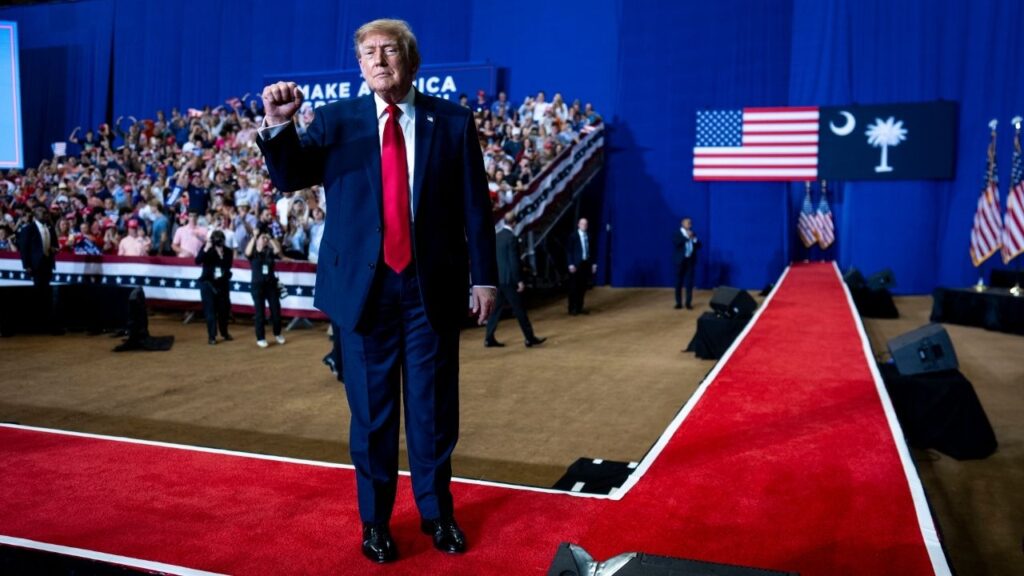
PORT HURON, Mich. — President Donald Trump turned to Islamophobic stereotypes to motivate Michigan Republicans on Sunday, claiming at a rally that Abdul El-Sayed, the Democratic Senate nominee, if elected, would bring a wave of jihadis to the United States.
“If Abdul and the Democrats win, they will open the floodgates and invite hordes of jihadis to our shores, creating a nightmare of violence and terror until you cannot even have a Christmas,” Trump told more than 4,000 supporters gathered in Port Huron, a working-class, waterfront city in a deep-red congressional district 60 miles northeast of Detroit.
Trump called El-Sayed, whose family immigrated from Egypt, a “jihadist Muslim Brotherhood member,” a baseless claim. He then contrasted El-Sayed, a Muslim who was born in the United States, with his Republican opponent, Mike Rogers, who is white and also born in the United States.

“I call him apple pie,” Trump said of Rogers, who is 63. “He’s like, perfect, this guy. He’s like central casting. He’s what your state is all about.”
Trump’s comments, coming in a key midterm battleground nine days before the elections, underscored the dark themes and personal vilification he and his allies have embraced as part of their closing pitch. And while he has often used crude and racist language, Trump’s message in Michigan seemed aimed at overtly stoking a fear of Muslims to get voters to the polls.
But a broader question about Trump’s rally here — which followed several in North and South Carolina, Georgia and Florida, among other stops — is whether his presence helps or hurts Republican turnout in a year when polls show deep dissatisfaction with the president. His audience in Port Huron seemed enthusiastic, and thousands strained to take Trump’s picture as he took to the stage. But he held the rally in a conservative district of a state that pollsters believe is swinging back to Democrats.
Trump’s deep unpopularity has complicated Republicans’ path to victory. While Trump carried Michigan by 2 points in 2024, just 34% of likely voters now approve of him, according to a New York Times/Siena poll conducted in mid-September.
Polls indicate that El-Sayed, 41, has a narrow edge over Rogers in a race that will be pivotal to determining control of the Senate.
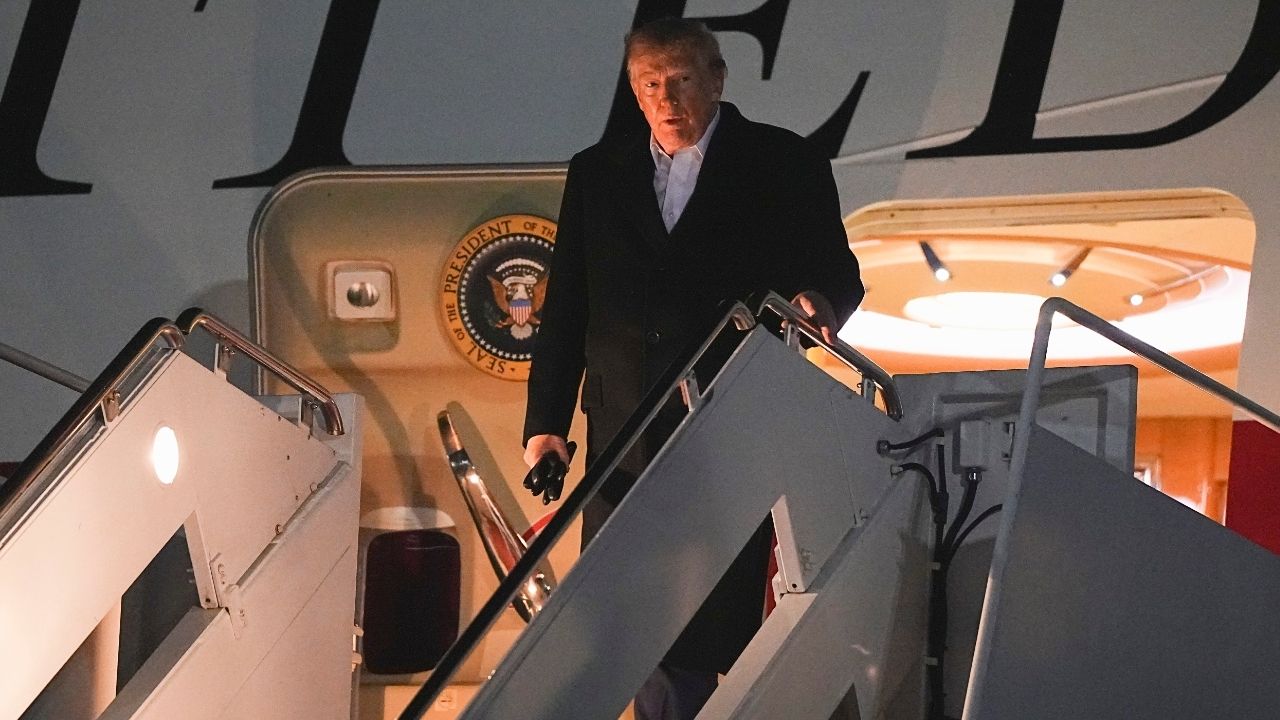
Trump’s attacks on El-Sayed on Sunday, questioning his loyalty to the United States, began before he got on Air Force One outside of Washington and accelerated after he landed in Michigan.
Speaking in a town on the Canadian border, Trump did not dwell on his battle with Prime Minister Mark Carney, one of the few world leaders who has directly confronted him on tariffs and other issues, and he did not repeat his frequent call for Canada to give up its independence and become the 51st state.
Instead, he focused on El-Sayed, his religion and his relatives. Trump also disparaged Jewish voters who were considering voting for El-Sayed.
“Any Jewish person that supports this guy should be ashamed of themselves,” Trump said, adding that he “cannot understand how anybody who’s Jewish can even think about voting for this guy.”
Hundreds of Jewish voters in Michigan publicly announced they were backing El-Sayed, while others have said they are voting for Rogers or threatened to withhold their support.
Trump made the statement after claiming that El-Sayed’s half sister, Eman Abdelhadi, celebrated the Oct. 7, 2023, massacre of Israelis by Hamas fighters.
She posted a video on the first anniversary of the attack that said that “no matter how great the brutality, the oppression, the intensity of what we’re going through, the horizon of justice is just around the corner,” but did not mention the massacre directly and did not celebrate the violence. El-Sayed’s campaign told Fox News that he disagreed with her “on a number of political positions and the rhetoric she’s chosen to use.”
El-Sayed has repeatedly disavowed the Muslim Brotherhood, an Islamist political movement, and has said comments about his name and faith are attempts to distract from voters’ economic woes. His aides have said claims of ties to overseas terrorist groups are racist and Islamophobic.
But his opponents have raised an open letter he signed in 2012, when he was a medical student. It was addressed to Mohammed Morsi, then the new Egyptian president, from a party that represents the political wing of the Muslim Brotherhood. It asked him to “purge the media and police” of loyalists to the government that was overturned during the Arab Spring.
El-Sayed has not discussed the letter. But his spokesperson, Cole Wozniak, said, “Abdul remains laser-focused on his plans to bring down costs and stand up to the chaos and corruption in Washington.”
“Michigan knows Trump is on the ballot on Nov. 3,” he added, “and they will vote like it by rejecting Trump’s rubber stamp Mike Rogers and sending Abdul to the Senate.”
At his own rally Sunday in Grand Rapids, El-Sayed said the Republican strategy was “to point at me and my name and my faith. But my name and my faith are not the reason you can’t afford your gas.”In Michigan, Trump also veered into a discussion of Greenland. He insisted, “Oh, you know we did get Greenland,” suggesting that it was now owned by the United States. In fact, Trump was forced to drop that demand and instead signed a new treaty with Denmark, which handles Greenland’s foreign affairs, that envisions opening two new U.S. bases on the island and bars similar arrangements with foreign powers, notably China. But it does not change Denmark’s sovereignty, as Trump initially insisted.
He also drew cheers when he insisted Iran would never get a nuclear weapon, and vaguely said the war with Iran would be resolved soon. But he largely steered clear of discussing how his decision to attack Iran led directly to high gas and diesel prices.
Rogers has sought distance from the war, calling for it to “end quickly,” and from the president’s tariffs on Canadian goods, saying “Canada is not our enemy” in a campaign ad. He has also backed a one-year moratorium on data centers, creating a contrast with Trump’s support for them.
Like other Republicans, Rogers has largely avoided talking about Trump in ads and on the campaign trail.
Speaking at the rally in Port Huron, Rogers again accused El-Sayed of having family ties to the Muslim Brotherhood. He said that watching El-Sayed try to tell the truth is like “watching an octopus put his socks on in the morning.” And he said the country “can’t risk his extreme ideology and thinking.”
On NBC News’ “Meet the Press” on Sunday morning, Rogers did not endorse Trump’s baseless claim that El-Sayed is “a terrorist,” but did not condemn it outright.
“I’ve never called him a terrorist,” Rogers said of El-Sayed.
El-Sayed has become a central villain in Republicans’ narrative of the midterms. In western Iowa on Thursday, more than 800 miles from Port Huron, Trump railed against El- Sayed, drawing some of the loudest applause of the night. He did the same in North Carolina and Ohio last week.
—
This article originally appeared in The New York Times.
By David E. Sanger and Bayliss Wagner/Haiyun Jiang
c. 2026 The New York Times Company