

|
Getting your Trinity Audio player ready...
|
California reduced its official homeless count in 2025 after years of increases. Now, preliminary data for 2026 shows many places in the state are continuing to make progress.

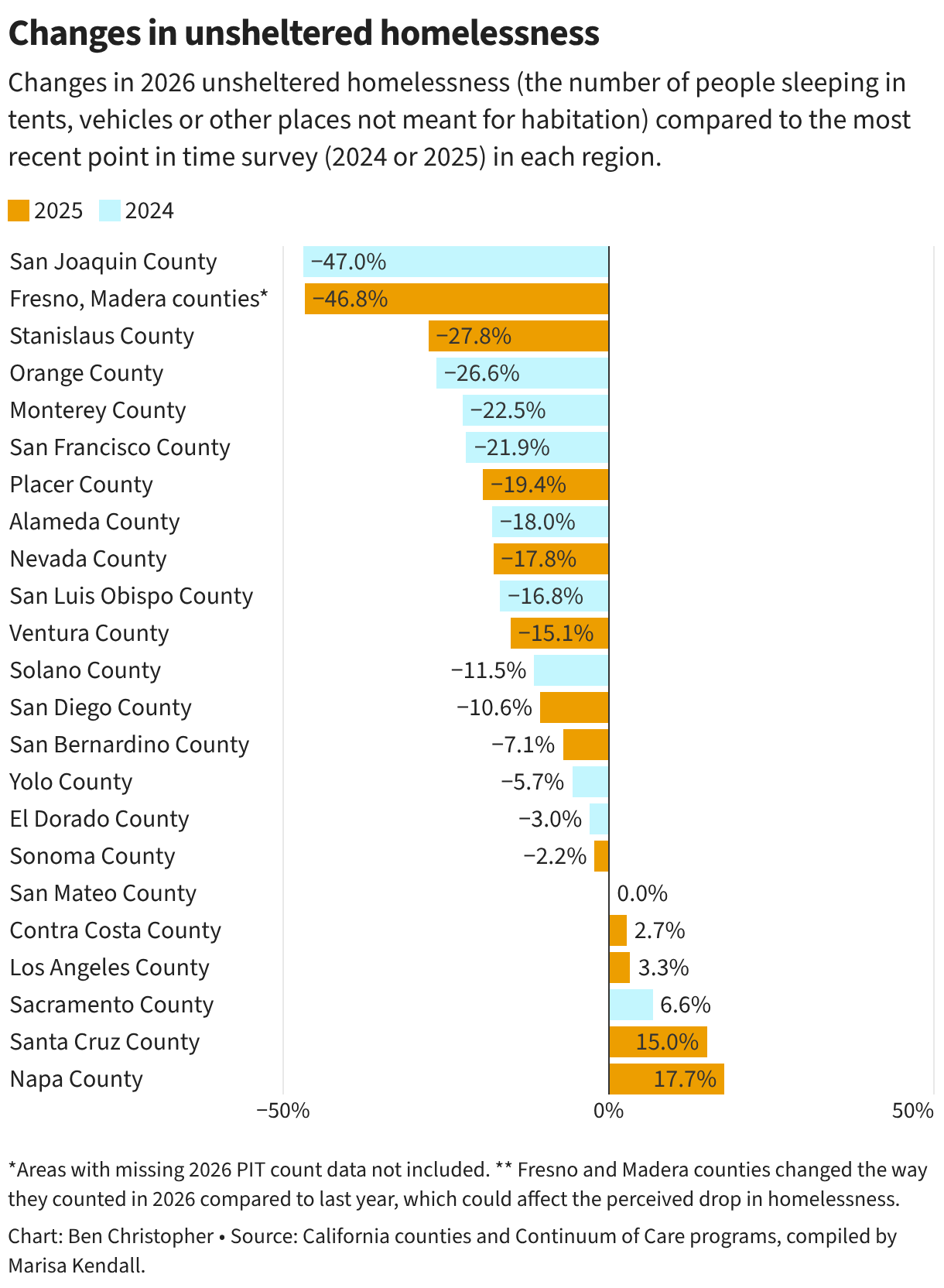
Counties up and down the state are reporting that their homeless populations dropped this year, citing early results of the point-in-time count conducted in January. Some of the drops were significant. San Joaquin County cut its total unhoused population by nearly a third compared to 2024 and nearly halved the number of people sleeping on the street without shelter. Others were more modest, such as San Francisco’s 4% drop.
Of the 28 counties or continuums of care (which group smaller counties together into single counts) that released 2026 data, more than half reported a decline in homelessness. Eight others did not conduct a point-in-time count this year, while seven had not publicly released their results.

This story was originally published by CalMatters. Sign up for their newsletters.
More Shelter Beds and Low-Income Housing
Officials in counties where the homeless count dropped credit their progress to creating more shelter beds and low-income housing, which they say was made possible by new state funds released over the past several years.
At the same time, some activists are questioning whether the numbers really are as rosy as they seem. Cities have ramped up enforcement against unhoused people in recent years – clearing encampments and citing people for illegal camping more frequently – which causes people to scatter and become harder to count. Just because someone is missing from an official count doesn’t mean they moved off the street and into housing.
Even in counties celebrating wins this year, officials wonder whether they can maintain those gains in the face of recent federal cuts to Medi-Cal and social services.
“We’ve made progress,” said Jonathan Russell, director of Alameda County Health Housing and Homelessness Services, which reported a 13% drop in homelessness compared to 2024. “And there are real threats, real peril.”
What the 2026 Point-in-Time Counts Show
The federal government requires every county to conduct a point-in-time census of its homeless population at least every other year, though some do it every year. Typically, volunteers join city, county and nonprofit staffers on a single night in January to tally every unhoused person they see. The results are generally considered an undercount, as it’s easy to overlook people tucked away behind bushes or hunkered down in parked cars. But despite the count’s flaws, it’s the only standardized way the state (and the rest of the country) has to measure fluctuations in its homeless populations.
There were 181,934 homeless Californians counted last year – a nearly 3% drop from 2024. The U.S. Department of Housing and Urban Development, which compiles the data from each county, won’t release the official statewide or nationwide 2026 count for many months. But most counties that did a 2026 count have published the preliminary results on their own.
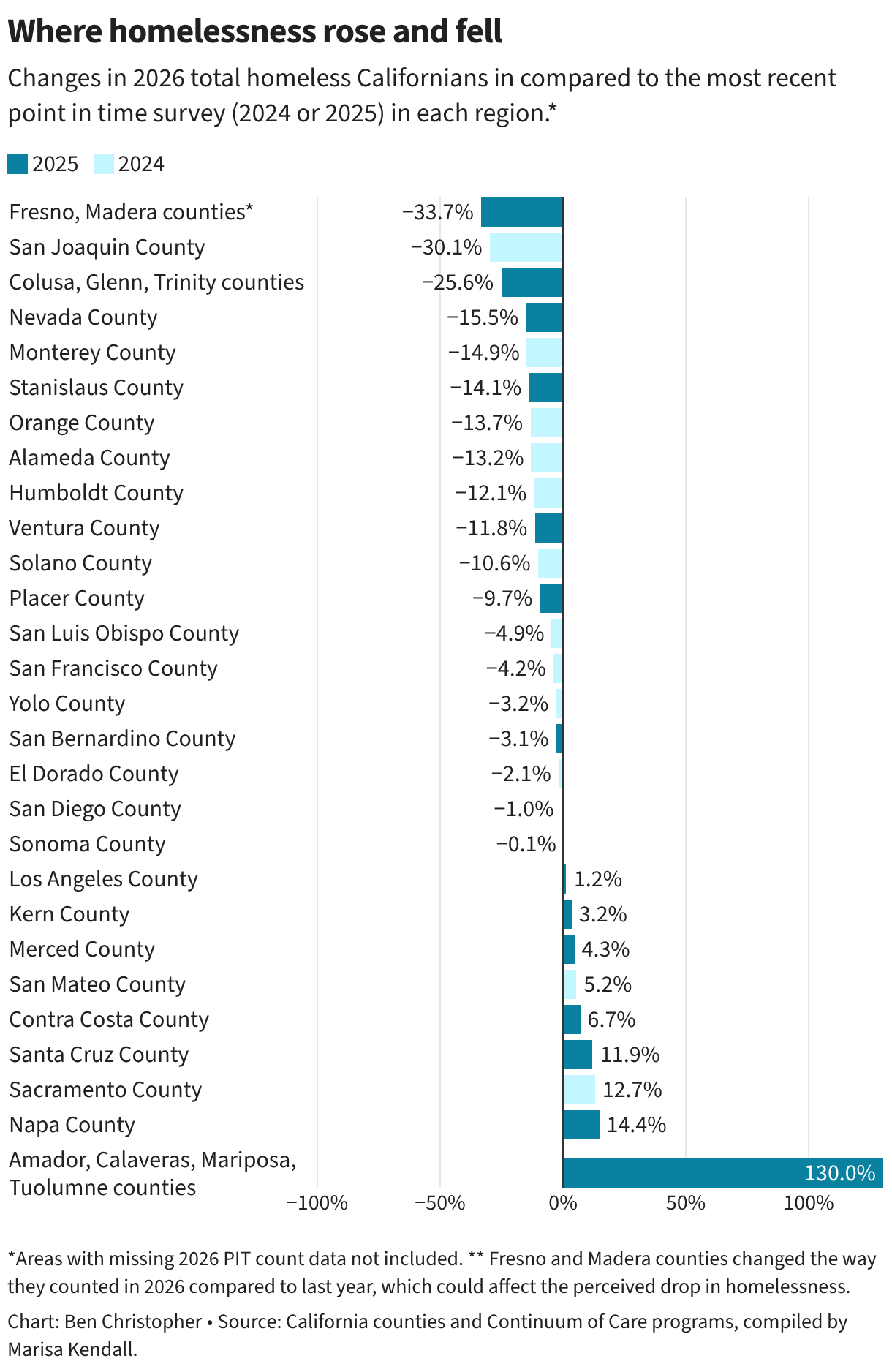
In some counties, the results were disappointing. Los Angeles County, after two years of declines, reported a 1% increase in homelessness this year. Homelessness increased 13% throughout Sacramento County from 2024, though it was down within the city of Sacramento.
Contra Costa County, after a significant decrease between 2024 and 2025, saw homelessness creep up 7% this year.
In addition, there were several reminders this year that the point-in-time counts are not perfect. The Los Angeles Times uncovered an accounting glitch that inflated the city’s homeless count by more than 600 people.
Fresno and Madera Counties Show 34% Drop
In Central California, Fresno and Madera counties, which combined reported a 34% drop in homelessness compared to last year, appeared to have the largest reduction in the state. But the counties changed the way they counted this year, potentially skewing the numbers. Instead of tallying everyone who was visible on the street as they did in 2025, this year, volunteers counted only people who confirmed they are homeless and agreed to participate in a survey. That change makes this year’s count difficult to compare to 2025 data, officials admitted.
Some counties touted wins in moving people off the street and into shelters – a feat that’s considered progress even though those people are still considered homeless. In Alameda County, the percentage of unhoused people living in shelters increased from 21% in 2019 to 37% this year.
Alameda County reached another significant milestone last year: for the first time since the county began tracking in 2021, slightly more people left homelessness and moved into housing than became newly homeless.
Russell credits a major influx of state homelessness dollars that appeared in the county’s coffers about four years ago, including investments in Homekey (the state program that helps cities and counties buy hotels to turn into homeless housing) and the state’s Homeless Housing, Assistance and Prevention fund. The state also awarded additional housing funds for homeless Californians with mental illness and substance use disorder in 2023 and 2024.
San Joaquin County, which boasted one of the biggest drops in overall homelessness and unsheltered homelessness in California, added 304 shelter beds and 1,078 permanent housing units between 2024 and 2026. That allowed the county to increase the number of people living in permanent housing by 86%.
“There just wasn’t money available 10 years ago like there is now,” said Dawn McLeish, deputy director of the county’s human services department. “It just took a couple years for those investments to get all the way off the ground.”
Niki Jones, executive director of the Sacramento Regional Coalition to End Homelessness, views downward-trending numbers across the state with suspicion.
“They can call it progress if they want to,” she said. “I call baloney.”
Supreme Court Ruling’s Effects on Homeless Counts
After the U.S. Supreme Court in 2024 gave cities more leeway to crack down on homeless encampments, cities have passed new ordinances banning camps, police are giving out more citations for camping-related offenses and activists are reporting more frequent encampment clearings. When people are forced to disperse from their camps, they become more difficult to spot during point-in-time counts.
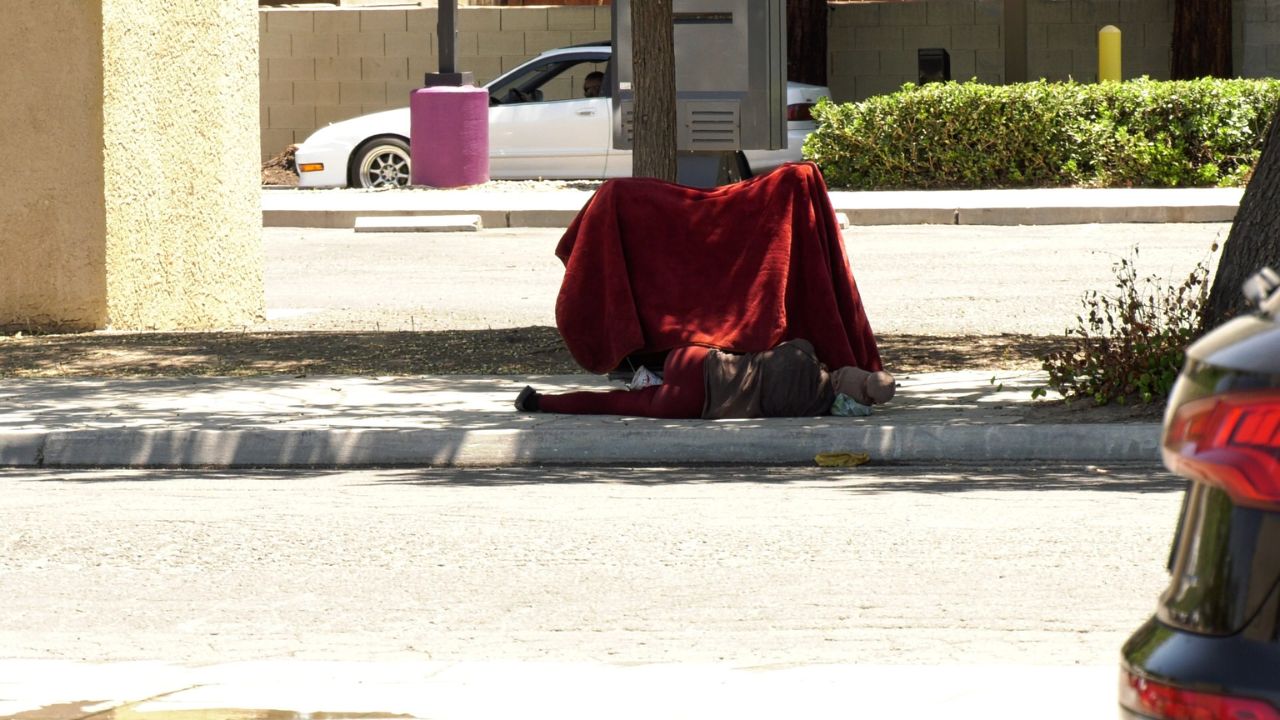
“It’s a lot harder to find one person with a blanket somewhere than it is to see a camp,” Jones said.
A recent study looking at the Skid Row, Hollywood and Venice neighborhoods in Los Angeles found the overall level of unsheltered homelessness didn’t change between December 2024 and January 2026. But the number of people living in tents dropped 23%, while the number of people “sleeping rough” (without a tent, tarp or other shelter) increased 20%, according to data from the nonprofit research organization RAND.
That shift away from camps could pose a challenge in getting people into housing, as Los Angeles Mayor Karen Bass’ main intervention – the Inside Safe program – specifically targets people living in tent encampments and moves them into hotels. In addition, rough sleepers generally have a harder time holding onto their personal documents and phones, making it harder for them to navigate the process of getting into housing, according to the study.
‘A Huge Accomplishment’
Increased enforcement could lead to people going uncounted, but it’s hard to tell how much that is really affecting point-in-time count results, said Roxanne Wilson, homeless services director for Monterey County. She does know that she’s seeing more people in her community move into housing.
Monterey County saw a 15% decrease in overall homelessness compared to 2024, while the number of people living outdoors dropped by nearly a quarter. Wilson attributes that largely to state funds. Monterey County won three state Encampment Resolution Grants that helped it move more than 150 people out of encampments along the Pajaro River levee, in Soledad and in King City. The money went toward opening a new shelter for the Pajaro River residents in Santa Cruz County, tiny homes in Soledad and hotel rooms in King City, Wilson said. People moved from the camps into those temporary accommodations, where they could then focus on securing permanent housing.
Wilson called that a “huge accomplishment.” But state homelessness funding comes in the form of one-time grants, meaning counties never know for sure how much money they’ll get next year – or if they’ll get anything at all. That makes it hard to plan ahead and invest in long-term strategies.
“The reality is that it’s going to be hard to hold this line,” Wilson said, “if we don’t start having more stable funding sources.”
This article was originally published on CalMatters and was republished under the Creative Commons Attribution-NonCommercial-NoDerivatives license.