


|
Getting your Trinity Audio player ready...
|
Proposition 57 was marketed in 2016 to California voters as the Public Safety and Rehabilitation Act and passed overwhelmingly with 64% approval. Prop. 57 promised taxpayer cost savings through reducing the prison population.
By Stephen Quick
Opinion
To date, five state prison facilities have closed, and every one of the Youth Authority facilities has been closed. The Youth Authority, or Division of Juvenile Justice, closure ended a 132-year-old state-run juvenile correctional program. Adult and teen offenders are now mostly housed in local county jails or juvenile detention centers, and those centers are at or near capacity.
The details of Prop. 57 included parole consideration for nonviolent offenders based on their primary offense, while in-prison credits can be achieved through good behavior, educational milestones, and rehabilitative achievements. These credits reduce the amount of time an offender serves from the original sentence.

Prop. 57 also removed the ability of prosecutors to directly file charges against a youth in criminal court. Instead, a transfer hearing is held, where the burden is on county district attorneys to convince a judge that the youth is not fit for juvenile detention, considering five factors under Welfare and Institutions Code Section 707, before the case can be transferred to criminal court.
Prior to Prop. 57 passing in 2016, Proposition 47 passed just two years earlier, promising similar taxpayer cost savings through reducing the prison population. Prop. 47 was named the Safe Neighborhoods and Schools Act.
The Unintended Consequences
In nearly 10 years since both propositions passed, Californians have experienced the unintended consequences of laws that have neither pushed forward safe neighborhoods nor public safety.
Felonies and misdemeanors dropped in 2020, primarily due to the COVID-19 pandemic, but we have since seen organized mass shoplifting sprees occurring throughout the state. We now live in a state where simple over-the-counter items are locked behind plastic barriers. Many retail stores employ security as a visual deterrent, while others have moved away from densely populated cities.
With prison closures, local county jails are full, and businesses large and small face significant costs from product loss. In many cases where crimes were once felonies and are now misdemeanors, offenders can be out of custody the same day through a turnstile of book and release.
At the same time, violent offenders are being released significantly sooner due to prison credits and a myriad of supplemental bills passed since Props 47 and 57.
Early release can undercut real rehabilitative efforts. Life sentences can be truncated. Sex offenders and other violent offenders can be released with questions remaining about whether they have actually been rehabilitated. Offenders are not always required to participate in rehabilitative programs while in adult or youth facilities.
California voters responded to some of these concerns with Proposition 36, which increased sentences for certain drug and theft crimes, after passing in 2024 with nearly 70% approval. To date, significant impacts from its passage remain to be seen.
Teen Violence and Accountability
Teen violence has seen a significant increase since Prop. 57. From 2023-2024, there were 32,874 juvenile arrests in California. Of those, 6,739 were for violent crimes. Yet only a tiny fraction of juveniles accused of the most serious crimes were transferred to criminal court.
In adult or more adequately criminal court, a teen offender found guilty of murder may receive a felony sentence of 25 years to life with the possibility of parole. In the juvenile system, the same crime can result in jurisdiction only until age 25.
Juveniles do not get a permanent felon label. Instead, they are temporarily labeled a “ward of the court,” and their records may ultimately be sealed. Based on participation in voluntary rehabilitation programs, good behavior or educational milestones, they can also have opportunities for sentence reductions.
The average typical stay for teens who are found guilty of murder and remain in juvenile jurisdiction is only two-and-a-half years.
Gangs know this and exploit teens.
Many teens who commit murder are involved in gang violence. Older members skip free of consequences while recruited teens commit the crimes. California Assembly Bill 333 placed restrictions on gang enhancements, and Senate Bill 1391 prohibited 14- and 15-year-olds from being transferred to criminal court. This makes gang recruitment of even younger teens ripe for exploitation with little accountability.
County district attorneys have cases where teen offenders could potentially be transferred to criminal court. But the burden to transfer is extraordinarily large, and oftentimes prosecutors do not attempt the transfer request.
This has led to teens accused of violent murders being held in local county juvenile detention centers throughout the state.
In Fresno County alone, from 2020 to the present, only two teens accused of murder have been successfully transferred to criminal court, while more than three dozen teens have faced murder cases.
These are not minor crimes.
There have been multiple stabbings, sawing bodies apart and dumping them in canals, a quadruple homicide by one teen with a gun, and premeditated public assassinations.
Those details matter when we talk about rehabilitation and accountability.
Related Story: Getaway Driver Cassandra Michael Found Guilty in Caleb Quick Killing
The Science Behind Rehabilitation
The theory of Prop. 57 is every teen can be rehabilitated regardless of the crime. That approach has been based, in part, on science supporting the idea that the human brain does not fully develop until age 25.
The adolescent brain is impulsive, and therefore teens are viewed as needing a rehabilitative approach in lieu of an accountable life-sentence approach. The law was set to make transferring teens who commit murder to criminal court extremely difficult, and it has been effective.
But newer research using neuroimaging technology suggests the human brain may not reach structural maturity until the late 20s or early 30s rather than 25, as previously thought. The idea that the brain or frontal lobe simply stops developing at 25 has also been shown to be an oversimplification in psychology and neuroscience.
In many counties across California, there are violent offenders approaching 25 years old who are held in the same facilities as 13- and 14-year-olds.
A question: Will the state eventually extend the age of juvenile jurisdiction to 30 or 35 with newer research showing brain development continues beyond age 25?
At what point does brain development stop being the standard for accountability?
How Well Is Rehabilitation Working?
How is rehabilitation working?
Rehabilitative programs are offered to offenders but are not required. If offenders take these programs, what are the recidivism rates? What is the effectiveness of the programs? Are they changing the mindsets or thought processes of the minors?
Six months after sentencing, juveniles are eligible for parole review and every six months thereafter. Review boards are allowed to grant up to 180 days’ reduction in the sentence every review cycle. This is how a seven-year sentence quickly shrinks to two-and-half-years.
These are questions that many should be asking because repeat offenders are common, and the number of victims continues to rise with every offense and re-offense.
Some county juvenile facilities offer evidence-based rehabilitative programs. Some offer cognitive-based intervention programs, and some offer both. Since closing the Youth Authority facilities, rehabilitation programs differ from county to county.
Since 2021, Fresno County juvenile detainee data has shown a recidivism rate approaching 50%. Teens who commit felony-type offenses often reoffend once released.
If nearly half reoffend, can we say they have been rehabilitated?
The average detainment for teens committing murder can be two to three years. That certainly does not seem like enough time to allow real rehabilitative efforts to take effect.
Sentence reduction undercuts the rehabilitative program’s intent and efficacy and raises a question about the purpose of Prop. 57.
Is it to rehabilitate, or create a brief timeout?
Related Story: Trump Writes Letter to Father of Caleb Quick as Cases Advance in Court
What About the Victims?
What is not discussed enough are the victims and victim families of teen violence.
Victims and victim families suffer the greatest costs.
Sending unrehabilitated teen offenders back into society so they can offend again is an abuse of the system. Sentence reductions can give sympathy to violent offenders while victimizing the families of those lost all over again.
Victim families feel their loved ones mattered and had value. In some cases, the victims are teens themselves with bright futures.
Also not discussed are the details of the violent murders teens commit. Those details can become lost in the effort to shield teens from criminal court.
The effort to erase their actions from history and accountability for their crimes is the ugly underbelly of Prop. 57.
There is value in rehabilitation. But rehabilitation without accountability, without measuring whether it works, and without considering the victims is not enough.
These propositions were sold to Californians as a way to create safe neighborhoods and greater public safety.
Nearly 10 years later, Californians have a right to ask whether they did.
About the Author
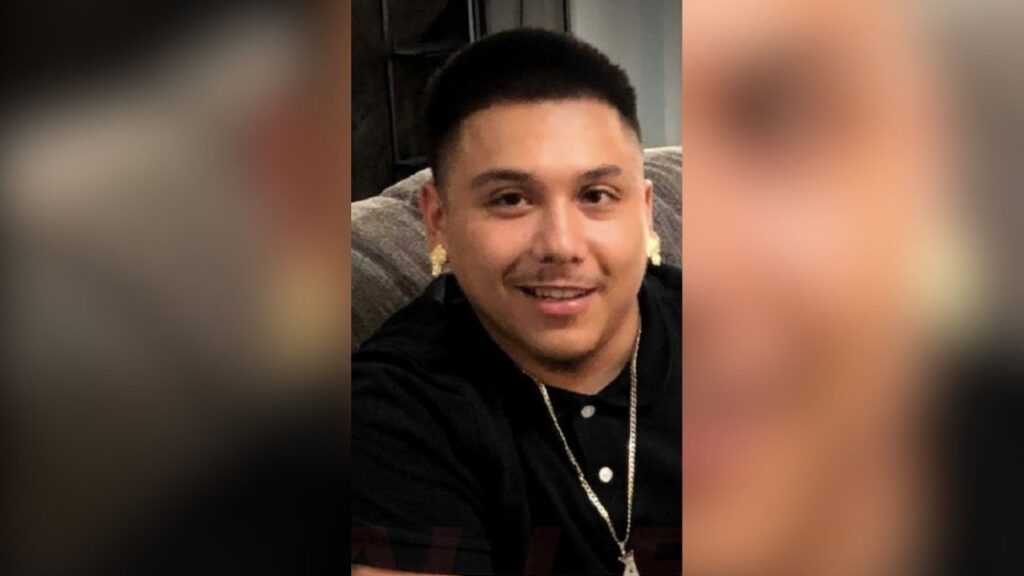
Stephen Quick, the father of Caleb Quick, has become an advocate for change in California’s juvenile justice system following the tragic death of his 18-year-old son in Clovis, California, in April 2025. In the wake of Caleb’s death, Stephen has worked to keep his son’s memory alive while bringing greater public attention to laws affecting how juveniles accused of serious violent crimes are prosecuted.