

|
Getting your Trinity Audio player ready...
|
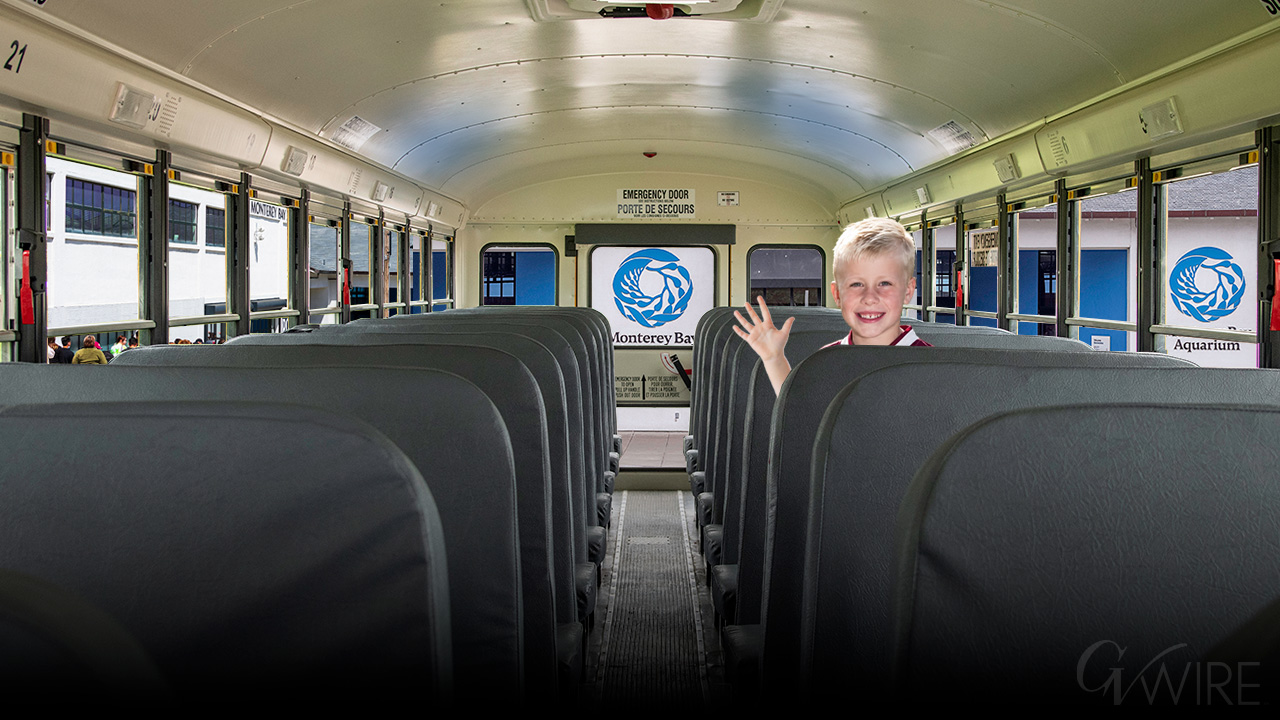
I can still picture myself at about 10 years old, wedged into a school-bus seat next to my childhood best friend, Austin, with both of us so excited that we were probably saying absolutely nothing that made sense.
We were bouncing around, watching Fresno pass through the windows, and waiting to arrive at the zoo, Monterey Bay Aquarium, the Big Fresno Fair, a Fresno Grizzlies game, or wherever else the school had decided to take us that day.
Honestly, the destination almost felt secondary because the important part was that we were leaving campus and going somewhere.


Anthony W. Haddad
The Millennial View
Field-trip days offered the best kind of freedom a child could have.
We were outside the classroom without really being outside of school, overstimulated while still being safe, and surrounded by classmates equally thrilled that a normal day had suddenly become something different.
The Memories That Somehow Stay
One of my strongest memories from those trips isn’t particularly profound, which is exactly why I think it matters.
During a trip to the Big Fresno Fair, I walked into a rock shop packed with crystals, ostrich eggs, arrowheads, and people cutting open geodes. It was noisy, bright, and filled with things I had never seen before, and I remember being completely overstimulated at first.
But I was there for it.
I wanted to know what everything was and what might be hiding inside the next rock they cracked open.
I don’t remember whether there was a worksheet attached to that trip or whether any of it appeared on a test later, but I remember that little rock shop decades later.
That’s why Fresno Unified Deputy Superintendent Ben Drati describing field trips and enrichment as “not core” landed so badly with me.
Fresno Unified’s Definition of Core
As my colleague Edward Smith reported, Fresno Unified will no longer centrally fund field trips, shifting responsibility to individual schools and parent groups to pay for them through site budgets and fundraising.
The district says federal pandemic funding that paid for at least one enrichment trip annually for transitional kindergarten through sixth-grade students has expired.
Fresno Unified also faces a $30 million shortfall and has been dipping into its $122 million reserve to cover spending gaps. The trips cost roughly $2.2 million to $3 million annually.
I understand that $2.2 million is real money, and I’m not arguing that Fresno Unified should preserve field trips by cutting teachers, classroom instruction, or the people who keep schools functioning every day. That should not even be an option.
What I reject is the idea that those are the only alternatives.
The Money Talks
Since 2022, the combined salary-and-benefit compensation for three Fresno Unified administrators increased substantially while they remained in the same positions.
Compensation for Paul Idsvoog rose 23% to $408,783, David Chavez’s increased 38% to $414,582, and Patrick Jensen’s climbed 70% to $384,032.
Superintendent Misty Her received $513,725 in salary and benefits in 2025.
The district also spent $1.5 million on central-office meals and travel last year, though Drati said $900,000 of that paid for professional learning connected to instruction.
Those expenses cannot necessarily be moved from one budget line to another, and I don’t want to pretend public-school financing is that simple.
But those numbers make Fresno Unified’s priorities fair game.
You couldn’t find $2.2 million anywhere else?
Schools Are Left to Figure It Out
The timing makes this even more frustrating.
Parents began learning about the change as they were sending their children back to school, while educators planning sixth-grade camps need to sign contracts now. Schools can become financially responsible before knowing whether their communities can raise enough money.
Drati acknowledged Fresno Unified could have communicated the decision better, but the district maintains that field trips haven’t been eliminated because schools can still fundraise for them.
That’s the kind of technical distinction only an administrator could love.
A field trip being theoretically possible doesn’t make it equally accessible.
Wealthier neighborhoods will have an easier time writing checks and raising money, while schools serving families already struggling with basic expenses will be asked to produce money that simply may not be there.
Proximity Is Not Access
I attended private school for most of my childhood, attended Fresno Unified schools for some, and my family was capable of taking me places. I don’t want to rewrite my childhood and pretend otherwise.
I didn’t fully understand that privilege until my early teens, when I began noticing some students didn’t have as much food and others couldn’t afford certain trips. I wanted to help them, but I had no idea what a kid was supposed to do.
Recently, while covering a story at the Fresno Mission, I was told there are children in Fresno who have never seen snow, the mountains, or the beach.
That stopped me, made me really think.
Snow and the mountains can be less than an hour away during winter. The coast is only a couple of hours from Fresno. As an adult with transportation, those places don’t seem particularly far away.
But proximity is not access.
A place can be 45 minutes away and still be unreachable to a child whose family cannot take them there.
Those are the kids I think about when Fresno Unified calls these experiences “not core.”
Let Them Get on the Bus
I don’t have children, but I remember being one, and I remember what it felt like when school made the world larger instead of simply telling me about it.
A lesson about geology isn’t the same as watching someone crack open a geode. A photograph of the ocean by the Monterey Bay Aquarium isn’t the same as standing in front of it. Field trips don’t replace classroom education and they are more than “enrichment,” they’re one of the ways education becomes real.
If Austin and I somehow boarded that school bus again today in our 30s, I honestly think we’d still be just as giddy because those moments don’t disappear when childhood ends.
Fresno Unified may call those experiences noncore, but that little rock shop at the Big Fresno Fair became one of my core memories.
When I picture that bus now, I still see Austin and me bouncing around in our seats, thrilled by the simple fact that we were going somewhere.
I want Fresno Unified’s kids to feel that same freedom, experience that same learning, and carry that same ridiculous excitement with them into adulthood.
They deserve to get on the bus, too.
About the Author
Anthony W. Haddad is a Fresno-based reporter and columnist best known for the award-winning Millennial View column series. He covers a wide range of topics, from pressing local issues and community concerns to the everyday challenges and experiences facing millennials today.
—
Connect with Anthony W. Haddad on social media. Got a tip? Send an email.