
|
Getting your Trinity Audio player ready...
|
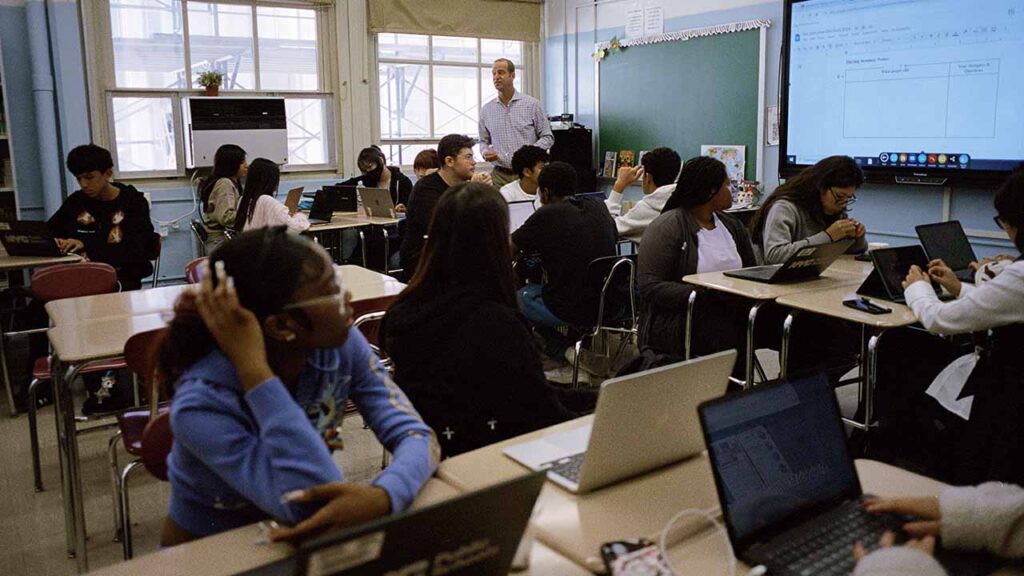
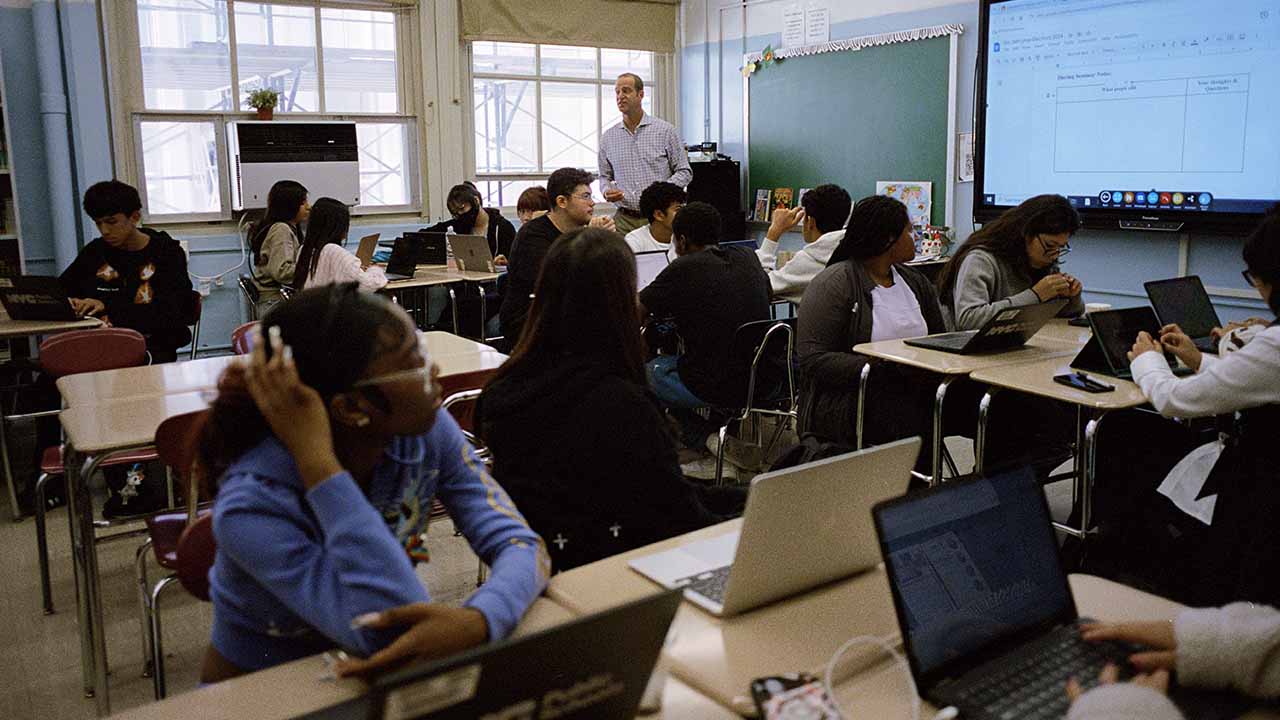
When New York City public schoolchildren return to the classroom next week, younger students will be barred from using artificial intelligence. No individual screens will be allowed until third grade. And teachers will not be able to ask AI to grade assignments.
Those rules on technology use are part of a sweeping new policy to be announced Wednesday by the city’s Department of Education that will place strict limits on digital devices and AI tools in the city’s school system — the nation’s largest — particularly for its elementary and middle-school students.
Still, some parents and groups that had called for a two-year moratorium on AI in schools said that the guidelines were disappointing.

Under the rules, about 600,000 students in the city’s schools — about two-thirds of all students in New York City public schools — will not be allowed to use AI until they enter high school, and even then, it will be permitted only in specific cases.
The department is also recommending caps on screen time, such as limiting middle schoolers to no more than 45 minutes a day. So-called companion chatbots, which offer emotional and mental support, will be banned in all grades.
City leaders on Tuesday framed the new policy as one of the most restrictive policies technology in the classroom in the country.
“The tech industry wants us to believe that AI-powered early education is not only inevitable, but necessary. We do not see it that way,” Mayor Zohran Mamdani said in a statement.
Kamar Samuels, the schools chancellor, said in a statement that the department would not “conflate innovation with more tech.”
“We’re putting guardrails in place to protect the critical human connection, curiosity, and creativity that help children grow,” he said.
Parents across the country have pushed back against the growing use of digital devices and AI in the classroom, saying that the technology has harmed students, limited their learning and encouraged cheating. The backlash has forced some school districts, including those in Los Angeles, to enact new restrictions on devices in schools.
In New York City, parents from all backgrounds have increasingly spoken out about the rapid embrace of AI in schools and the instructional apps used by students, including those that resemble games. Some have formed groups calling for a pause on AI use, an effort that a majority of City Council members endorsed a few months ago.
“This is certainly a step forward,” said Eric Dinowitz, the chair of the council’s Committee on Education. “I still have a lot of questions.”
Dinowitz said he has urged department leaders to evaluate the AI tools to make sure that they improve student learning and cautioned them not to be swayed by the marketing claims of technology companies.
Department leaders have spent the past months crafting a comprehensive guidebook on AI in the classroom, incorporating feedback from parents, elected officials and technology companies. They released an initial set of guidelines in March, which did not restrict digital devices or limit AI in some grades.
Kelly Clancy, a Brooklyn parent who founded Parents for AI Caution and is a member of the Coalition for an AI Moratorium, said the department should have heeded the calls from parents like her and imposed a temporary moratorium on the technology.
“The fact that this policy exists at all is due to the enormous work of parents across the city who spoke out against the overreach of AI into their kids’ classroom,” Clancy said.
She said that she was concerned that the policy might be less restrictive than it appears, noting that it has several exceptions that could allow for wider AI use.
The new rules will not apply to “centrally approved instructional programs” across all grades, such as e-books and coding software, according to a department summary of the guidelines obtained by The New York Times. It will also not apply to some student tests, or tools to help students with disabilities, and those still learning English.
New York City teachers will not face the same set of restrictions and can use AI in their jobs, for purposes including crafting lesson plans, translating material and writing messages. But there are limits: AI cannot be consulted for determining whether a student should graduate, for instance, or for deciding how to counsel a student in crisis.
Department leaders presented the new rules to various stakeholders Tuesday. Several people who attended the presentations said they still had many questions about the implementation, and on whether the department would now remove instructional apps that have already incorporated AI.
“What does that mean in a world where all software at this point is now using generative AI as part of their core features,” said Naveed Hasan, a member of a city education oversight panel who has a background in technology policy.
Hasan said that the Department of Education, whose roughly $40 billion budget is the largest of any city agency, had the power to force technology companies to change their apps.
“Are we finally using the scale and scope of New York City’s budget and purchasing power to push back on the people that are selling us stuff to tell them to design it in a way that works for us?” he said. “It remains to be seen.”
—
This article originally appeared in The New York Times.
By: Matthew Haag/Sara Messinger
c.2026 The New York Times Company