

|
Getting your Trinity Audio player ready...
|
A new report finds that intensified immigration enforcement is disrupting jobs and business activity and putting economic pressure on industries heavily dependent on immigrant workers.
The report from America’s Voice, an immigration advocacy organization, combines federal economic data with independent research on employment, consumer spending, and business activity following increases in immigration enforcement.
The organization calls the economic effects an “ICE Tax” and urges the Trump administration and Congress to end its mass deportation campaign.

California Cities Prominent in Report
California figures prominently in the report. The San Diego area experienced one of the nation’s sharpest increases in immigration arrests, while businesses near enforcement locations in Los Angeles County lost an estimated $3.16 million in revenue following a June 2025 enforcement surge.
“California families are paying the price for Donald Trump and Stephen Miller’s mass deportation agenda,” Joanna Kuebler, chief of programs at America’s Voice, said in a statement.
Narrowing economic impacts to a single cause can be difficult, but independent research cited by America’s Voice found employment and business activity declined following enforcement surges. Other portions identify rising prices and slowing construction activity in industries and areas heavily reliant on immigrant labor.
Research from the Brookings Institution compared employment in 86 cities that experienced sharp increases in immigration enforcement with 255 cities that did not.
Employment in enforcement-surge cities fell on average .73% below what researchers estimated it otherwise would have been. The gap widened even more after enforcement surges, declining 1.48% six months after immigration actions in those cities.
668,000 Fewer Jobs in 86 Cities
Researchers estimated that decline amounted to about 668,000 fewer jobs across the 86 cities, including an estimated 51,000 to 297,000 jobs that would have been held by U.S.-born workers.
Construction was particularly affected, with employment losses averaging 2.2% across the 86 cities, equivalent to roughly 102,000 jobs, according to the research.
The San Diego-Chula Vista-Carlsbad area averaged 31 at-large immigration arrests per month in 2024. Following a May 2025 enforcement surge, the monthly average increased to 693, a 2,148% increase.
That amounts to a projected 11,284 jobs lost in the San Diego area.
“After January 2025, the typical surge city saw enforcement more than triple, and they lost an average of about 7,800 jobs in the months that followed,” the Brookings report stated.
46,000 Fewer Customer Visits in Los Angeles County
Separate research from UCLA’s Latino Policy and Politics Institute found businesses near nine Los Angeles County immigration enforcement sites lost about 46,000 fewer customer visits and an estimated $3.16 million in revenue within two weeks of a June 2025 enforcement surge.
Nearly a year later, 95% of Latino entrepreneurs surveyed still report ongoing financial stress. The survey and focus-group research involved 75 entrepreneurs across Los Angeles County.
America’s Voice also cites a Wharton School, at the University of Pennsylvania, working paper that matched 5,388 immigration enforcement operations with foot-traffic and card-spending data covering 5.4 million businesses.
The study found that after enforcement moved into an area, consumer spending at the average business ran about 6.2% below normal and foot traffic 2.7% below normal. Independent businesses experienced spending declines of nearly 11%, compared with about 5% at chain locations.
Construction Employment Falls
America’s Voice also examined construction trends in California, Florida, Nevada, New Jersey, and New York, which it identifies as the five states with the highest immigrant shares of their overall labor forces.
Construction employment across the five states collectively fell 1.3%, while increasing 3.3% in the rest of the country. Single-family permits in the five states fell 9.2% between June 2024 and June 2026, compared with a 3% increase nationwide.
The decrease in employment correlates with an increase in construction costs.
Estimated average permit prices for new single-family homes in those states increased 13.1%, from $304,312 to $344,112, while valuations increased only 2% nationally.
New Home Prices Increased
The report also examines consumer prices in industries with relatively large immigrant workforces.
During the 12 months ending in June 2026, core consumer prices increased 2.6%, while lettuce prices rose 32.1%, landscaping and lawn-care services 10.8%, home health care 10.7%, whole milk 9%, canned fruit 7.9%, apples 7.1% and fresh citrus 6.3%.
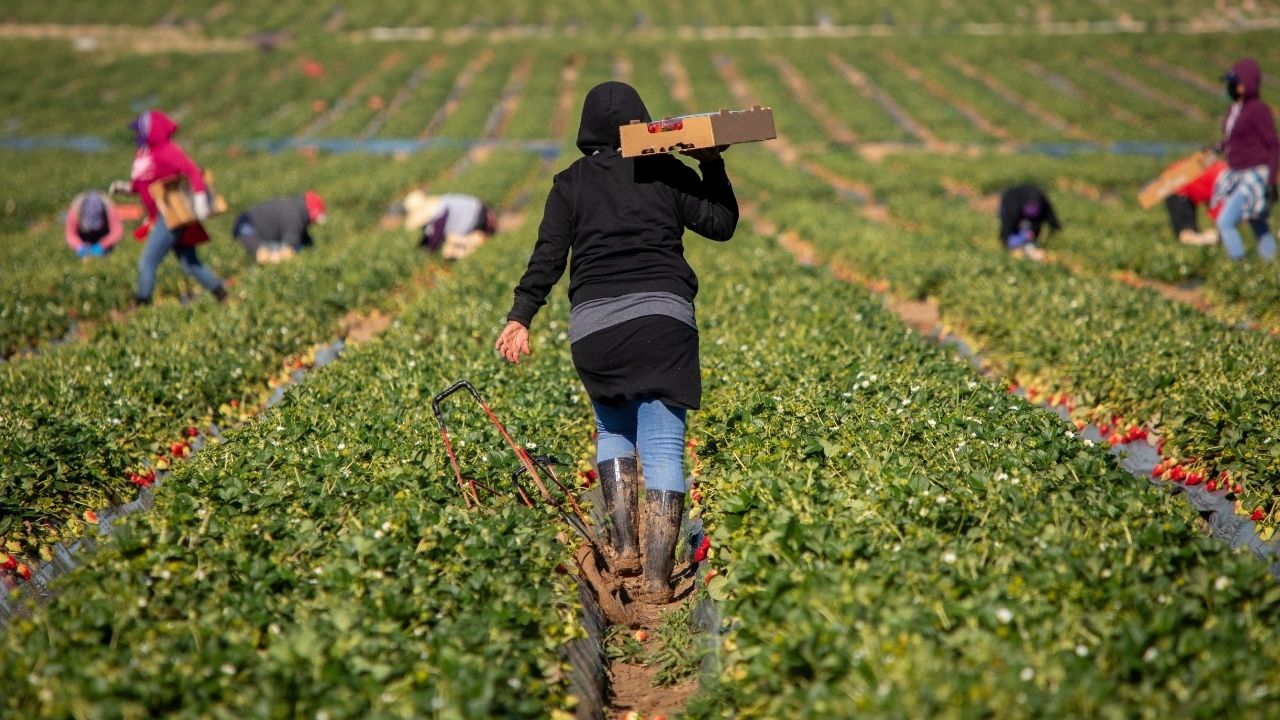
About 68% of U.S. crop farmworkers are immigrants, according to the report. Immigrants also account for 39% of the landscaping and groundskeeping workforce and 39.8% of the home health care workforce.
America’s Voice said its analysis focused on industries with higher proportions of immigrant workers and compared their June-to-June consumer-price changes with broader inflation.
The analysis does not determine how much of those price increases resulted from immigration enforcement. America’s Voice said it could not separate the effects of immigration policy from tariffs, geopolitical events and other factors affecting prices.
The report itself also acknowledges that weather, fuel costs, and ordinary market changes can affect prices and says no single figure proves its argument.
America’s Voice argues that, taken together, the employment, business, construction, and consumer-price data show that the economic consequences of intensified immigration enforcement can extend beyond immigrants themselves.
Kuebler said the effects are being felt “from the job site to Main Street” and called on the administration to end mass deportations.