
|
Getting your Trinity Audio player ready...
|
Sam Schwartz, the 78-year-old former New York City traffic commissioner credited with coining the term “gridlock,” is about to become a first-time novelist.
Naturally, he wrote about killer robocars.
His book, “Autokill,” co-written with Cary Pepper, is a nail-biter about a terrorist plot to turn autonomous vehicles into weapons. It goes on sale on Aug. 18, and Schwartz is betting that the novel will be a timely hit as the driverless car industry continues to expand.

There may not be a more qualified person to engage in this kind of speculative fiction. Schwartz, a onetime cabdriver turned city official turned transportation consultant, was instrumental in the development of New York’s congestion pricing toll, and he is now the chair of a transportation research program at Hunter College in Manhattan that bears his name.
Schwartz has long been wary of how driverless cars have taken root in the public imagination.
“It’s almost as if people are worshipping the autonomous vehicle,” he said in an interview.
“But it’s not so far-fetched that AVs could be used by bad actors,” he added, citing the 2017 arrest of a man in Britain who had planned to set off a bomb using a driverless car.
His novel is set in the 2030s and revolves around a protagonist with a tragic past and a striking resemblance to Schwartz.
The character, Richard Corby, is a professor of “social justice in urban planning” who has encyclopedic knowledge of transportation and lives in an America where politicians are in the thrall of AV companies. After his wife is killed by a driverless car, he spirals, until he meets a young protégée who is also worried about the industry’s growing influence.
Through narrative kismet, they become entangled with a federal agent investigating a string of unexplained driverless vehicle malfunctions. Their sleuthing leads them on a quest to stop the “Horizon Event,” a catastrophic attack on New York planned by a Luddite who resents the AV industry.
The novel is, of course, shot through with transportation trivia: a history of the three-point seat belt; an explanation of the Model Municipal Traffic Ordinance, which helped create America’s car-centric culture; a shoutout to Ralph Nader’s car industry exposé, “Unsafe at Any Speed.”
To keep the material lively, Schwartz, who was born and raised in Brooklyn, teamed up with Pepper, a playwright who was his college fraternity brother.
“We were the weird ones on campus,” Pepper, 78, said about their time at Brooklyn College. Schwartz acted in some of Pepper’s early plays, and they have since worked together on a number of unpublished pieces.
The novel’s path to market has its own twists. “Autokill” is being published by Open Road Integrated Media, whose CEO and chair is David Steinberger, a former deputy commissioner at the city’s Transportation Department who calls Schwartz a mentor. Steinberger was fired from the agency in 1991 after blowing the whistle about deteriorating conditions on the Manhattan Bridge.
The two remained close as Steinberger, 66, moved into the publishing world, and Schwartz delved deeper into transportation planning. Schwartz started writing the book in 2019, a year after finishing a nonfiction treatise on the promise and perils of the AV industry called “No One at the Wheel.”
“I’ve always thought Sam had a novel in him,” Steinberger said. “I’m calling it the first traffic thriller.”
Kelly McGuinness, director of the Hunter College program that Schwartz established, is acquainted only with his academic side, but said she was enjoying the book.
“I’d imagine the parts describing traffic speeds and interchange configurations is Sam,” she said.
The book arrives at a pivotal time for the driverless car industry.
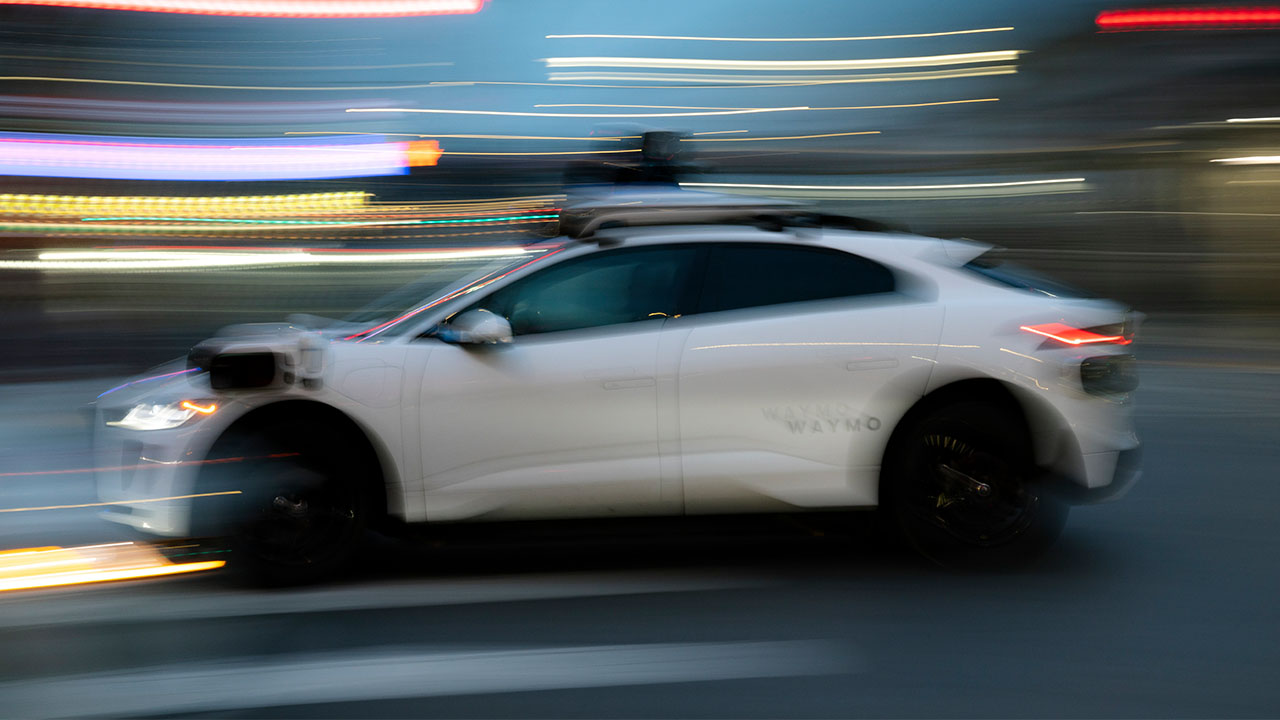
Waymo, the autonomous taxi company, is available to riders in 11 cities and completes roughly 500,000 trips a week, the company said. But it has run into legislative roadblocks in some markets, including New York, where Gov. Kathy Hochul withdrew a proposal in February to expand the use of the company’s taxis in parts of the state. Mayor Zohran Mamdani has also registered skepticism about their use in New York City.
Schwartz has warned that the arrival of autonomous cars would be disruptive not just for taxis, but also for shipping and consumer vehicles.
“This will be the biggest industry the world has ever seen,” he said.
His research program released a report last month arguing that Waymo taxis in New York City could worsen traffic and pollution, since they tended to cruise without passengers for much longer than human drivers.
The report originally suggested that, by one measure, professional human drivers were less likely than Waymo vehicles to be involved in serious crashes, but the authors said they had temporarily removed that section, citing data discrepancies.
Ethan Teicher, a spokesperson for Waymo, disputed both findings and said the report had “serious methodological flaws.” He said that, compared with human drivers, the company’s autonomous taxis were involved in 94% fewer crashes that caused serious injuries.
Schwartz said that he wasn’t trying to single out Waymo in his novel. In fact, after riding in the company’s vehicles for three days in San Francisco as part of his research, he said he had felt “very safe.”
But he still has concerns about their potential vulnerabilities to hackers or others with bad intent.
“I believe AVs are the future,” Schwartz said. “I want it done right.”
What else might the future hold?
Maybe a movie deal, he said.
—
This article originally appeared in The New York Times.
By: Stefanos Chen/Manuel Orbegozo
c.2026 The New York Times Company