



|
Getting your Trinity Audio player ready...
|
LANSING, Mich. — The Lansing River Trail, a greenway that winds through Michigan’s capital, has long drawn walkers and cyclists to the Grand River. But lately, the trail has become known for something else: suspicious deaths.
In less than a year, five homeless men died from injuries suffered in the middle of the night on a 1-mile stretch near downtown Lansing, Michigan. Each was lying down, possibly sleeping, police said. Four suffered head injuries. A fifth was stabbed.
A suspect has been charged with murder in that attack, but the others remain under investigation.

Public awareness of the deaths among the homeless spread only recently. In September, The Lansing State Journal noted similarities among four of the killings. Soon after, investigators confirmed the details of a fifth. Then Police Chief Robert Backus raised the question that has the city on edge.
“Do we have a serial killer in Lansing?” Backus said during a news conference, adding: “We are looking at the idea — or the possibility — that these may be related cases.”
The prospect of a killing spree in a public park has frightened residents and prompted nighttime patrols by community groups and police. The deaths have also renewed questions about how Lansing handles homeless encampments, park safety and public communication about crimes. The Police Department has faced sharp criticism from local leaders, homeless residents and a victim’s father for failing to warn the community.
“It’s scary knowing that even if you’re homeless, you can’t even lay out here and go to sleep without somebody beating you,” said Derick Byrd, 56, who has stayed along the river and knew three of the men who were killed.
Backus said that temporary cameras were now along the trail, and that the city was considering better lighting and permanent surveillance. The chief said he considered the trail safe — except overnight.
Along the trail downtown, public squares, playgrounds, art installations and apartment buildings sit near woods with homeless encampments. The path winds under bridges that are dark and isolated at night, serving as popular sleeping spots. On Friday evening, homeless people on the trail far outnumbered others.
At Lansing Shuffle, a bar steps from the greenway, bartenders discussed the deaths, and Austin Smith, 28, a patron, said talk of a serial killer had kept friends off the trail. They “just pass it by, find a different route,” he said, “because why even take the chance?”
Lansing’s homeless population has grown in recent years, officials said, with clusters of tents scattered in the same downtown where Michigan lawmakers and lobbyists gather in marbled hallways and high-dollar restaurants. A 2023 study estimated the city of more than 113,000 had a homeless population of 2,371.
Along the river, the string of deaths among the homeless began Oct. 14, 2025, when Gino Chouinard, 54, was found unconscious with injuries to his face. He died 13 days later. The medical examiner listed his cause of death as undetermined, but Backus said it was now under review.
Then, over the summer, four more men died within two months of one another.
Denis Dunnebacke, 70, was found unconscious July 9 with facial injuries under a bridge. Four days later, Robert Smith, 57, was found unresponsive and bleeding from his head. Both men died within days. Dunnebacke’s cause of death remains under investigation, while Smith’s has been ruled a homicide, police said.
A little more than a month later, on Aug. 20, Daniel Lusk, 22, was found stabbed to death under a bridge. Ten days later, Louis Woodruff, 57, was found with facial injuries under another bridge. Woodruff’s death is being investigated as a homicide, police said. He died Sept. 1.
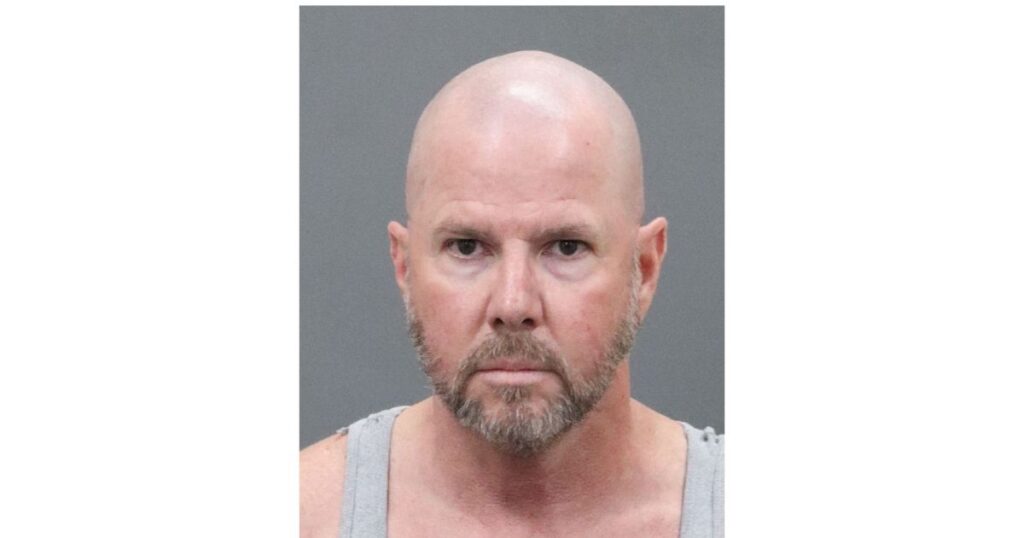
The next day, police arrested Edward Joseph Smith, 23, and charged him with murder in Lusk’s death.
Surveillance footage from nearby buildings captured a man leaving the scene and walking across downtown, including a stop at a drinking fountain to wash his arm, court records show. Police found blood on the fountain, recognized Smith from the video and found a sweatshirt in his tent that matched the one worn by the suspect on the surveillance footage, the records show.
At his news conference, Backus noted that while all five deaths had similar circumstances, Lusk’s was the only one that involved a known weapon — a knife. The stabbing involved a victim and a suspect in their 20s, police said, while the other victims were older than 50.
“We are looking at every case with the idea of, is this a similar suspect or the same suspect?” Backus said. “But we cannot move forward in an investigation thinking that these are all the same person. We have to look at these on a case-by-case scenario.”
He said the investigations had been hindered by limited surveillance cameras, few witnesses and, in some cases, inconclusive or unfinished findings from the medical examiner.
State Sen. Sarah Anthony, whose district includes the trail, called the deaths “terrifying,” and said that had the victims not been homeless, the police would have acted more urgently.
“It’s really infuriating, the lack of information and clarity we’ve received,” Anthony said. “There’s no perfect time to tell the public news that could scare them, but bringing the community along is something leaders do.”
Mayor Andy Schor, a Democrat, declined an interview, but said in a statement that the attacks did not target “the general public,” a line echoed by Peter Spadafore, the City Council president. Spadafore said that “the Police Department is treating these deaths as serious as any other suspicious deaths,” but added that officials would look to improve communication. A police spokesperson, Eric Pratl, declined to comment.
In his news conference, Backus apologized for not issuing a news release about one of the deaths. He said that in other cases, medical information about victims and their causes of death arrived slowly, and he didn’t want to alarm the public unnecessarily.
Ryan Kost, a council member whose ward includes the trail, said the city’s homeless population had “exploded” over the past eight months and previous city sweeps of homeless encampments had pushed more people toward the river. He said the police should have done more to warn and protect them.
“You’re talking about a population that has no defense mechanism — they’re sleeping on the damn ground,” Kost said. “That’s the frustrating part: They had no way to fight back.”
—
This article originally appeared in The New York Times.
By Bill Ruthhart and Ryan Patrick Hooper
c. 2026 The New York Times Company