


|
Getting your Trinity Audio player ready...
|
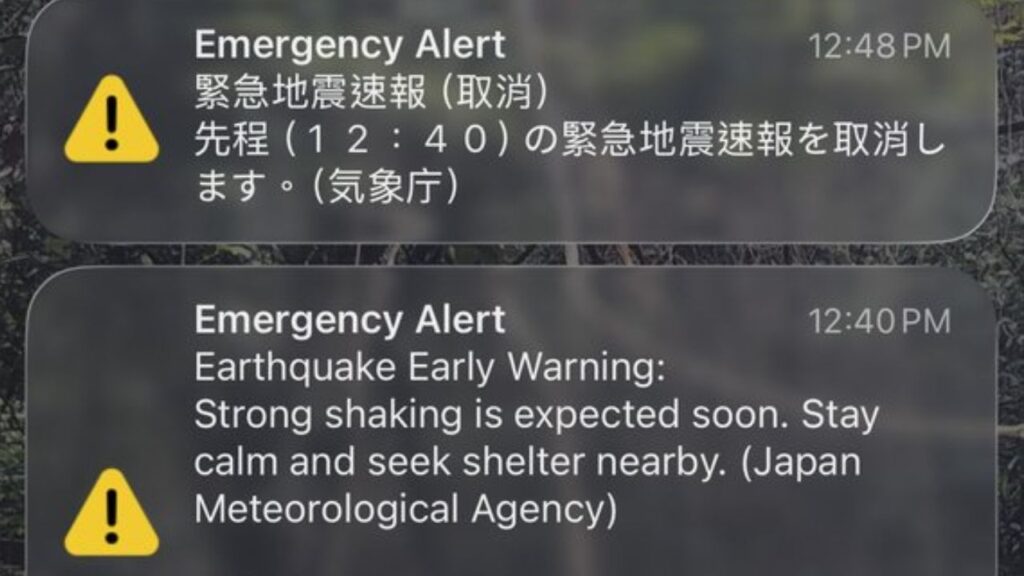
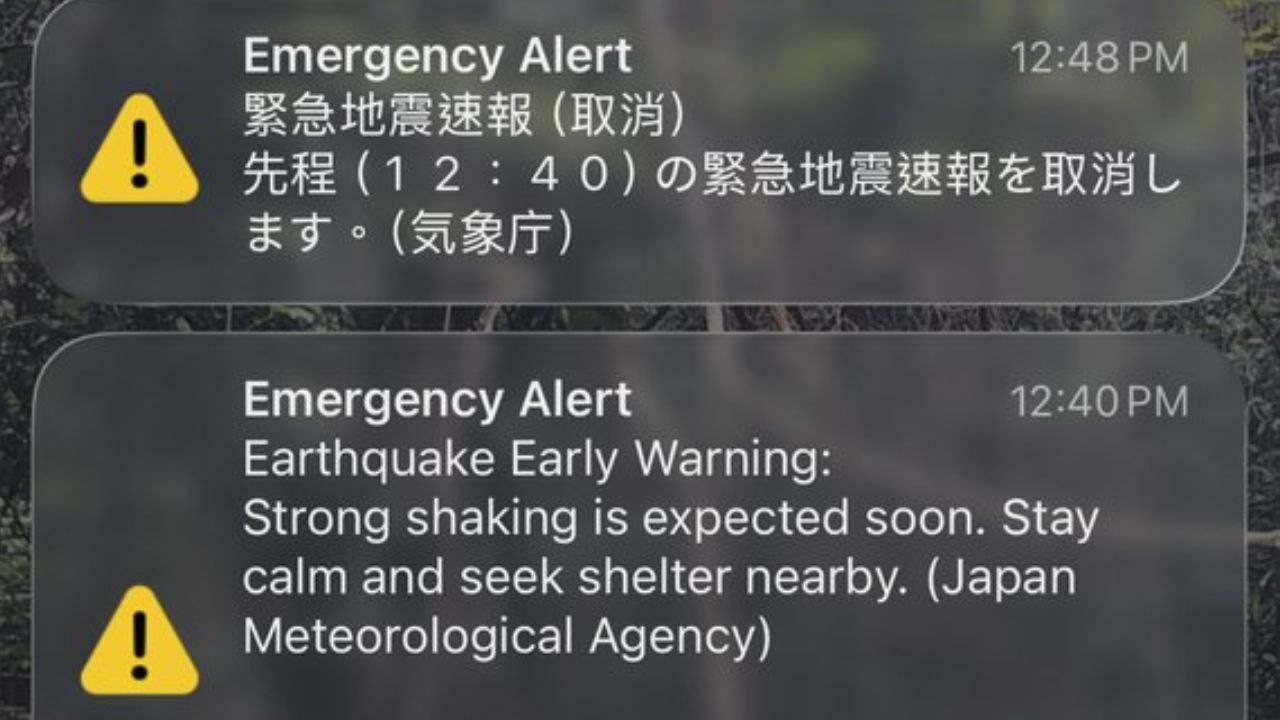
TOKYO — Screens lit up and phone alarms sounded in Japan on Friday with a startling if not unfamiliar warning: Heavy shaking soon. Seek shelter.
But less than 10 minutes later, the same alarm sounded with an update: “The Emergency Earthquake Warning issued earlier (at 12:40 p.m.) is canceled.”
Although the alerts did not provide a magnitude, the Japan Meteorological Agency initially said on its website that the earthquake was a magnitude of 9.9, which would have been the strongest ever recorded. The quake’s actual magnitude was 6.9, according to the United States Geological Survey.

The incorrect figure was calculated when the Japanese agency mistook the location of the quake, said Ayataka Ebita, director of its earthquake and tsunami observation division. At a news conference on Friday, he said the agency initially believed that the epicenter of the earthquake was in the Kuril Islands, rather than where it actually occurred, which was near the Kamchatka Peninsula, an eastern region of Russia hundreds of miles away. The mistake was under investigation, he said.
Ebita added that the error was not the result of a cyberattack, several of which have wreaked havoc in Japan in recent weeks.
While the tremors that reached Japan were barely strong enough to be felt, they triggered the country’s early warning system, said Shigeki Aoki, director of the meteorological agency’s earthquake and volcanic engineering division. Because the system had misplaced the quake’s epicenter, the calculations went awry.
“The Earthquake Early Warning system is designed to calculate the magnitude based on the estimated epicenter, and then use those values to predict seismic intensity,” Aoki said.
While such mistakes are rare in Japan, which has one of the world’s most advanced tectonic warning systems, this was not the first.
The government operates thousands of seismometers across land and water. When an earthquake occurs, instruments detect its primary wave within seconds, allowing the authorities to issue alerts quickly.
In 2013, the agency issued a warning for what it said would be an earthquake of 7.8 magnitude in the prefecture of Nara after misinterpreting a much smaller quake, prompting confusion which caused infrastructure disruptions. In 2018, a similar alert went out to millions of people that warned of an earthquake off the coast of Ibaraki that turned out to be far weaker than expected.
Japan is one of the most earthquake-prone countries, experiencing around 1,500 earthquakes a year, according to the University of Tokyo. Some cause significant damage.
In March 2011, Japan suffered its strongest ever earthquake when a 9.1-magnitude earthquake and a tsunami devastated the country’s northeast coast. More recently, in July, a powerful 6.8-magnitude earthquake struck the southwestern prefecture of Kumamoto, killing 38 people.
There were no reports of widespread disruptions in Japan on Friday, only some confusion and people taking shelter unnecessarily. Some videos posted on social media showed people sheltering and awaiting tremors at a Disney resort near Tokyo.
“There’s a big earthquake announcement playing in front of the station,” another social media post read, “but, uh, is everything OK?”
—
This article originally appeared in The New York Times.
By Kiuko Notoya and Claire Moses/The New York Times
c. 2026 The New York Times Company