


|
Getting your Trinity Audio player ready...
|
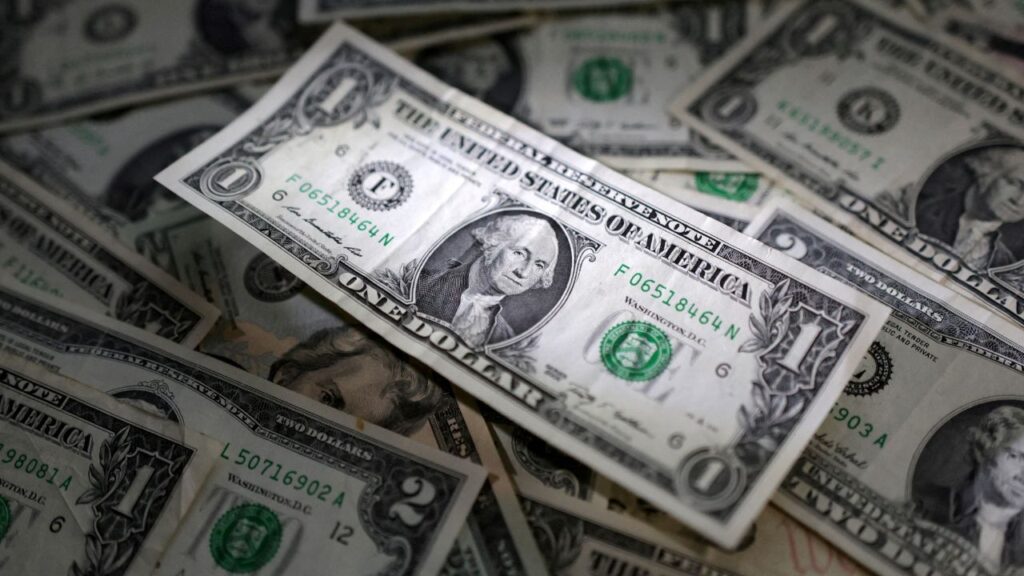
The dollar pulled back on Monday from its highest level in nearly two months, after Iran said its attacks on Israel had ended.
Tehran’s comments lured investors into other currencies that had been dented after strong U.S. jobs data on Friday prompted traders to ramp up bets on a Federal Reserve rate rise this year.
Iran’s military announced on Monday that its first wave of attacks on Israel since a ceasefire in April was now over, although it threatened to resume the strikes if Israel continued attacks on Lebanon.

The euro was a touch stronger on the day at $1.1533, but still hovered near its lowest level in around nine weeks, while the pound edged above three-week lows to $1.3390.
Data in Focus
Weekly data from the U.S. Federal Reserve shows that in the week to June 4, the day before payroll figures, investors cut their bullish positions in the euro to the lowest in three months, while adding to their bearish bets on the yen, positions now worth more than $10 billion, according to LSEG data.
The Federal Open Market Committee meets next week for the first time under its new chair, Kevin Warsh. For now, markets see a roughly 40% chance of a hike by October, according to CME’s FedWatch tool.
Markets are also eyeing U.S. inflation data on Wednesday for clues to the Fed’s possible moves.
Meanwhile, the European Central Bank is widely expected to raise rates this week, with another increase likely in September, as it seeks to balance energy-driven inflation against a weakening economy.
“The big event this week is going to be the ECB rate hike and the U.S. CPI data,” said Kit Juckes, chief FX strategist at Societe Generale.
“If you got a really big upside surprise on U.S. inflation on Wednesday, then I suspect the dollar would get a bid. But if it looked really benign enough to kind of walk us a little back from the edge in terms of rate expectations, then that will be a different story. Likewise, if the ECB sounds like they’re going to be one and done for now, I don’t think that will sort the euro out.”
The dollar index, which measures the greenback against a basket of currencies including the yen and the euro, fell 0.12% to 99.95.
Safe-Haven Dollar
The dollar has drawn on its safe-haven credentials in the past couple of weeks, as well as the prospect of a widening gap between U.S. rates and those elsewhere. This has hit the Japanese yen particularly hard.
The yen has erased the gains made in the wake of Tokyo’s 11.7 trillion yen ($73.0 billion) intervention just over a month ago, when it slid to its lowest since July 2024 at 160.725.
Sources told Reuters that the BOJ is expected to raise interest rates this month unless a sharp escalation in the Middle East conflict upends markets, as rising fuel costs from the energy shock compound price pressures in the economy.
The Japanese yen strengthened 0.11% against the greenback to 160.12 per dollar.
(Reporting by Chibuike Oguh in New York; Additional reporting by Rae Wee in Singapore; Editing by David Holmes and Susan Fenton)