


|
Getting your Trinity Audio player ready...
|
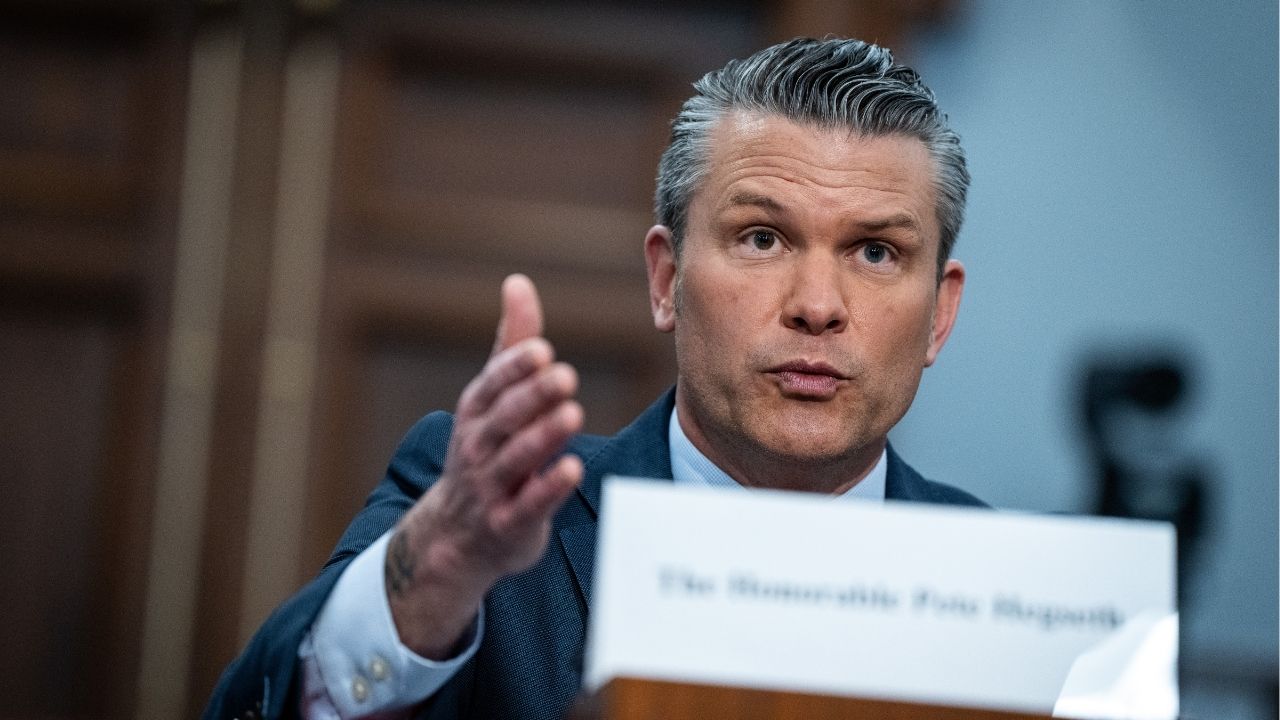
WASHINGTON — In a move that disproportionately targets women and minority officers, Defense Secretary Pete Hegseth recently blocked the promotions of at least seven Navy officers who had been selected by a board of senior Navy admirals.
The net result of Hegseth’s intervention is a slate of 22 nominees to be one-star admirals that bears little resemblance to the broader force these officers will help lead.
At least two of the officers removed by Hegseth from the promotion list are women, and two are Black men. An additional three are white men.

Hegseth’s actions, which appear to violate the rules governing a promotion system that is supposed to be apolitical and merit-based, were described by four current and former defense officials who spoke on the condition of anonymity to discuss sensitive personnel matters.
No female officers were included on the new one-star list, which was released publicly in late May, despite the fact that women make up about 21% of the active-duty Navy. The list appears to include only two nonwhite officers, even though sailors who identify as racial minorities make up about 38% of the active-duty Navy.
Hegseth’s removal of the officers from the one-star list is highly unusual, the current and former defense officials said. According to Pentagon rules, the defense secretary is only supposed to pull officers from the list for moral, mental, physical or professional failings that raise questions about the officers’ fitness to lead.
Hegseth’s actions are the latest in a series of firings and personnel interventions that seem to be driven by his anti-diversity politics rather than the officers’ performance. Taken together, they could reshape the military’s top ranks for years to come.
Sean Parnell, the Pentagon’s chief spokesperson, declined to say why Hegseth pulled the officers off the Navy one-star list. “Military promotions are given to those who have earned them,” Parnell said. “The department will never consider the color of a service member’s skin or their gender as a factor in promotions.” The Navy declined to comment.
Since taking office, Hegseth has fired or sidelined nearly three dozen senior military officers as part of a broader campaign designed to purge the Pentagon of leaders he has disparaged as “foolish,” “reckless” and “woke.” He has consistently refused to explain why he has chosen to fire officers or pull them from promotion lists.
His scrutiny has fallen heavily on female and minority officers, who have borne the brunt of the dismissals. Nearly 60% of the senior officers Hegseth has fired are female or Black, Sen. Jack Reed of Rhode Island, the top Democrat on the Armed Services Committee, said in recent Senate testimony. Women and minorities currently account for fewer than 20% of all generals and admirals.
“You are hollowing out the military’s bench of experience and highest-performing senior officers, while making young officers wonder if they should continue to serve,” Reed told Hegseth at another recent hearing.
Among those dismissed were Gen. Charles Q. Brown Jr., the second African American to serve as chair of the Joint Chiefs of Staff, and Adm. Lisa Franchetti, the first woman to lead the Navy.
Earlier this year, Hegseth also removed four colonels — two Black men and two women — from the Army’s list of nominees for one-star general over the objections of Army Secretary Daniel P. Driscoll. Driscoll insisted that the officers had a long history of exemplary service and had done nothing wrong.
Officers selected for one-star rank are picked by a board of admirals or generals who review hundreds of personnel files over the course of meetings that can span two weeks. Only about 5% of those eligible for promotion to one-star are chosen, making it the most competitive board in the U.S. military.
The lists are then reviewed by the service secretaries and the defense secretary, who under Pentagon rules may strike names in limited circumstances, such as the emergence of new information that raises questions about the officers’ qualifications for service.
The unpredictability of Hegseth’s interventions has created an atmosphere of anxiety and mistrust among the military’s top ranks, military officials said.
The lack of information has exasperated Republican and Democratic lawmakers alike. In April, Rep. Austin Scott, R-Ga., pressed Gen. Christopher C. LaNeve, the acting Army chief of staff, on whether Hegseth had pulled the names of officers from that service’s one-star list as first reported in The New York Times.
“I’m less worried about the race and the gender than if he did or he didn’t do it,” Scott said. “Did he pull four names from the list, as has been reported?”
LaNeve, who had taken over after Hegseth fired his predecessor, Gen. Randy George, said that Scott would have to ask Hegseth.
“Well, if I could get anybody over there to respond, I would,” Scott replied.
Two weeks later, when Hegseth appeared before the House Armed Services Committee, he acknowledged that he had pulled names from the Army one-star list but declined to explain the specific grounds for their removal.
“We don’t talk about that out of respect for those officers,” he said. Instead, he spoke broadly of the need to correct for years of “gender and demographic engineering” that he asserted had blunted the effectiveness of U.S. troops on the battlefield.
The officers struck from the Navy one-star list seem to have been targeted because they took part in some diversity-related event years or even decades earlier, current and former Navy officials said.
One highly respected officer whose promotion was pulled had served as a surface warfare officer, completed the Navy’s advanced nuclear power school and was selected to be a top aide to a four-star admiral in the Pentagon.
She was singled out by Hegseth shortly after her name appeared on a website that said it was working to purge “woke” military officers. The site noted that the officer had worked as a “diversity liaison officer” two decades ago, responsible for helping the Navy recruit and retain women and minorities.
Another female officer targeted by Hegseth served as a Navy pilot and foreign area officer, interacting with militaries around the world.
Before he was selected by President Donald Trump to serve in the Pentagon, Hegseth had opposed the inclusion of women in combat jobs. Since then he has moderated his position, arguing that women should be able to serve in combat roles, as they have since 2013, if they can meet the same physical standards as men.
—
This article originally appeared in The New York Times.
By Greg Jaffe and Kate Kelly/Haiyun Jiang
c. 2026 The New York Times Company