

|
Getting your Trinity Audio player ready...
|
House GOP leaders on Wednesday released a budget blueprint that would allow them to bypass Democratic opposition and provide $73 billion in additional military funding amid the war in Iran and $12 billion for farmers, as well as authorize severe voting restrictions championed by President Donald Trump.
The plan amounts to the first effort to push ahead on a Pentagon spending request the White House sent to Congress last month to pay for the conflict in the Middle East, which Democrats have roundly rejected as they condemn the president’s handling of a war he undertook without congressional authorization. It is also a long-shot bid to resurrect his stalled election bill, known as the SAVE Act, which Democrats assail as a voter suppression measure and Republicans have been unable to move through the Senate.
Traditionally, spending requests are dealt with through the bipartisan appropriations process. But in the face of intractable Democratic opposition to funding two of Trump’s key priorities — an immigration enforcement surge and the war in Iran — Republicans have again turned to a budget maneuver known as reconciliation, which shields certain fiscal bills from a filibuster, to blow past Democrats’ resistance.

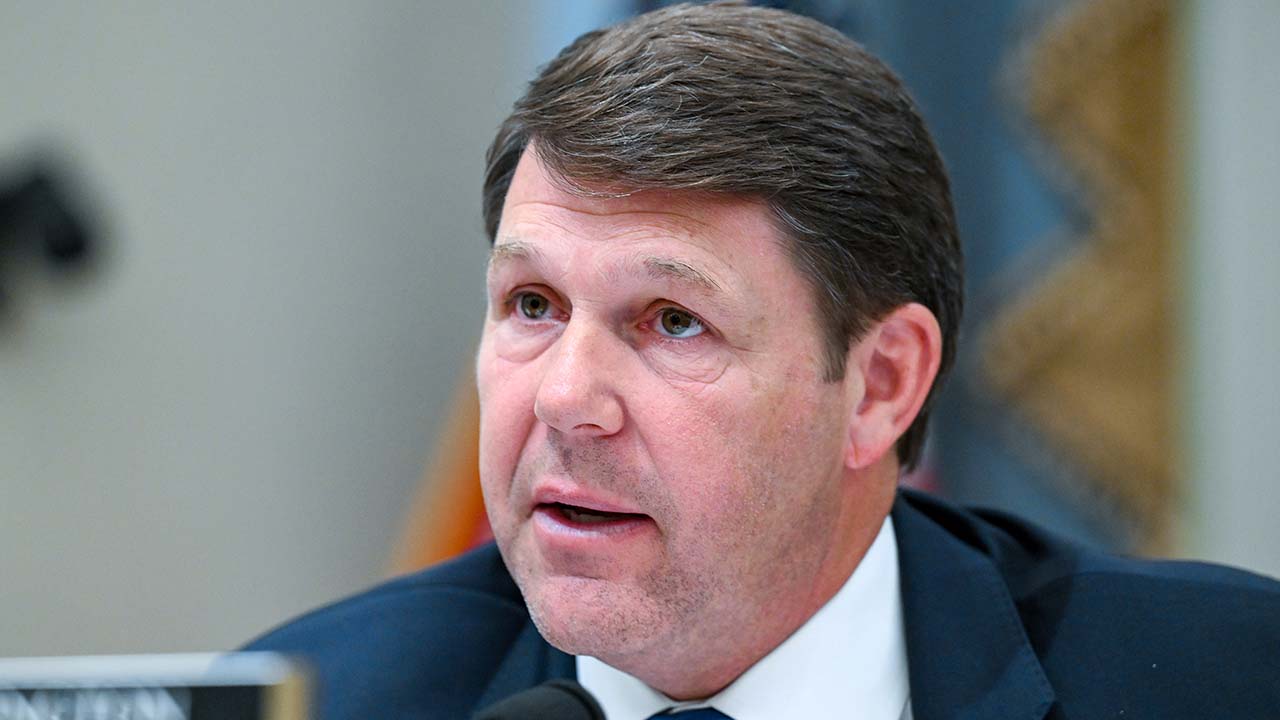
“House Republicans will unlock a third budget reconciliation to stop Democrat obstruction, support our troops and safeguard the integrity of our elections,” Rep. Jodey Arrington, R-Texas, the chair of the Budget Committee, said in a statement. His panel was set to vote on the plan Thursday.
The approach faces a rocky path amid GOP divisions and carries heavy political risks for Republicans, paving the way for votes only months before the midterm elections to pour substantial funding into a war that polls have shown is deeply unpopular.
Nor is it clear that the measure will survive the tricky reconciliation process. Trump has demanded repeatedly that Republicans pass the SAVE Act, which would require people to prove that they are U.S. citizens when they register to vote, impose new identification requirements when they vote and severely curb voting by mail. But such sweeping policy changes typically cannot be attached to reconciliation bills, whose provisions are subject to strict rules to limit them to matters that directly affect deficits.
The plan would instruct the Armed Services, Administration, Agriculture and Intelligence committees to write legislation that increases government spending by up to $95 billion in total. It did not instruct the committees to come up with corresponding cuts to offset the costs of new spending.
“This ‘America Last’ budget would add tens of billions more to the national debt to fund the most unpopular war in American history,” said Rep. Brendan Boyle of Pennsylvania, the top Democrat on the Budget Committee.
Bill Must Meet Byrd Rule
To tee up reconciliation, both the House and the Senate must pass the budget blueprint. Then the committees begin drafting the corresponding legislation, which must also be passed by the House and the Senate. For the bill to bypass the filibuster, the Senate parliamentarian must determine that its provisions adhere to the Byrd Rule, which requires that all provisions make direct changes to spending or revenue.
Those requirements have created some high hurdles for congressional Republicans’ third reconciliation bill. And even if the voting restriction measure were allowed to remain in the measure, its inclusion would most likely sap support from moderate Senate Republicans who oppose it.
A number of politically vulnerable Republicans have privately expressed misgivings about approving new spending for an unpopular war as the elections approach. And a number of hawkish Republicans have grown frustrated with what they say is a lack of information from the Pentagon about the costs of the war.
“My prediction?” Rep. Warren Davidson, R-Ohio, wrote on social media minutes after the blueprint was unveiled. “DOA.”
—
This article originally appeared in The New York Times.
By: Catie Edmondson/Kenny Holston
c.2026 The New York Times Company