
|
Getting your Trinity Audio player ready...
|
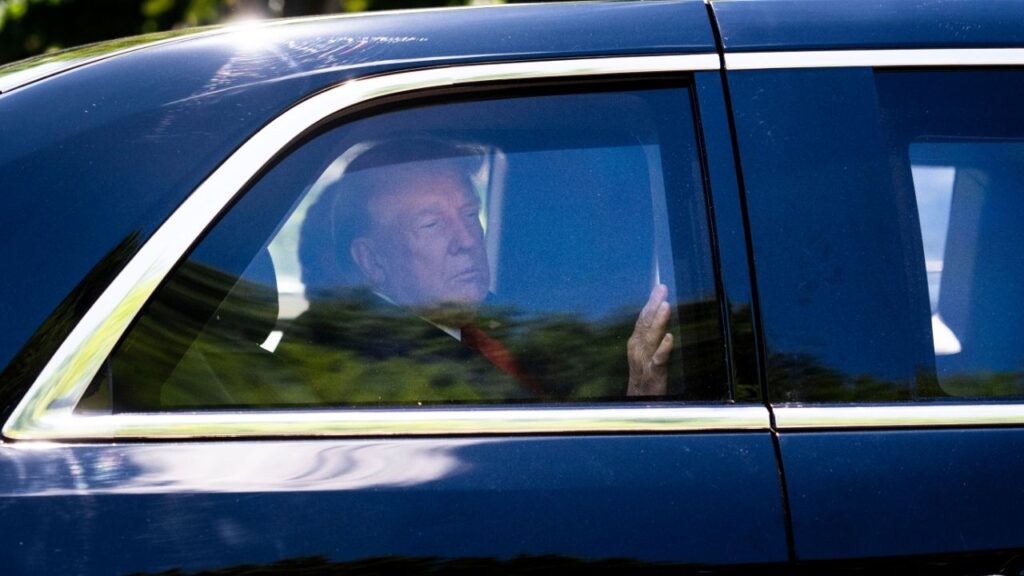
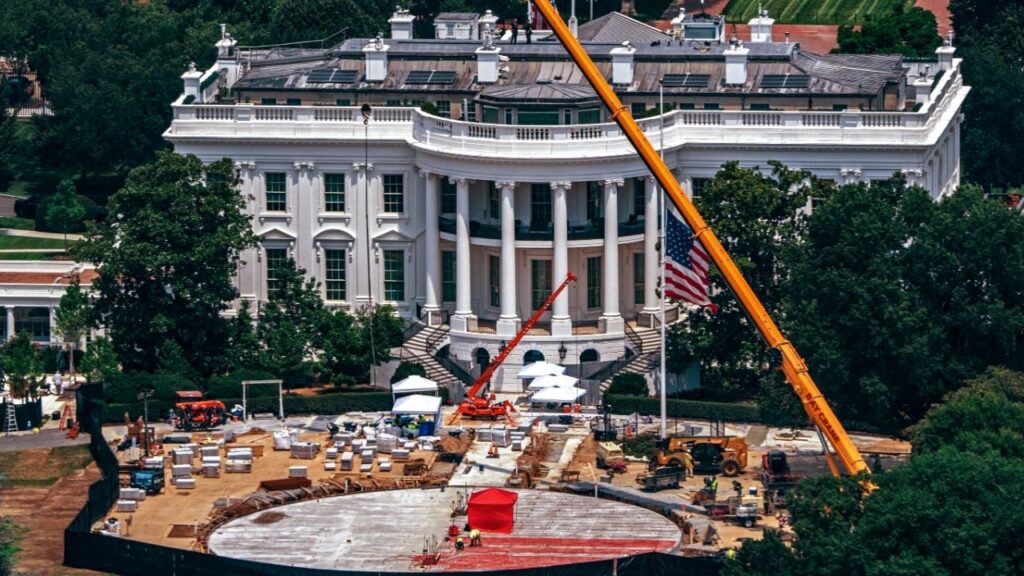
President Donald Trump, a former real estate mogul who knows a few things about construction projects, says there is “no harder zoning thing to get” than a helipad. But he is building one at the White House, and building it fast.
Such projects usually require a developer to navigate a complex web of zoning laws, airspace regulations and environmental impact studies, while negotiating with town councils and fighting off community pushback. Construction at the White House can often face additional hurdles.
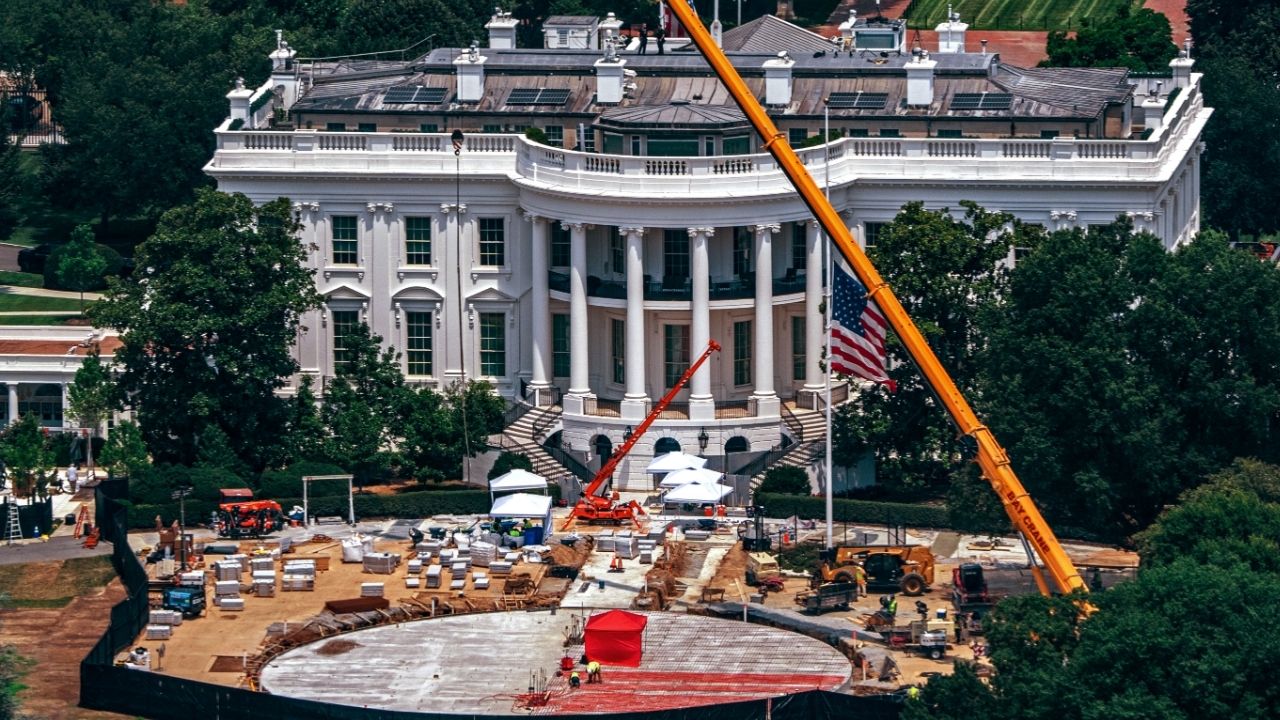
But Trump has encountered no such difficulties as he quickly proceeds with construction of a black granite helipad on the South Lawn. He has not asked Congress or any review panel, such as the Commission of Fine Arts, to approve the project.

Past presidents have involved Congress and review panels in changes to the White House grounds, though Trump has asserted that he has the right to undertake major construction projects, such as a new 90,000-square-foot ballroom, without congressional approval. That project is currently the subject of litigation.
A White House spokesperson said in an email that “operational upgrades to the White House grounds, such as the helipad installation, do not require commission reviews.”
Work on the helipad — which will be 100 feet in diameter and feature a presidential seal — started last month, shortly after a makeshift stadium built to host an Ultimate Fighting Championship fight significantly damaged the South Lawn.
UFC President Dana White said his organization had set aside $700,000 to repair the lawn after the June 14 event. But Trump instead decided to forge ahead immediately with a helipad he had long wanted.
Why Trump Is Building a White House Helipad
The helipad would allow Trump to use the latest generation of Sikorsky helicopters as Marine One on White House grounds — a move multiple administrations had avoided because the new, more powerful helicopters were likely to damage the South Lawn during landing.
The Navy began the search in 2010 for helicopters to replace the two models that have been used to transport the president and vice president for more than four decades — the VH-3D and the VH-60N. It purchased 23 VH-92A helicopters, including two test aircraft, at about $215 million apiece, with a total cost estimated at $5 billion, according to the Government Accountability Office.
The new helicopters are produced by Sikorsky, a subsidiary of Lockheed Martin, which is building the helipad as a donation. They joined the fleet between 2014 and 2021 and underwent a period of testing. The new generation of helicopters has occasionally been known to scorch the grass with engine exhaust while landing — an issue found during a training session in September 2018.
President Joe Biden was the first president to fly on a VH-92A, on his way to the Democratic National Convention in Chicago in August 2024. But no new helicopter has yet transported a president to and from the South Lawn.
Marine One landed on the South Lawn grass for decades, and portable aluminum pads were rolled out to catch the wheels.
Trump said the new helicopters were “more powerful than the old ones.”
“And when you land on the grass,” he continued, “it’s not that the grass gets discolored, it gets ripped out.”
The VH-92A has two engines with more than three times the capacity of those of the VH-3D, the current Marine One model, pushing more heat to the ground.
Lockheed Martin, a major defense contractor, is paying for the helipad project, which Trump estimated would cost $5 million to $6 million.
“They didn’t tell us how powerful these helicopters were, and they felt a little bit guilty,” Trump said.
According to a spokesperson for Lockheed Martin, the company has a “long history of supporting projects in both the Washington, D.C., area and across the country.
“This specific contribution was made to the National Park Service. Our engagement with the federal government is guided by rigorous ethics and compliance standards and conducted in full accordance with all applicable laws and regulations.”
For a Different Helipad, Reviews and Red Tape
Trump is also trying to build a helipad at his Mar-a-Lago resort in Palm Beach, Florida. But that project is moving much more slowly than the one at the White House.
The Mar-a-Lago project has been the subject of local historic preservation commission review, multiple public hearings, negotiations with town lawyers and votes by the Town Council.
Because Mar-a-Lago is a historic property, any changes there must be approved by the Palm Beach Landmarks Preservation Commission, said Joanne O’Connor, the town attorney for Palm Beach.
Trump had installed a helipad at the resort during his first administration, but it was dismantled after he left office.
The town is allowing Trump to build a new helipad at Mar-a-Lago but has placed limits on its use after his presidency. Any helicopter trips to or from Mar-a-Lago after he leaves office can be carried out only if approved by the Secret Service and in the event of an emergency, O’Connor said. The helipad cannot be used, for instance, to facilitate a golf outing.
“The concern was balancing the health, safety and welfare of the president with the interests of the town residents and the quiet enjoyment of their residential property,” O’Connor said.
No such review is taking place for the changes Trump is making at the White House.
Trump spoke recently about the difficulty most people encounter when trying to have helipads approved at their properties.
“I always was lucky, I always got helipads,” he said in remarks from the Oval Office. “Other people don’t. Very hard to get. The hardest thing to get is a helipad, OK?”
What This Means for the South Lawn
The helipad would significantly reshape the South Lawn, which has historically hosted events and ceremonies, including the annual White House Easter Egg Roll.
A White House official said that events on the South Lawn would not be affected by the new helipad and that they would continue as usual.
“It can be used for other things when helicopters aren’t landing,” Trump said this month. “You can have other things out there like events. You could have news conferences literally on it because it’s the right size. So by doing this, we solved the problem, and we’ll be able to finally retire 45-year-old helicopters.”
Previous administrations have prioritized preservation of the White House property over permanent changes to the South Lawn. During the Biden administration, building a helipad was not high on the president’s priority list, said Andrew Bates, who served as a White House spokesperson.
—
This article originally appeared in The New York Times.
By Luke Broadwater and Marco Hernandez/Salwan Georges
c. 2026 The New York Times Company