
|
Getting your Trinity Audio player ready...
|
MINNEAPOLIS — A federal investigation into Rep. Ilhan Omar’s immigration history could depend in part on proving when she was born. But irrefutable records of her birth date might be difficult or even impossible to obtain because the Minnesota Democrat spent her early years in war-torn Somalia and a Kenyan refugee camp.
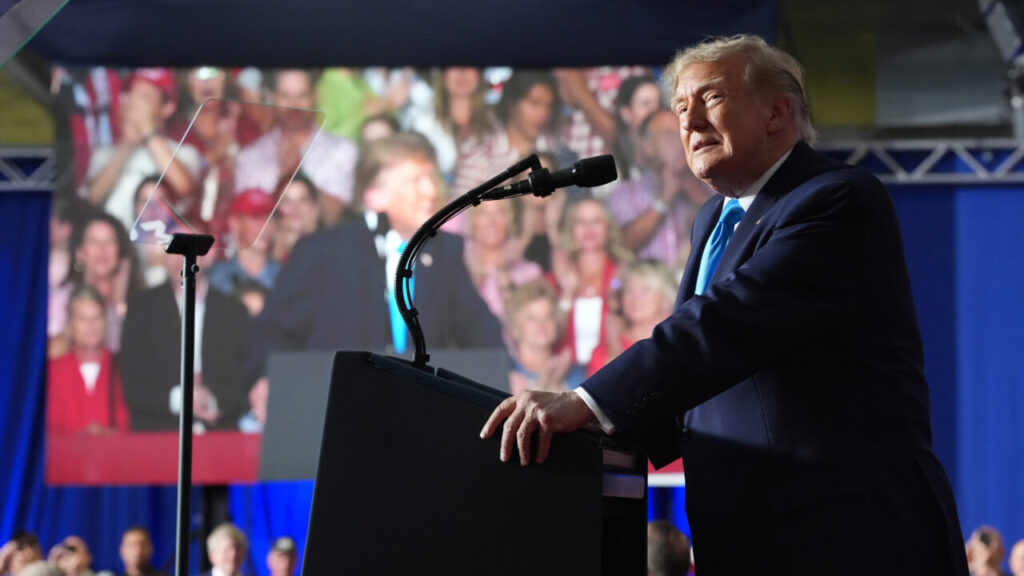
President Donald Trump and members of his administration have long asserted that Omar, a frequent critic of the president, committed immigration fraud. Last week, in an extraordinary escalation of those claims, federal agents searched her Washington-area house.
The government has not released any public documents providing insight into its evidence. But top administration officials have suggested that Omar, who came to the United States as a child more than three decades ago, could ultimately lose her citizenship.

Scrutiny of Omar’s birth date intensified after she sought years ago to have the year of her birth adjusted in some sources. She said she was correcting inaccurate listings, but critics have called the changes suspicious.
Omar has said she obtained citizenship through her late father as a minor, but if she is actually one year older than she maintains, she may have been ineligible for the citizenship.
Omar has adamantly denied having committed immigration fraud and called the investigation an abuse of power.
Here is what to know about this case:
How and When Did Omar Become a US Citizen?
Omar’s office said she was born on Oct. 4, 1982, in Mogadishu, Somalia. She fled her homeland as it descended into civil war in the early 1990s. She, her father and six siblings escaped “flying bullets overhead and starvation-level food shortages” before arriving at a refugee camp in Kenya, she wrote in a memoir.
Omar and her relatives were admitted to the United States as refugees in 1995. After initially settling in Arlington, Virginia, they moved to Minneapolis, home to the largest Somali diaspora in the United States.
Refugees can become eligible to apply for citizenship five years after their arrival. Omar has said she acquired citizenship through her father’s naturalization case in 2000, when she was 17.
This claim appears to be central to the investigation into Omar.
What Is the Government Investigating?
Weeks before the search of Omar’s home on Oct. 12, Homeland Security Secretary Markwayne Mullin told a conservative commentator that investigators examining her family immigration history had found “some illegal activity for them to come to the United States to begin with.” Mullin added, “If we can prove that you shouldn’t have been here in the first place, we’ll deport you.”
Several people familiar with the case told The New York Times that investigators were exploring whether Omar was actually 18, and not a minor, when she became a U.S. citizen. If she was an adult, she would have been ineligible for the so-called derivative citizenship.
Investigators are also looking at whether Omar’s late father lied or omitted information in immigration forms before becoming a U.S. citizen, and whether family members have since conspired to conceal information that may have jeopardized their immigration petitions, according to the people familiar with the case.
Several members of Omar’s family, including a sister, Sahra Noor, have received subpoenas directing them to appear before a federal grand jury in Minnesota. Such subpoenas allow prosecutors to question people under oath as grand jurors assess whether there is enough evidence to hand down an indictment.
How Did This Investigation Start?
Omar’s immigration history has been investigated by federal authorities for over a decade, but those inquiries have not led to charges.
The current investigation is being overseen by Justice Department leaders, who have faced extraordinary pressure from the White House to prosecute critics of Trump.
The president has long expressed disdain for Omar. On Tuesday, Trump told reporters that Omar could face deportation, calling her a “sick and very dishonest person.”
Starting last year, senior members of his administration began hinting that her immigration paperwork was being scrutinized. In March, Vice President JD Vance said he was certain that Omar had committed immigration fraud.
People familiar with the case said that this year, officials seized a phone belonging to Noor, the sister. The phone contained family text messages about immigration matters, according to the people familiar with the case.
How Can Someone Get US Citizenship Through a Parent?
Immigrants approved for naturalization can automatically extend their newly acquired citizenship to children under 18. To qualify for this type of citizenship, minors must be permanent residents living in the United States in the legal custody of the naturalizing parent.
Minors eligible for derivative citizenship are issued a certificate of citizenship, which can be used to get a passport. Those who are 18 or older do not qualify for this type of bundled citizenship and must file stand-alone applications.
Why Is There Confusion About How Old Omar Was When She Became a Citizen?
Omar’s office says she was born in 1982. But in the past, her birth year was listed as 1981 in some sources, including the reference library of the Minnesota Legislature, where Omar served as a state lawmaker for two years starting in 2017.
Her birth year was updated at the request of Omar’s congressional staff in 2019, David Schmidtke, the deputy director of the Minnesota legislative library, said in an email. “We do not have supporting documentation, as the information was self-reported,” he said.
Omar does not have a birth certificate or a similar vital record that would conclusively show when she was born, according to Jackie Rogers, her spokesperson. Rogers called the 1981 birth date references clerical errors.
Why Doesn’t Omar Have a Birth Certificate?
Somalis who fled their country’s civil war often arrived in refugee camps without birth certificates or other vital records, said Muna Saleh, a professor at Ohio State University who studies Somali resettlement in the United States. Many older immigrants and people from rural areas never had birth records to begin with, she said. Several buildings that contained vital records were destroyed during the war.
Many refugees who came to the United States had only a travel document issued by the United Nations refugee agency. Because many did not know their birth date, U.N. personnel often listed it as Jan. 1 by default.
For many refugees, U.N. travel documents became the underlying source for identity documents issued at various stages of the immigration process in the United States, said Saleh, who called the investigation into Omar’s immigration highly unusual.
“We don’t see cases where decades later the government invests so many resources to pick apart the story of a person’s journey to the United States,” she said.
How Could the Government Revoke Omar’s Citizenship?
A Supreme Court case from the 1960s established that, with narrow exceptions, the government can only revoke a person’s citizenship if it was obtained through fraud or despite omission of key facts.
If the government concludes Omar was ineligible to become a citizen in 2000, it would have a few options, according to immigration lawyers.
Officials could pursue a denaturalization case in federal court, where a judge would decide whether the evidence warrants revoking her citizenship. Alternatively, the government could nullify Omar’s certificate of citizenship and passport, a move Omar could challenge in court. The government could also place Omar in deportation proceedings in immigration court, where she could assert that she is a citizen.
What Are Some Unanswered Questions About the Investigation?
In a court filing this week, federal prosecutors referred to Omar by a different name, Ilhan Nur Said Elmi, and suggested the one she uses is an alias. The government has not explained its basis for doing that.
People familiar with the investigation have said it involved a possible conspiracy, but it’s not clear how many people are under criminal investigation or what charges they could face.
The warrant used to search Omar’s home was supported by an affidavit by a federal agent laying out why the government believed searching her home could yield evidence of a crime. News organizations have asked a judge to make that document public. Unless it is unsealed or unless charges are filed, the public may not get a detailed understanding of the scope and nature of the investigation.
—
This article originally appeared in The New York Times.
By Ernesto Londoño/Eric Lee
c. 2026 The New York Times Company