
|
Getting your Trinity Audio player ready...
|
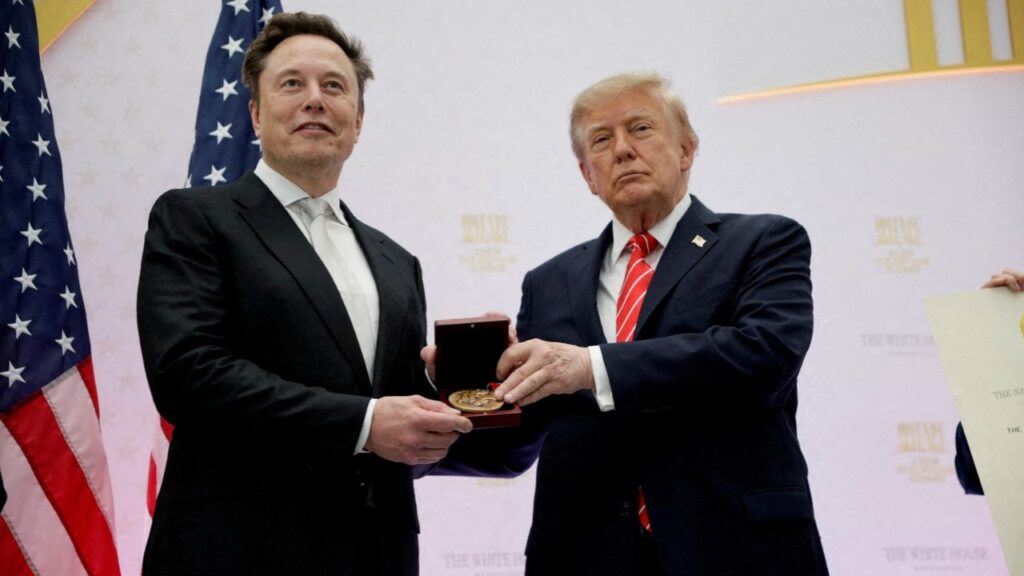
Elon Musk is pouring astounding sums into supporting Republican candidates in the midterm elections. How can it be that the richest man in the world can lawfully deploy hundreds of millions of dollars to try to install his favored politicians?
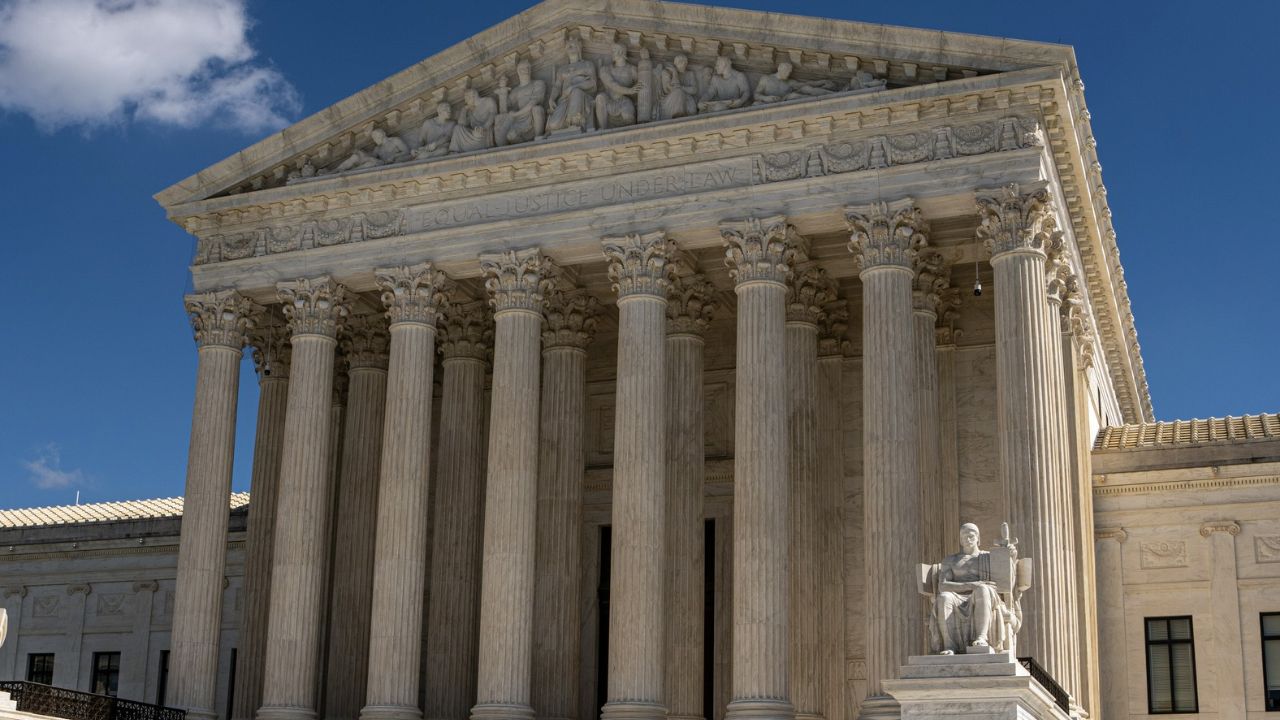
The glib answer is that everything changed in 2010, when the Supreme Court ruled in the Citizens United case that corporations and unions have a First Amendment right to spend unlimited amounts in candidate elections.
But there are many misconceptions about Citizens United. A clear-eyed look at the decision undermines the conventional view that it single-handedly opened the floodgates of dark money in American politics.

It did not, for instance, establish the principle that corporations have First Amendment rights.
As Justice John Paul Stevens acknowledged in his dissent, the court had long recognized that “corporations are covered by the First Amendment.” Justice Anthony Kennedy, writing for the majority, listed more than 20 precedents to that effect.
Nor is Citizens United responsible for the rise in dark money in elections. Indeed, the court upheld the disclosure requirements in the case by an 8-1 vote even as it voted 5-4 to strike down limits on corporate spending.
Citizens United was also but a chapter in a long saga. The decision that allowed individuals to spend without limit, Buckley v. Valeo, was decided half a century ago, in 1976.
Still, a new study in The Yale Law Journal Forum demonstrates that Citizens United marked a turning point — as a galvanizing symbol that seems to have affected judicial behavior in ways untethered to its actual holding.
“A lot of the complaints people have about the role of money in politics can’t neatly be traced to Citizens United itself,” said Duncan Hosie, the director of the Stanford Constitutional Law Center and the author of the study. But, he added, the decision was a potent shorthand for the Supreme Court’s campaign finance jurisprudence and the increasing influence of money on the political system, one that amped up partisan polarization among lower court judges.
The study examined about 800 First Amendment challenges to campaign finance regulations in the two decades after Chief Justice John Roberts joined the Supreme Court in 2005.
The rate at which Republican appointees upheld such regulations remained constant, around 40%. But Democratic appointees’ behavior changed after Citizens United. The rate at which they upheld campaign finance regulations increased to 73% from 64%.
In this area and many others, ideology matters more as you move up the judicial ladder. There was a 15-percentage-point gap between Republican and Democratic appointees at the trial court level. It grew to 33 points in the appeals courts and to 81 points in the Supreme Court.
There was another kind of gap, too, one between appointees of different presidents. Fifty-two percentage points separated President Donald Trump’s appointees, who upheld just 27% of regulations, and those of President Bill Clinton, who upheld 79% of them.
Before Citizens United, the politics of regulating the role of money in politics was more complicated. The formal name of the challenged law, after all, was the Bipartisan Campaign Reform Act of 2002. It was more commonly called the McCain-Feingold Act, co-sponsored by Sen. John McCain, R-Ariz., and Sen. Russ Feingold, D-Wis.
People forget the details of the dispute. It involved a polemical documentary called “Hillary: The Movie,” a relentlessly negative look at Hillary Clinton’s career and character as she sought the Democratic nomination in 2008.
The documentary was made by a conservative advocacy group called Citizens United, which lost a lawsuit against the Federal Election Commission seeking permission to distribute it on a video-on-demand service. The McCain-Feingold law banned “electioneering communications” paid for by corporations within 30 days of a primary or 60 days of a general election.
The case divided some usual allies. Most liberal groups supported the law, while the American Civil Liberties Union backed Citizens United. That position was not popular with many ACLU members.
The group explained its stance in a 2012 statement.
“Our system of free expression,” the statement said, “is built on the premise that the people get to decide what speech they want to hear; it is not the role of the government to make that decision for them.”
A brief supporting Citizens United by the Reporters Committee for Freedom of the Press said the McCain-Feingold law, which exempted news reports, commentaries and editorials, nonetheless posed unacceptable dangers.
“By criminalizing the distribution of a long-form documentary film as if it were nothing more than a very long advertisement,” the brief said, a lower court’s ruling “created uncertainty about where the line between traditional news commentary and felonious advocacy lies.”
The court had plenty of off-ramps. It could have focused, as the Reporters Committee suggested, on the differences between TV ads and documentaries. It could have distinguished between messages that you have to seek out and ones that arrive uninvited. It could have drawn a line between small advocacy groups and major public corporations.
The court instead went big, unleashing corporate and labor spending. That said, rich people like Musk were already free to spend unlimited sums under Buckley v. Valeo, which struck down limits on political spending by individuals in a 1971 law that was substantially amended in 1974 in the wake of Watergate.
A 2010 federal appeals court decision issued after Citizens United and said to flow from it made it easier for people like Musk to spend money through super political action committees. But Citizens United by itself, Hosie said, “is not the root cause of his ability to use his fortune to influence political outcomes.”
—
This article originally appeared in The New York Times.
By Adam Liptak/Alex Kent
c. 2026 The New York Times Company