



|
Getting your Trinity Audio player ready...
|
Over decades, Saudi Arabia has invested hundreds of billions of dollars in building an advanced military, putting the kingdom among the top 10 nations in terms of arms spending.
Still, the country has stumbled in response to deadly attacks by the Iran-backed Houthi militia, with the fighting in recent months reigniting a war that the kingdom began in 2015.
The problem in part is that Saudi Arabia invested heavily in weapons having what some military analysts call a “glitter factor” — things like high-tech fighter jets and the latest missile interceptors. But the Houthi guerrillas often deploy cheap drones or low-flying cruise missiles that Saudi forces struggle to detect.

In addition, Saudi defenses were built assuming that the biggest threat would come from the east or northeast, from Iran or Iraq, not from Yemen to the southwest. So the country was left somewhat exposed, analysts said.
Finally, the kingdom only recently started to address long-standing systemic problems. To inoculate the Saud dynasty against the military coups that plagued most Arab states, the military was built as two competing branches. Each suffers from highly centralized decision-making which limits flexibility, analysts said.
“It’s a hugely rattling moment for Riyadh, humiliating on a number of fronts,” said Burcu Ozcelik, an expert on Middle East security issues at the Royal United Services Institute, a defense research organization in London.
“There has been a very substantial, long-standing investment in building up hard military capabilities,” she added. “But the issue is preparedness. How ready were the Saudis for this kind of lightning-speed offensive, as it is being called by the Houthis?”
Houthis Launch Repeated Attacks
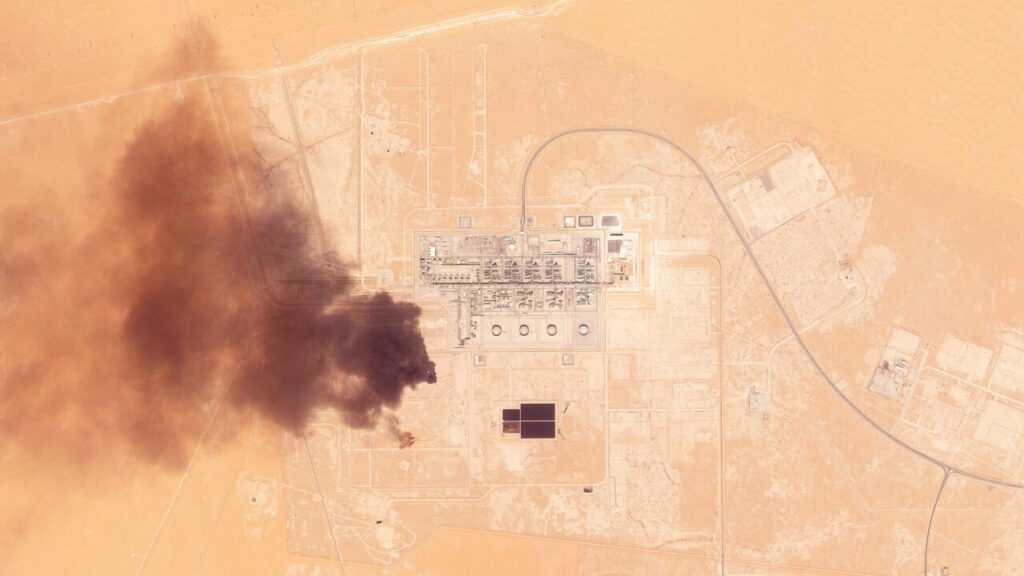
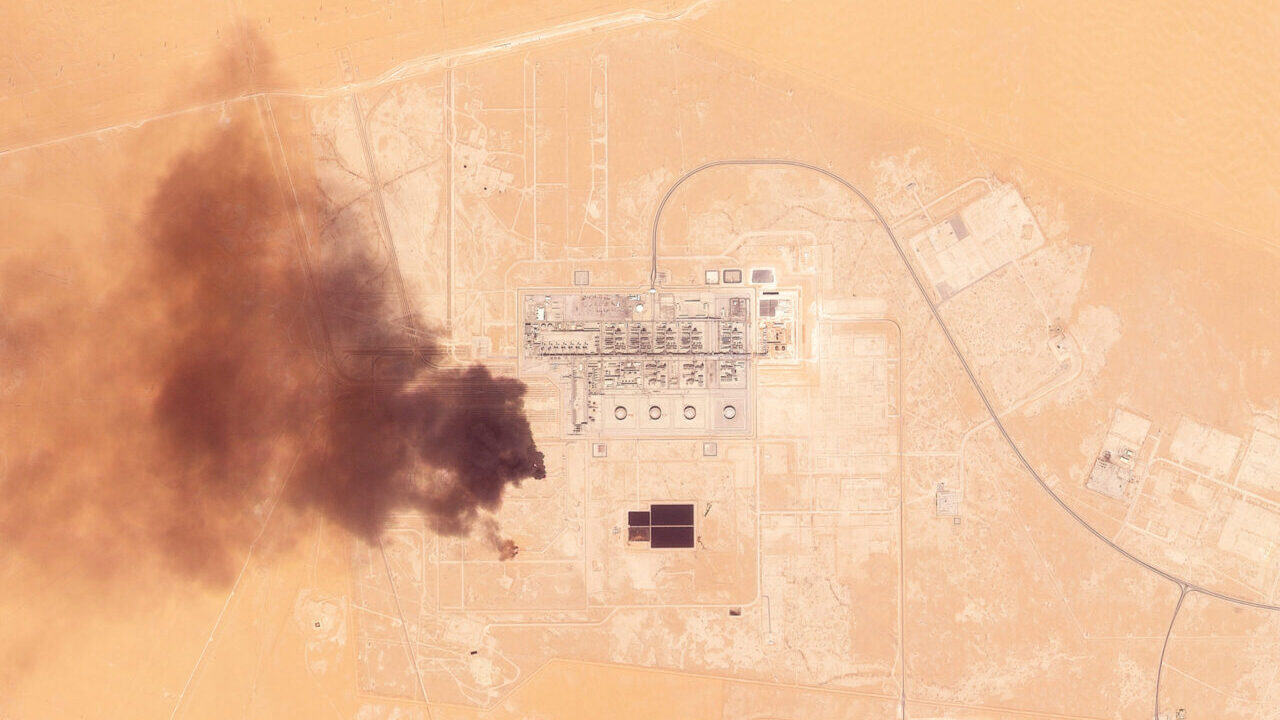
For days, the Houthis have launched repeated attacks on infrastructure, energy and military targets deep within Saudi Arabia. This week, they struck the Saudi energy giant Aramco, setting a building on fire in Dhahran in the east of the country. On Thursday, Saudi authorities said a drone was intercepted and destroyed in the eastern province, as well as a cruise missile in the Medina region, though the Houthis denied targeting Medina.
On Saturday, a cruise missile struck a domestic airport terminal in Riyadh, the capital, killing at least 13 people and wounding more than 300 others. It was the worst attack on the kingdom in over a decade.
The military spokesperson for the Houthis issued a statement on social media Sunday detailing multiple sites targeted by drones and missiles.
“The Yemeni armed forces will continue their operations in an escalating manner toward the Saudi interior,” the Houthi spokesperson, Yahya Saree, said, adding that the strikes would continue until the kingdom stopped attacking Yemen. Houthi forces are also blocking Saudi oil shipments to Asia through the Bab el-Mandeb Strait between Yemen and Africa.
Saudi Arabia vowed retaliation. “The events of recent weeks are serious,” Prince Abdulaziz bin Salman, the energy minister, said at an international conference in Riyadh soon after the attack on the airport. “Our response must be equally serious.”
Crown Prince Started the War With Houthis
In 2015, Prince Mohammed bin Salman of Saudi Arabia, then defense minister, ignited the war against the Houthis, a Shiite Muslim millenarian sect seeking to unseat the Yemeni government. Routing them would take weeks, said Prince Mohammed, who became crown prince in 2017 and is now Saudi Arabia’s de facto ruler.
Instead the war became a quagmire. The United Nations brokered a ceasefire in 2022, but the conflict flared anew amid tensions over the United States and Israel attacking Iran.
Given that the Houthis fired hundreds of missiles at Saudi Arabia during the initial war starting in 2015, the Royal Saudi Air Defense Force, the separate military wing that protects Saudi airspace, gained unique experience firing Patriot missiles, said David Des Roches, a professor and former Pentagon policy director for the Persian Gulf.
Patriots are expensive, mobile, surface-to-air defense systems sold by the United States and consisting of advanced radar and interceptor missiles.
Trying to Swat a Mosquito With a Hammer
Since 2020, Washington has sold Saudi Arabia at least 730 Patriot interceptors, according to figures from the U.S. State Department.
But Patriot missiles are designed to knock down ballistic missiles, which follow a high, fixed trajectory that can be tracked. THAAD interceptors, which Saudi Arabia has also purchased from the United States, are meant to hit missiles flying even higher.
So the fight against the Houthis is asymmetrical. Using a Patriot missile bought for over $3 million to shoot down a drone costing $15,000 to $25,000 is akin to trying to swat a mosquito with a hammer, analysts said.
Also, because of the wars in Ukraine and the Middle East, there is an interceptor supply shortage worldwide.
Since the Houthis began fighting, their arsenal has become more robust, with the militia now manufacturing some weapons and diversifying supplies away from Iran’s Revolutionary Guard, according to a U.N. Security Council report.
Radar is also a key issue for Saudi Arabia. Drones and cruise missiles that the Houthis use — with a lighter payload still capable of decimating civilian targets — fly at low altitudes and can change direction. “It can be tough to find them at long range if you don’t have radar coverage,” said Kenneth M. Pollack, author of “Armies of Sand,” a book about Arab military effectiveness.
Kingdom Difficult to Defend Because of Its Size
Saudi Arabia is immense and hard to protect. Since the kingdom has long feared attacks against the Eastern Province, the heart of its oil resources along the Persian Gulf, it has concentrated there the most sophisticated air defenses, including layers of radar installations and missile interceptors, analysts said.
Complex radar installations are not mobile, and although some face Yemen, they are ground-based. Their lack of reach over the horizon means they often do not detect projectiles zipping low through Yemen’s mountainous terrain until they are already over Saudi Arabia, leading to erratic warnings to civilians. The kingdom requires more airborne radar to identify them earlier.
Although jet fighters are designed to confront other jet fighters, they can be used against drones and missiles. But they need to be alerted to their trajectory, analysts said. (Ukraine uses acoustic sensors to help detect drones.) Saudi Arabia has several hundred fighter jets — mostly F-15s from the United States plus Eurofighter Typhoons.
In April 2024, when Iran launched more than 300 projectiles at once against Israel, Israel and the United States, along with Britain, France and Jordan, intercepted most of them. Wide, overlapping radar coverage pinpointed the projectiles, with fighter jets shooting down the smaller threats including drones while Israel’s ground-based interceptors handled missiles at higher altitudes. Even so, not everything was intercepted.
Saudi Military Structure Hurts Its Performance
Aside from drone warfare, the Saudi military has been grappling with structural problems.
Its current annual military budget is more than $82 billion, according to the independent Stockholm International Peace Research Institute, but the force remains divided into two silos. The regular military has around 250,000 troops, while the Saudi Arabian National Guard includes about 125,000. The national guard has long recruited from tribes loyal to the Saud dynasty, and trains against possible domestic insurgency.
Princes dominate both forces, analysts said, and the rigid, top-down command structure thwarts initiative in the field.
With President Donald Trump denying Riyadh’s recent requests for help, Saudi Arabia invoked a mutual defense pact that it signed with Pakistan and Turkey in August. Those countries are expected to aid matters like intelligence and communications, analysts said.
A renewed air campaign alone would probably be insufficient to defeat the Houthis. “There is nothing really that the Saudis did not already try,” said Jean-Loup Samaan, a Middle East expert at the National University of Singapore. Mainly, there is no viable alternative to the Houthis inside Yemen, he added.
A negotiated political solution anytime soon seems unlikely. Amid a war against Iran inaugurated by Trump, the Iranians want the Houthis to ratchet up the cost of the conflict for both the United States and Saudi Arabia, a crucial U.S. ally. The Houthis, who seek more power, are emerging as the strongest force in the region among the Iranian proxies, which Tehran calls the “Axis of Resistance.”
The United States fought the Houthis to a standstill for four months in 2025, and Trump has shown little appetite to resume. Still, the Houthis represent a strategic dilemma.
“Saudi Arabia’s increasingly difficult position cannot simply be ignored,” Danny Citrinowicz, an Israeli military analyst, wrote on social media. “Riyadh is a critical American partner, and a Houthi victory, or a political settlement imposed on Saudi Arabia under military pressure and largely on Houthi terms, would represent an enormous strategic achievement for Iran and the broader Axis of Resistance.”
—
This article originally appeared in The New York Times.
By Neil MacFarquhar
c.2026 The New York Times Company