
|
Getting your Trinity Audio player ready...
|
KYIV, Ukraine — Ukraine’s popular former defense minister has called for wartime elections in Ukraine, setting up a potential confrontation with President Volodymyr Zelenskyy, the man who fired him last month.
After Russia invaded in February 2022, elections in Ukraine were suspended under martial law. Opposing political parties and some Ukrainians have grumbled about Zelenskyy’s hold on power, which has extended for more than seven years, but rallied behind him because of the war.
The first major crack in that largely unified front appeared Tuesday evening, when the former defense minister, Mykhailo Fedorov, whose firing prompted sustained protests against Zelenskyy, posted a nine-minute video on social media. In it, Fedorov argued that Ukraine was facing a systemic crisis of governance.

Ukrainians, Fedorov said, need to be able to exercise their democratic rights despite the war with Russia. He did not directly put himself forward as a candidate to succeed Zelenskyy. But the video of Fedorov, dressed in a black military-style shirt, dramatically spotlighted at a wooden desk, had the feel of a campaign declaration.
“Can Russia effectively be given the right to dictate when Ukrainians can choose their government again?” Fedorov said. “I am convinced that the answer is no. Democracy cannot be held hostage by Russia. We are fighting precisely because we want to remain a free European state.”
Zelenskyy, a onetime comic actor who rose to prominence playing an accidental president of Ukraine who fought corruption and government waste, was elected in the spring of 2019.
He and other Ukrainian leaders have argued that it is impossible to hold safe and fair wartime elections. The law could be changed to allow elections before the war ends, but it is unclear how voting would be conducted for soldiers, for Ukrainians who fled to other countries and for those who are in front-line cities under constant Russian bombardment.
President Vladimir Putin of Russia has seized on the lack of elections to call Zelenskyy an illegitimate president, even as Russia itself remains far from a democratic paragon.
President Donald Trump and his inner circle have occasionally echoed the Russian talking point. In December, Trump said it was time for presidential elections in Ukraine. In response, Zelenskyy said he was ready.
Despite rumors of elections this year, nothing has materialized. Any pressure from the Trump administration has dwindled as Washington has become consumed by the war against Iran.
Zelenskyy has been free to politically neutralize any potential challengers. The popular leader of the Ukrainian army during the first two years of the war, Gen. Valery Zaluzhny, was practically banished, becoming the Ukrainian ambassador to Britain. The popular leader of military intelligence, Kyrylo Budanov, was named Zelenskyy’s chief of staff.
Fedorov is different. He has not been afraid to criticize Zelenskyy publicly after his removal last month.
At 35, Fedorov is the face of a younger, tech-savvy generation. As minister of digital transformation, he tried to make it easier for soldiers to purchase the drones they needed and to adapt military strategies based on the troves of data produced in the war.
In January, Fedorov was named defense minister. Under his leadership, the ministry intensified a push for machine-led warfare and for an approach to war that relied more on data and statistics. In the first months of the year, Ukraine’s military started to fare better than it had in years.
Even as Fedorov’s popularity soared, he clashed with the military’s occasionally sclerotic old guard, including the army’s top commander, Gen. Oleksandr Syrskyi. Fedorov also drew intense pushback from Ukraine’s entrenched defense contractors, he has said, as he tried to revamp procurement and to combat corruption.
Zelenskyy, continuing a pattern of sidelining anyone who becomes too politically popular, fired Fedorov on July 15.
Daily protests against Zelenskyy then began, calling for Fedorov’s reinstatement and for the firing of Syrskyi. Unlike other potential rivals who have lost their positions but stayed in the Zelenskyy fold, Fedorov refused any other job offer. The only position he would accept, he said, was defense minister.
Zelenskyy eventually replaced Syrskyi but seemingly weathered the crisis. Parliament was on recess. The protests grew smaller.
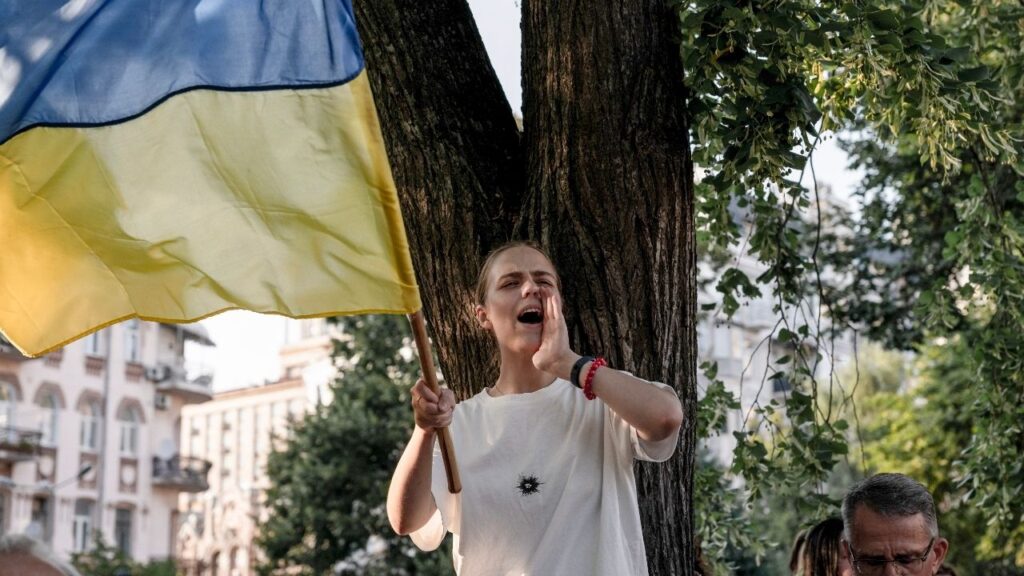
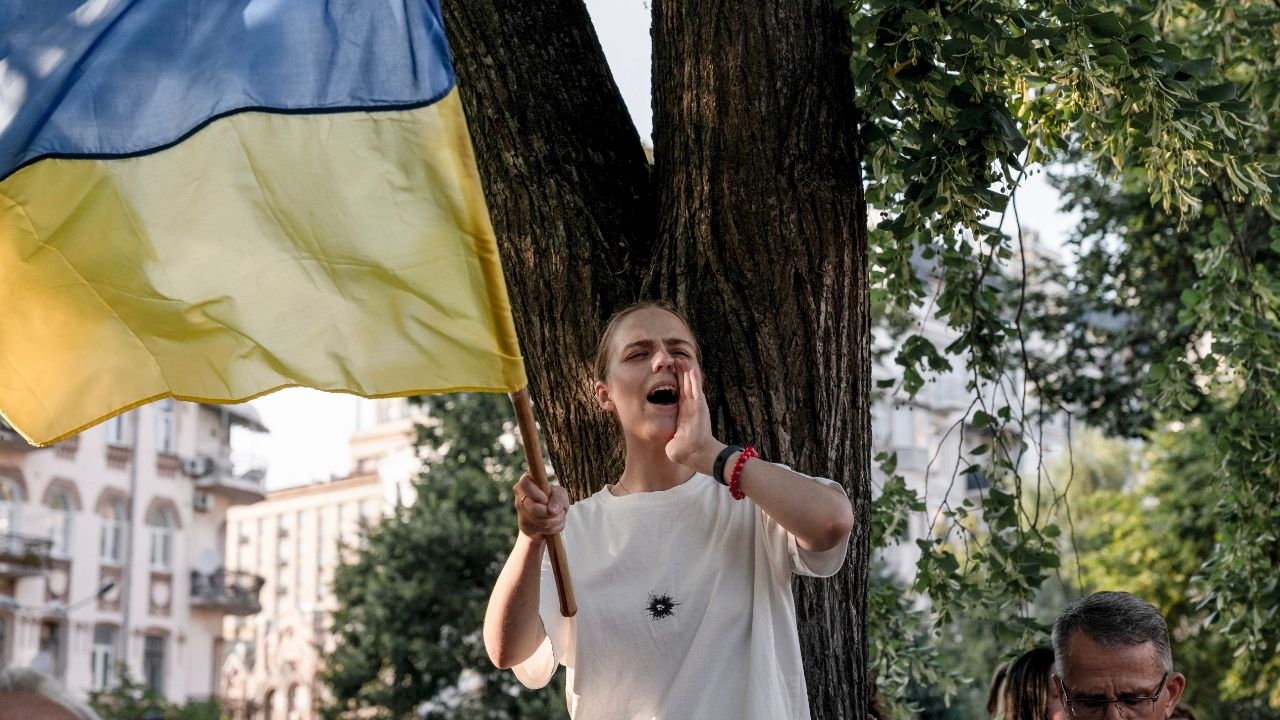
Still, Sunday evening, before the Ukrainian parliament was to return and one month after Fedorov’s ouster, thousands attended a demonstration. They sang Ukrainian songs and shouted slogans including, “The people are the power,” “Corruption kills” and, simply, “Fedorov.”
On Tuesday evening, Zelenskyy submitted a proposal to parliament to appoint Yevhenii Khmara, who had run the domestic intelligence agency, as the new defense minister. Fedorov then posted his video.
Parliament on Wednesday voted overwhelmingly to confirm Khmara. Because the Ukrainian defense minister is supposed to be a civilian, Khmara resigned from the military. Outside parliament, Fedorov’s backers protested the vote.
Hours before the vote, anti-corruption agencies announced an investigation into a group of lawmakers and “high-ranking officials” from Zelenskyy’s office, the latest accusation of graft against his inner circle.
—
This article originally appeared in The New York Times.
By Kim Barker/Jedrze Nowicki
c. 2026 The New York Times Company