
|
Getting your Trinity Audio player ready...
|
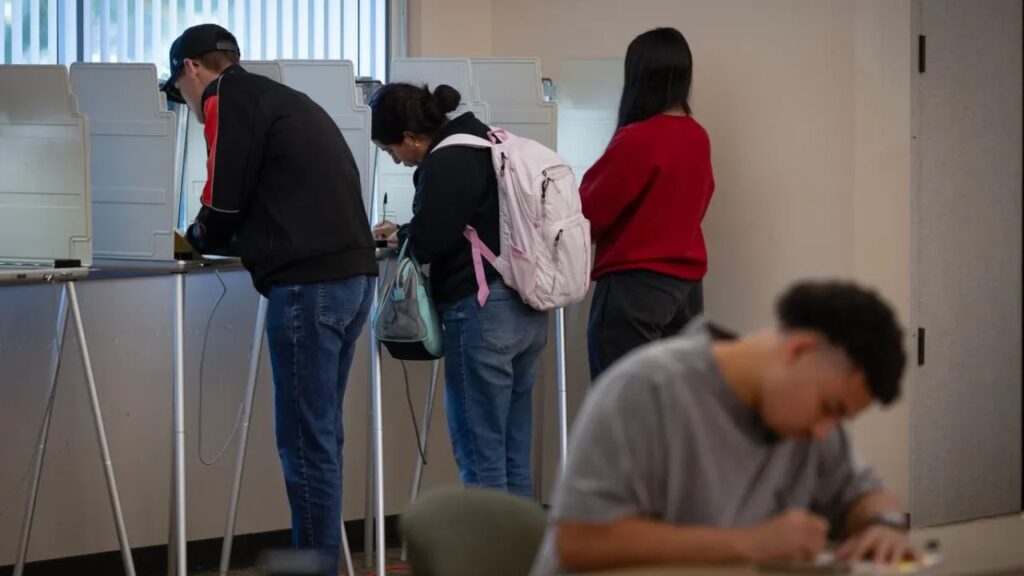
Democratic Party leaders are breathing a sigh of relief after voters rejected Proposition 39, a GOP-backed voter ID measure that drew interest — and millions of dollars — from Republican megadonors across the country.
About 60% of voters rebuffed the measure, which Democratic leaders opposed in unison and heavily campaigned against, arguing it would amount to voter suppression. Republican Party leaders and other supporters of the initiative characterized Prop. 39 as a common-sense idea that has precedence in more than two dozen states.
CalMatters
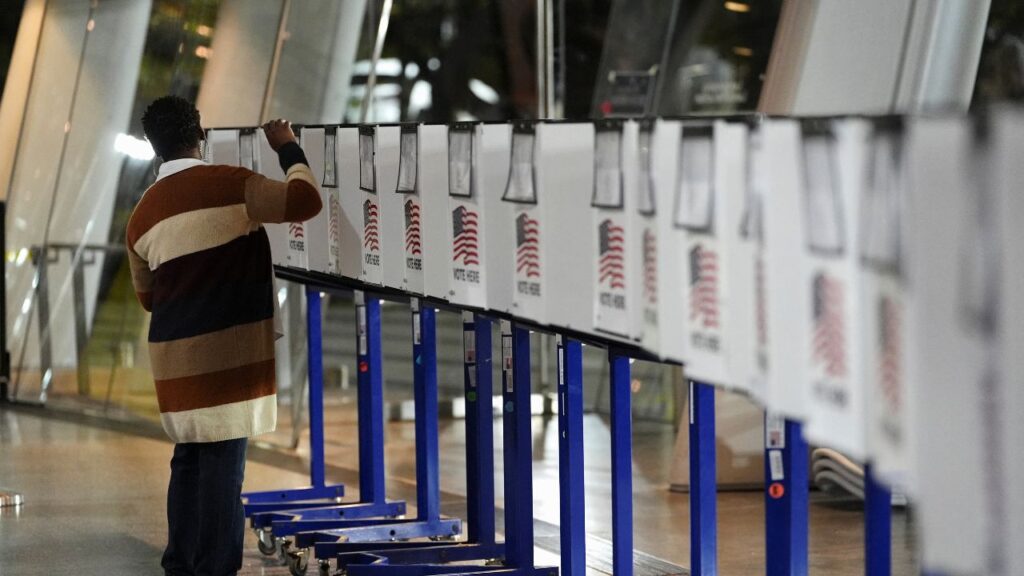
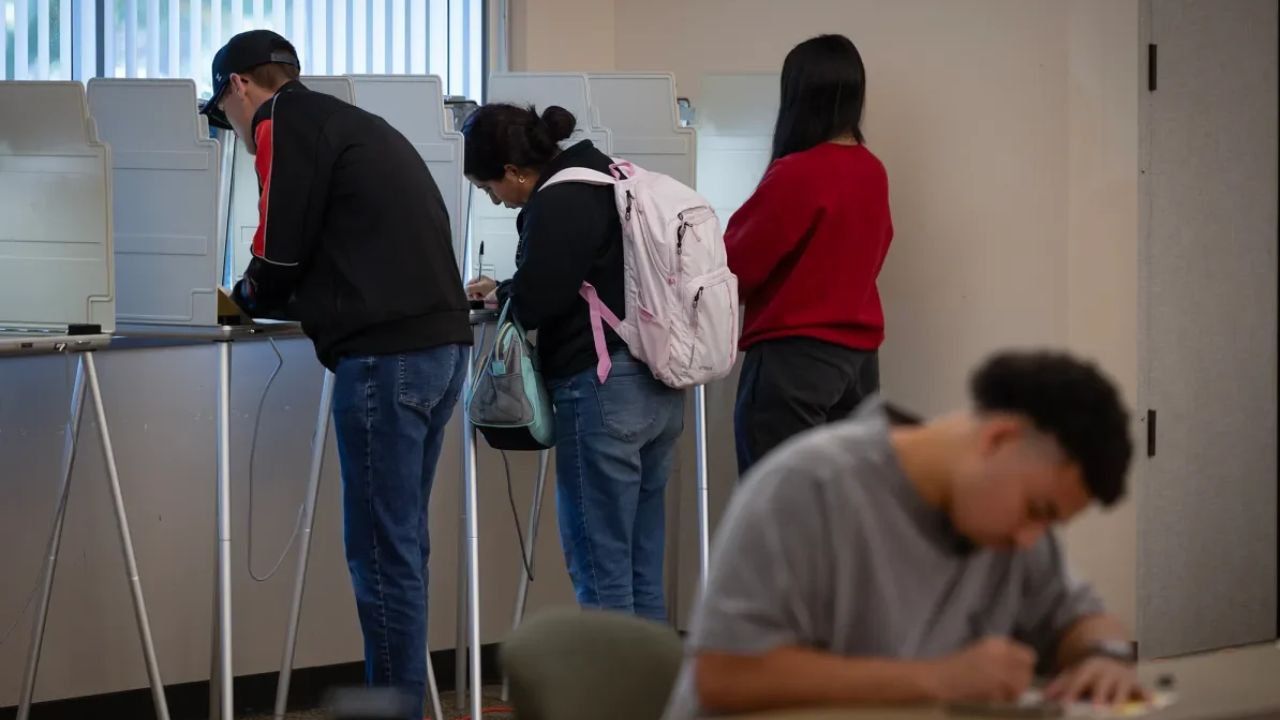
The measure would have required voters to show a government ID at polling places or write the last four digits of a Social Security or other government-issued number on mail ballots. Illinois billionaire Richard Uihlein, the campaign’s biggest donor, helped proponents amass $37 million in support from Republicans nationwide.

“It was an absolutely unnecessary ballot measure,” said David Trujillo, executive director of American Civil Liberties Union California Action Tuesday night. “ACalifornia voters saw it for what it was, which was an attempt to disenfranchise voters in this state.”
The GOP headwinds nationwide appeared to trickle down-ballot in California, spelling bad news for the Republican-endorsed measure as returns quickly showed overwhelming opposition.
Yes campaign spokesperson Meredith Shields did not immediately return a phone call, voice mail and text message seeking comment Tuesday night.
There is widespread consensus among experts that voter fraud is rare in California, and election officials, including Secretary of State Shirley Weber, have said such claims are unfounded.
Backers said that requiring voter ID would be a small yet meaningful step to help deter voter fraud and guarantee California’s elections are secure, as 36 other states already do. Republican San Diego Assemblymember Carl DeMaio put the measure on the ballot in tandem with his right-wing political group Reform California after similar previous failed attempts in the state Legislature. He and others emphasized national polling that shows bipartisan support for voter ID requirements.
Top Republicans Backed the Measure
The California Republican Party and Howard Jarvis Taxpayers Association were among the major backers of the measure, which drew $17 million in funding from packaging magnate Uihlein and $8 million from Airbnb co-founder and White House official Joe Gebbia.
Southern California businessman Steven Bray and Reform California each contributed more than $3 million.
Prop. 39 detractors argue that showing voter ID is a needless hurdle that would prevent eligible voters from casting ballots. Critics included a coalition of civil rights, voting and good governance groups who say ID requirements are unnecessary because noncitizen voting and impersonation is rare. People who recently moved or changed their last name might not yet have an updated ID and would be unfairly kept from voting, groups such as Common Cause and the American Civil Liberties Union claim.
Opponents noted it could cost tens of millions to the low hundreds of millions of dollars to implement, according to the nonpartisan Legislative Analyst’s Office.
U.S. Gov. Gavin Newsom and Sen. Adam Schiff stumped were among the public faces to the opposition, along with Gov.-elect Xavier Becerra, who created a committee with Assembly Speaker Robert Rivas to raise money to oppose it.
The Democratic Party contributed nearly $6.5 million of the opposition’s $35 million total raised. California labor and tribal groups also gave more than $2 million each. Philanthropists Quinn Delaney and Patty Quillin combined gave $3 million.
This article was originally published on CalMatters and was republished under the Creative Commons Attribution-NonCommercial-NoDerivatives license.