



|
Getting your Trinity Audio player ready...
|
I have supported California high speed rail for years because I want Merced families to have better access to jobs, education and investment. Our support should not become an obligation to surrender local tax revenue or cover the costs a state project creates in our community.

By Robert Dylina
Opinion
Gov. Gavin Newsom described that promise in 2019. He said the Valley had suffered “too many years of neglect” and that communities including Merced deserved a “fair share of our state’s prosperity.”
That promise should guide the decisions being made now.

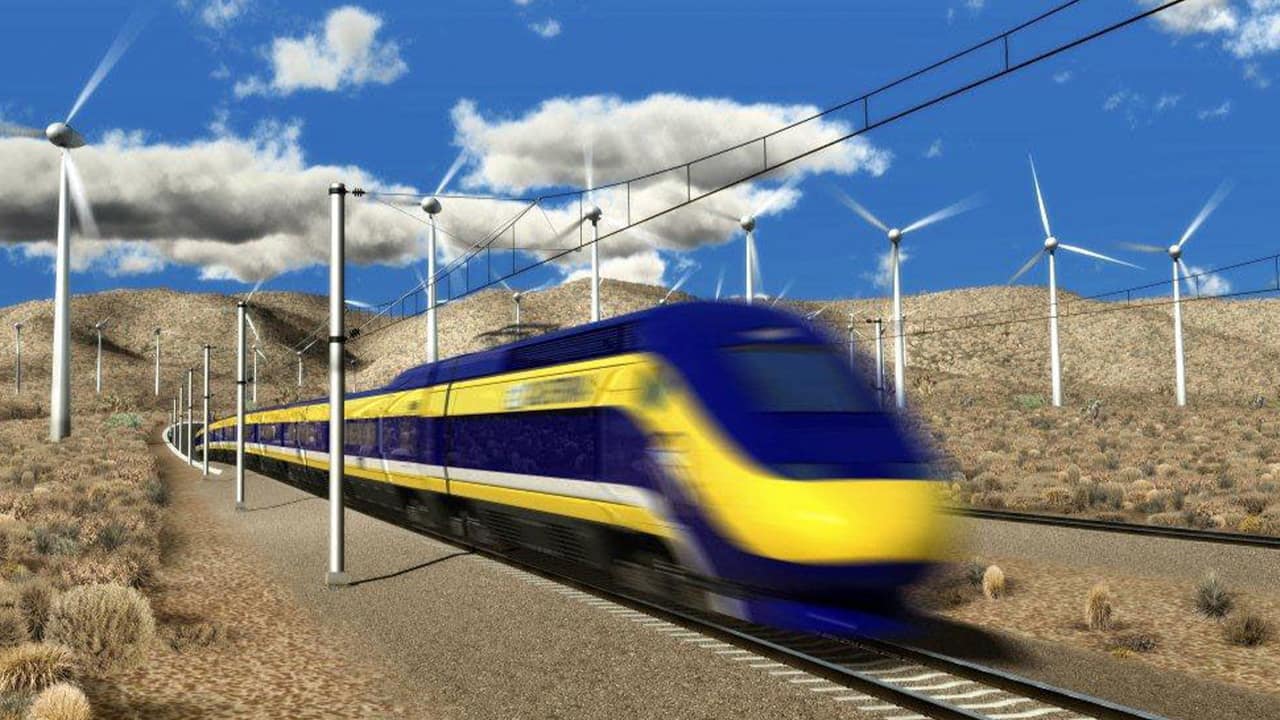
The California High-Speed Rail Authority’s 2026 Business Plan, adopted in June, identifies a station concept southeast of downtown near Mission Avenue. The authority says moving the station would reduce costs and avoid downtown construction disruption. But roads, utilities, transit connections and emergency services would still be needed. The city’s background paper presented in July says infrastructure is not readily available at the proposed site.
A lower construction bill for the authority is no bargain for Merced residents if the remaining costs land on us.
Merced Long Planned for a Downtown Station
For more than a decade, Merced planned around a station along 15th and 16th streets. Businesses and property owners made decisions around that expectation. The city’s paper describes the downtown station plan as on hold and calls for evaluating lost investment opportunities. Moving the station south would leave downtown with delayed plans and investment while creating infrastructure needs in another part of our community.
The high-speed rail financing proposal raises another concern. Tax increment financing could commit future growth in local property taxes to rail infrastructure. The city warned in its April response that diverting that growth would limit its ability to serve a growing population. A tax rate need not rise for residents to lose resources their community needs.
Councilmember Darin DuPont told the Merced Sun-Star: “I just don’t feel comfortable that they would be reinvesting it into that half-mile that they’re taking it from.”
Merced County’s median household income is $65,510, more than $33,000 below California’s $99,122, according to Census estimates for 2020 through 2024. Per capita income is $28,030 here versus $49,513 statewide, about 43 percent less. Our residents face California’s taxes, fees and living costs with far less income to absorb them.
State Must Keep Its End of the Deal
Consider Highway 99. Merced residents help support it through state taxes and fees. Local money can contribute to highway improvements, but Caltrans remains responsible for the state highway system. High-speed rail also serves a statewide purpose. The location of a station should not make a lower income agricultural community responsible for closing the state’s funding gap.
The state and the authority should fund the roads, traffic mitigation, utilities, transit connections, public safety capacity and ongoing maintenance the project requires. Any station agreement should protect residents and businesses from displacement, require local hiring and good jobs, protect affordable housing and preserve local land use authority.
There should be no financing district controlled by the state around the Merced station and no capture of local tax growth for rail construction. Merced residents already contribute as California taxpayers.
Before any station agreement is signed, residents deserve a written funding commitment from the state covering construction and continuing services.
High-speed rail can still deliver on the governor’s promise. It cannot uplift an agricultural community like Merced by draining it.
About the Author
Robert J. Dylina is a Merced resident and real estate developer.
Make Your Voice Heard
GV Wire encourages vigorous debate from people and organizations on local, state, national, and international issues. Submit your op-ed or letter to bmcewen@gvwire.com for consideration.