
|
Getting your Trinity Audio player ready...
|
Iran has signaled that it is willing to escalate its fight with the United States, with senior leaders issuing increasingly sharp warnings in recent days after attacking U.S. warships for the first time.
The country’s leaders are taking a more aggressive approach as Iran faces mounting economic pressure and they worry that their grip on the Strait of Hormuz is slipping. The U.S. blockade is making it nearly impossible for Iran to ship oil, its main money source. And in effect, Iran sees escalation as the primary leverage it has against the United States, analysts said, warning that the recent clashes could reignite a full-blown war.
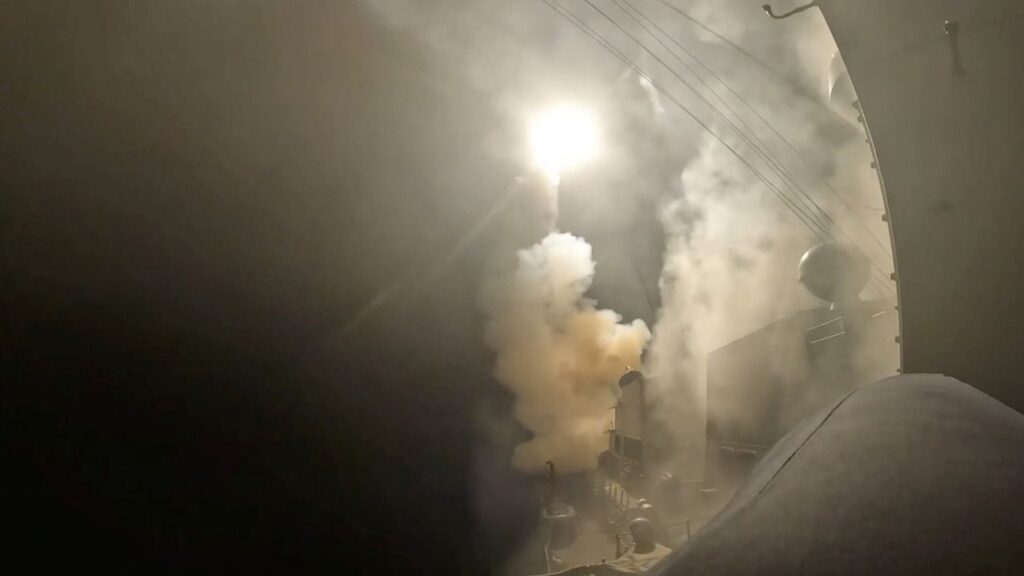
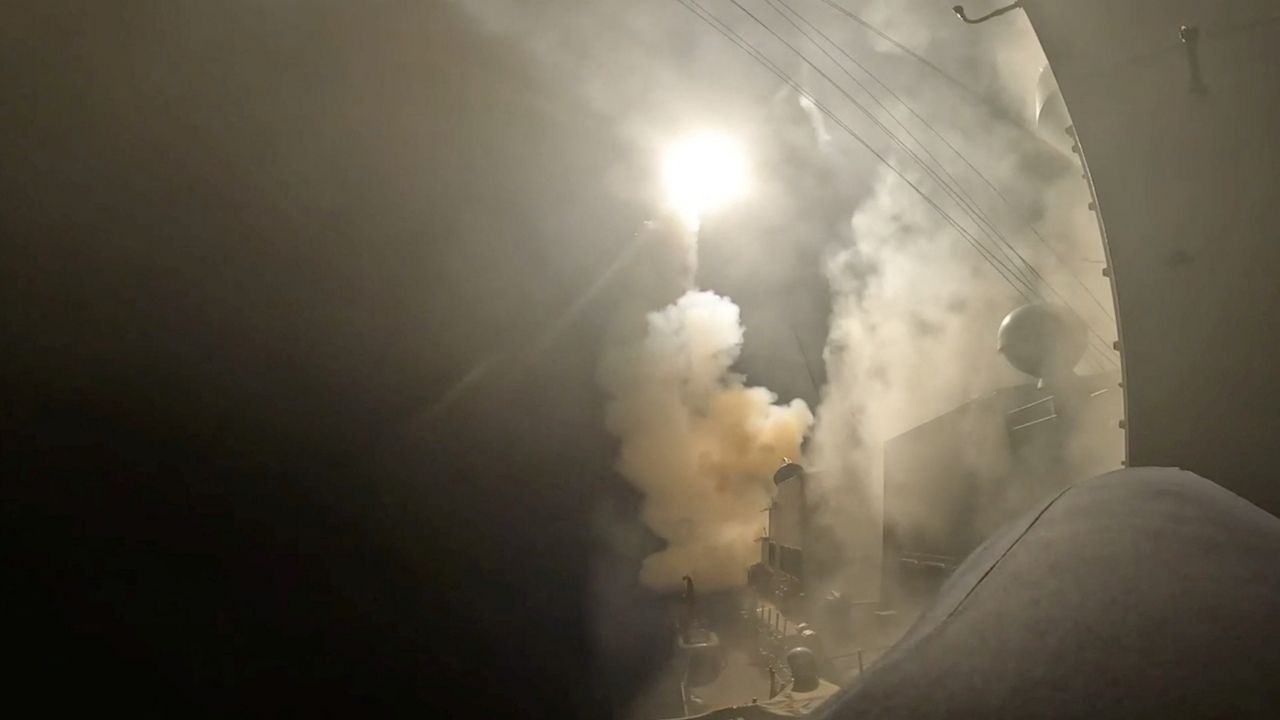
The U.S. military said Tuesday that it had destroyed five Iranian oil tankers in retaliation for attempted strikes on a U.S. Navy warship, while Iran said it launched strikes at a base used by U.S. forces in Jordan in response. The attacks occurred three days after Iran made its first known attempt at striking a U.S. military vessel.

On Sunday, Mohammed Bagher Qalibaf, Iran’s lead negotiator and the speaker of parliament, told lawmakers that the era of “proportionate responses” to U.S. attacks was over. Iran’s security chief, Mohsen Rezaei, also announced plans to impose a “restricted zone” for shipping in the Persian Gulf that would go beyond the country’s efforts to control the Strait of Hormuz.
Iran has largely withstood the heavy military campaign launched by the United States and Israel in February. But the war of attrition in recent months has created an economic threat that is now pushing the government to intensify its rhetoric and attacks.
A U.S. naval blockade has prevented Tehran from exporting much of its oil, the country’s main source of revenue, making a long-standing economic crisis even worse. On Tuesday, the government raised some gasoline prices because of fuel shortages, a move that is expected to further roil a country already struggling with soaring inflation and unemployment, and a rapidly depreciating currency.
At the same time, U.S. naval escorts have enabled a trickle of oil tankers to pass through the Strait of Hormuz, undercutting Iran’s closure of the waterway, which has caused global oil prices to rise sharply. The number of ships getting through is small, and the effort is extremely costly for the United States, but it has prevented oil prices from rising further and blunted Iran’s ability to impose economic pain on Washington.
“How do you regain the momentum? You escalate,” said Farzan Sabet, an Iran analyst at the Geneva Graduate Institute, a research group. Iran will likely attempt to intensify the military confrontation, he said, while seeking to avoid a return to full-out war. “It’s highly damaging, but at the same time, they hope it raises global oil prices or fully recloses the Strait of Hormuz,” he said.
‘Make or Break Moment’
Senior Iranian officials have said they are open to negotiating a return to the fragile Memorandum of Understanding that halted the war in April and was meant to lead to talks on an Iranian nuclear deal.
But President Donald Trump has said he has no interest in negotiations, preferring to maintain his strategy of attrition and suffocating Iran economically.
Iran’s leadership believes that now may be the best moment to raise the stakes, before the U.S. midterm elections in November when an unpopular war could hurt Trump and the Republican Party.
“All signs point to a make or break moment,” said Mohammad Ali Shabani, an Iran analyst and editor of the regional news website Amwaj.media. “I’m not sure the Iranians are going to wait until after the elections to be attacked if diplomacy fails.”
Iran’s move to strike two U.S. warships with ballistic missiles was a significant escalation, said Hamidreza Azizi, a senior Iran analyst at the International Crisis Group.
Iranian forces had previously made no serious effort to target U.S. naval ships and seemed reluctant to conduct attacks that could cause heavy American casualties. “These calculations have obviously changed,” he said.
The U.S. decision to retaliate by striking three Iranian oil tankers — and sinking one of them — was an indication of how seriously Washington took the Iranian attack.
“Both sides are trying to dictate their red lines and trying to push the red lines of the other side as far back as they can,” Azizi said.
It was also a recognition that Iran’s military capabilities have evolved. Before the war started, the United States did not think Iran could target U.S. military bases in the region with precision, he said. But in recent months, Iran has shown it can do so, including with a strike on a U.S. base in Jordan in July that killed two American soldiers.
Iran could become similarly adept at targeting naval fleets, Azizi said.
Iran has also been very public about its efforts to capture and learn from its enemy’s weapons. On Tuesday, Iran’s state news agency IRNA announced that naval forces of the powerful Revolutionary Guard had seized a U.S. submarine drone known as the Dive-LD. Iran has previously managed to reverse-engineer weapons offered to it by its allies or captured from its enemies.
U.S. Central Command said the drone was an older model that had malfunctioned and “neither collected sensitive data nor carried any classified sonar or radar equipment.”
Economic Crisis
For Iran’s leaders, what they have called a U.S. “economic war” has become a domestic security risk that has prompted them to take a more aggressive stance.
A rising sense of economic despair among Iranians could spark a new wave of anti-government protests. Last December, a currency crisis triggered nationwide demonstrations, which security forces crushed with deadly force.
Iranian officials are anxious that Israel may exploit any discontent to support dissidents or an insurgency, said Hadi Borhani, a professor of Israeli and Middle East studies at the University of Tehran.
He pointed to recent statements by Israel’s defense minister, Israel Katz, and Prime Minister Benjamin Netanyahu, who said this week that “there is still more to complete. I mean, first and foremost, the toppling of the regime. This regime in Iran — its end is near.”
The Iranian government does not want to wait for Israel to act.
“They believe Iran should change the situation, possibly through a more damaging or aggressive move that can raise regional tension,” Borhani said.
Some Iranian leaders also believe now is a good moment to act because Trump will return to war after the midterms anyway. The president will either feel vindicated by an unexpected electoral victory or feel that he has nothing more to lose by pursuing his own strategy, several of the analysts said.
Sabet, however, expects that worsening global economic conditions will eventually push the Trump administration to ease tensions.
—
This article originally appeared in The New York Times.
By Erika Solomon
c. 2026 The New York Times Company