

|
Getting your Trinity Audio player ready...
|
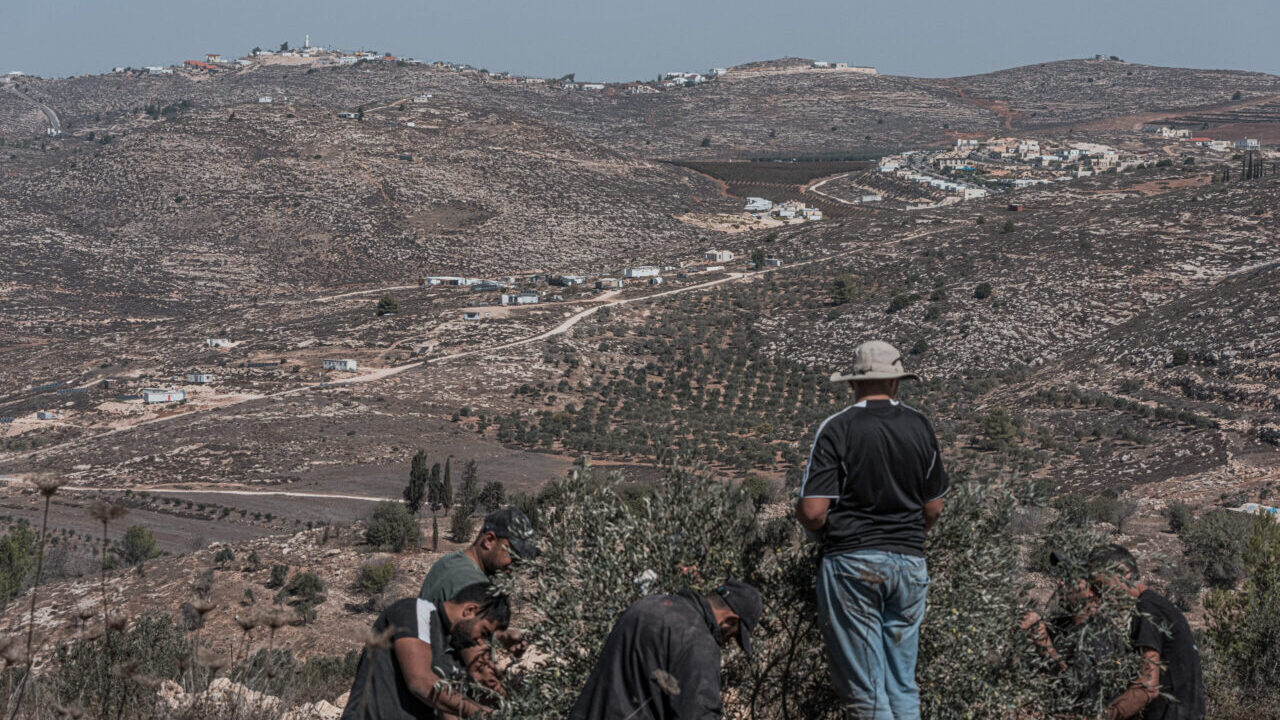
Britain is set to announce wide-ranging economic restrictions targeting Israeli settlements in the occupied West Bank as soon as Tuesday, according to seven officials briefed on the measures, in what experts say would be a significant censure of Israeli policy toward Palestinians.
The measures are expected to include a trade ban on goods produced in the settlements, the officials said, speaking on condition of anonymity because they were not authorized to speak to the media. Three of the officials said the measures could also include sanctions on companies helping to build settlements.
Israel has become increasingly isolated on the world stage in the aftermath of the devastating war in the Gaza Strip, and international attention has focused on Israel’s tightening grip over the West Bank. The sanctions come at a time when Israeli extremists have been repeatedly attacking Palestinians, on occasion assailing homes with little intervention by Israeli forces.

Some analysts say Britain’s move could foreshadow decisions by other European countries to impose harder-hitting and broader sanctions.
While the details are still unclear, a British product ban would likely have a limited impact on the $8 billion in annual trade between the countries, given that goods made in Israeli settlements are only a small fraction of that amount. But the measures go well beyond previous British sanctions related to the West Bank, which targeted some extremist Israeli settlers and two far-right ministers.
“The government is broadening the extent of the sanctions from individuals to looking at processes and the system,” said Lord Tariq Ahmad, who was a British minister for the Middle East until 2024 and has knowledge of the expected policy.
‘Israel Will Act’ Against British Sanctions
Gideon Saar, the Israeli foreign minister, said last week that “Israel will act” against any new British sanctions, without elaborating. The Israeli foreign ministry did not respond to a request for comment Monday. The British Foreign Office declined to comment.
British Jewish groups have lobbied against the move in meetings with government officials, arguing that the measures were driven by domestic politics, could stoke antisemitism at home and were unlikely to compel Israel to change course.
Britain, a longtime ally of Israel, has long condemned Israeli settlements in the West Bank, which are widely considered illegal under international law, saying they undermined the possibility of a future Palestinian state. Prime Minister Benjamin Netanyahu has shrugged off international criticism and promoted building more settlements at a breakneck pace.
In August, Britain condemned the Israeli government decision to move ahead with plans for new homes for settlers in E1, a part of the West Bank near Jerusalem, that critics say could preclude the creation of a contiguous Palestinian state in the territory.
Ed Miliband, Britain’s foreign secretary, denounced that decision as “an unacceptable and destructive act,” and vowed to respond with new policies, including sanctions targeting those involved in expanding settlements.
“We need to look at our wider economic relationship with the occupied territories, as we are doing, and at the different tools we have,” he said in Parliament last week. “We do not want British companies financing, constructing or advertising new settlements.
Israel Has Occupied the West Bank Since 1967
Israel has occupied the West Bank since 1967. About 3 million Palestinians live in the territory alongside some 500,000 Israelis, who live in a sprawling array of settlements. Their exports include kosher wine, produce, plastics and other products.
Prime Minister Andy Burnham entered office in July pledging a tougher stance on Israel over the war in Gaza, which began after the Oct. 7, 2023, Hamas-led attacks on Israel. Burnham called Gaza “a scar on our collective conscience,” and criticized the previous government’s response in a video.
Keir Starmer, Burnham’s predecessor as prime minister, moved to recognize a Palestinian state, suspended some arms licenses for Israel and imposed sanctions on the two far-right Israeli ministers but stopped short of broader economic measures. The Biden administration imposed sanctions on individual settlers deemed to be responsible for attacks against Palestinians, but President Donald Trump canceled those measures when he was reelected.
Spain and the Netherlands have already banned products from the settlements. Analysts say Britain’s move wields additional influence.
“Britain’s political and economic weight could play an almost unique role in catalyzing broader measures against Israel’s settlement project and in coalescing other Western partners around joint action to defend whatever is left of the two-state solution,” said Hugh Lovatt, an analyst at the European Council on Foreign Relations, a research group.
In commenting on possible British sanctions last week, Saar argued that Burnham’s government was “acting systematically against Israel” in part to shore up domestic support before the Labour party’s conference later this month.
Could Sanctions Become de facto Boycott of Israel?
Britain’s chief rabbi, Ephraim Mirvis, said on social media last week after meeting with Miliband, the British foreign secretary, that a ban on trade with Israeli settlements could easily slide into a “de facto boycott of trade with Israel more broadly.” He added that “when rhetoric towards Israel escalates, hostility towards Jews is never far behind.”
Other Jewish leaders have asked Burnham to at least delay announcing the measures, noting that Israel is set next month to hold its first national elections since the 2023 attacks. Netanyahu is locked in a close contest with opponents who are generally seen as willing to pursue more moderate policies toward the Palestinians.
Some opposition lawmakers in Britain have also spoken out against the plans, saying that imposing sanctions could threaten the country’s national security because Israel shares intelligence information that has been used to prevent terror attacks on British soil.
This article originally appeared in The New York Times.
By Adam Rasgon and Aaron Boxerman/Daniel Berehulak
c.2026 The New York Times Company