



|
Getting your Trinity Audio player ready...
|
When a traffic light turns green, Dan Kroushl is unlikely to be the first driver out of the gate. He won’t floor the gas pedal, and he never drives over the speed limit.
Bradlee Fons said he gets 83.2 mpg with his 2017 Toyota Prius by driving with fuel economy in mind.
Instead, he eases forward by lightly pressing the accelerator, and the moment he sees a yellow light, he gently taps the brakes.
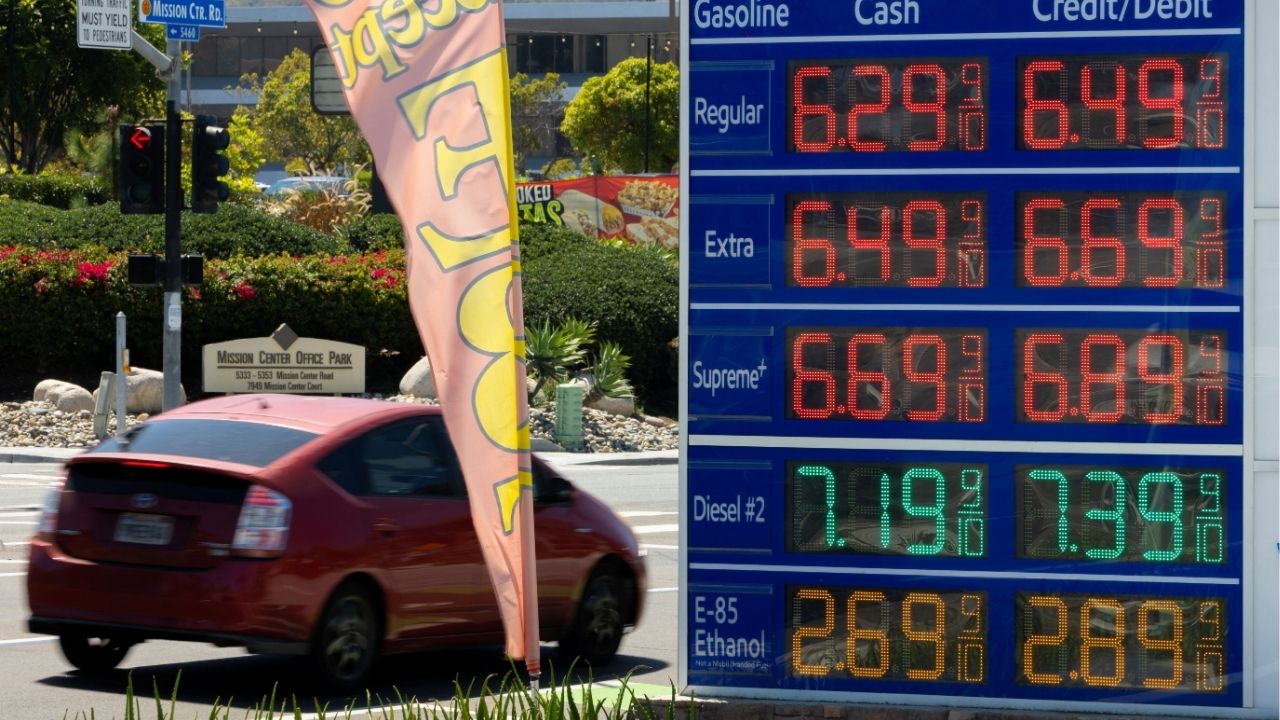
These techniques and others make Kroushl, 61, a so-called hypermiler, a driver who squeezes as many miles as possible out of each gallon of gas. And after a summer of soaring gas prices driven by the war in Iran, hypermilers like Kroushl say their strategies can help drivers who are feeling pinched at the pump make the most of every gallon.

“People think when they are pumping gas: I can’t do anything about it,” Bradlee Fons, 74, a fellow hypermiler, said of the increased gas prices. “I tell them, ‘You’re in total control.’ People can control their fuel costs.”
Hypermilers mostly aim to maximize fuel efficiency by driving smoothly, without hard stops or starts. But sometimes they employ more extreme measures, like not using air conditioning or removing a vehicle’s interior door panels to reduce its weight.
The 2017 Toyota Prius that Fons drives in his home in Jackson, Wisconsin, just north of Milwaukee, is estimated to achieve 52 mpg, according to its official EPA rating. But, Fons said, he gets 83.2 mpg by driving with fuel economy in mind.
Fons, who started a nonprofit organization called Drive Smart Wisconsin, keeps a list of simple techniques that he said any driver can use. At the top of the list is “nonaggressive driving,” which he defined as moving smoothly and purposefully. Other strategies include completing multiple errands in one trip so the car does not use extra fuel to warm up, and keeping up with vehicle maintenance.
Most cars are at peak fuel efficiency between 45 and 65 mph. Hypermilers recommend staying in that range and not going over the speed limit on the highway. Driving faster causes the vehicle’s drag to increase.
“You work the gas so you’re barely holding the speed you want to hold,” explained Bruce Gregersen, 79, a hypermiler who lives in St. Cloud, Minnesota. “It takes a little more concentration, but once you get used to it, you’ll do it automatically.”
This article originally appeared in The New York Times.
c.2026 The New York Times Company













![[hubspot type=form portal=8576119 id=f5235c74-daca-46b2-b841-0fec24b5a509]](https://gvwire.com/wp-content/uploads/2026/09/GVH_LaborDaySavings_300x250_static.jpg)