



|
Getting your Trinity Audio player ready...
|
WASHINGTON — Howard Lutnick, President Donald Trump’s billionaire commerce secretary, was holding court before reporters outside a Washington courthouse recently when he acknowledged what had become readily apparent inside the White House.
As the war with Iran grinds on, Trump finds reprieve by focusing on the minutia of an endeavor much more within his grasp: renovating Washington with ornate projects.
“He loves to build,” Lutnick said, shortly before an emergency hearing about Trump’s desire to rename the John F. Kennedy Center for the Performing Arts in his own honor. Lutnick added: “This is what he enjoys. So late at night, 11 o’clock at night, he calls me and wants to talk about things he’s building, because it’s fun for him.”

“If you sat with him, would you have a nice chat with him? No, you’d ask him about Iran, then you’d ask him about this, then you’d ask him about that,” he noted. “Everybody does that. And the one thing he likes to do during the week is construction.”
As the United States appears mired in another intractable conflict in the Middle East, Trump has basked in the momentum he has on the half-dozen makeover projects he has set in motion throughout the capital.
The Supreme Court gave him a green light to race forward with construction of the White House ballroom. The administration said it planned to start excavation work for a 250-foot-tall triumphal arch near Arlington National Cemetery even before a federal review panel had approved the project. The Kennedy Center board, stocked with the president’s loyalists, voted to add Trump’s name below the main sign on the building, and abruptly removed a large outdoor sculpture, “Blue,” from the grounds.
Trump’s primary background is not in government or finance, but in construction and real estate. In New York City, he often lamented the never-ending series of zoning regulations, permits and community-level approvals needed to get projects built.
Making changes to a project there requires hours of sitting in community meetings listening to complaints from residents, and getting sign-off from city officials. Projects like helipads, Trump has complained, are next-to-impossible to get approved. But in his second term as president, he said, he realized he could barrel over many of those impediments. He stocked review panels with White House appointees. Court challenges have failed to keep pace with the administration’s rapid construction. He can finally just have fun.
“You mean I can actually do something that I really want?” Trump told a room full of donors to his White House ballroom last year, describing what it had been like overseeing construction projects as president.
“‘You’re the president of the United States. You can do anything you want,’” Trump has said he has been told.
In a statement, a White House spokesperson, Davis Ingle, said, “President Trump can walk and chew gum at the same time. As a result, the Trump Administration continues to deliver on the president’s campaign promises.”
Trump’s breakneck makeover efforts in Washington have illustrated the administration’s willingness to sidestep laws and intimidate critics.
Trump abruptly tore down the White House’s historic East Wing without seeking approval from Congress, after saying that the ballroom would be next to the older structure but would not touch it. He constructed an imposing White House helipad also without going through any review process. And the administration has announced that it is moving ahead with his giant arch before the review process is complete. (The Justice Department on Friday said in a court filing that the government just planned to do an archaeological excavation of the site necessary for a historic review, and that no final decision had been made.)
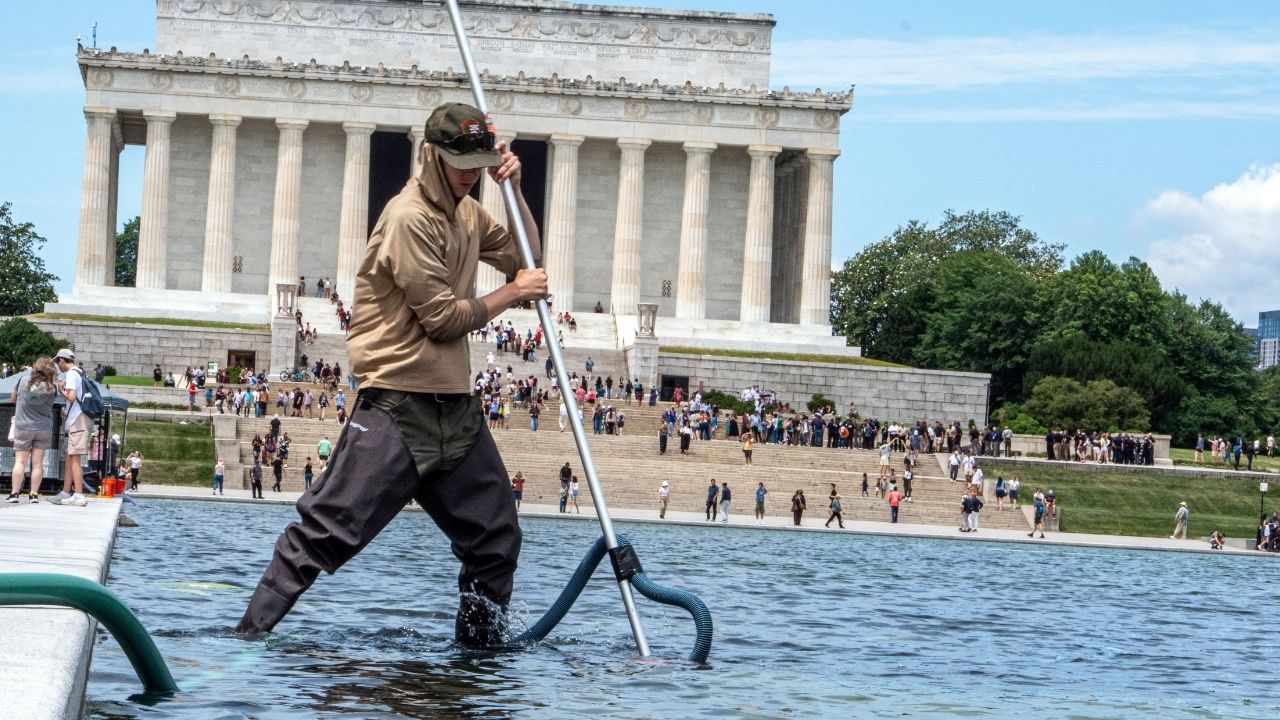
Trump’s remaking of the Reflecting Pool near the Lincoln Memorial began as another such adventure in speed, with the president telling people he brought in his “pool guy” to fix leaks and damage to the decades-old site. Instead, it became a symbol of dysfunction, as the new coating peeled. The president blamed “vandals,” without providing evidence. Jeanine Pirro, the U.S. attorney in Washington, vowed to aggressively prosecute a former Olympian accused of the crime, only to have to reverse herself when the case fell apart.
The tab for the various construction projects that Trump has launched come with a potential cost of as much as $1 billion, much of it at taxpayer expense. Nearly two-thirds of Americans have a negative view of his three main projects, according to a Washington Post/Ipsos poll taken in July.
In a White House where one meeting often rolls into another, Trump’s visits with old friends or administration officials have invariably collided with his many planning sessions for his beautification and building projects, from the remodeling of a golf course along the Potomac River to what some have referred to as the “Arc de Trump.”
He is at his most animated, aides and visitors to the White House say, when he is showing off the designs for the ballroom, boasting about the size of the columns and their designs, or taking officials on tours of the White House to show off where he has gilded the interiors. His personal touch has been quite literal: He has used super glue to affix gold pieces onto the walls and the Oval Office mantle, among other places.
The White House has argued that the new ballroom is necessary to accommodate events for visiting dignitaries, and for national security reasons, as it is being built over an emergency operations bunker.
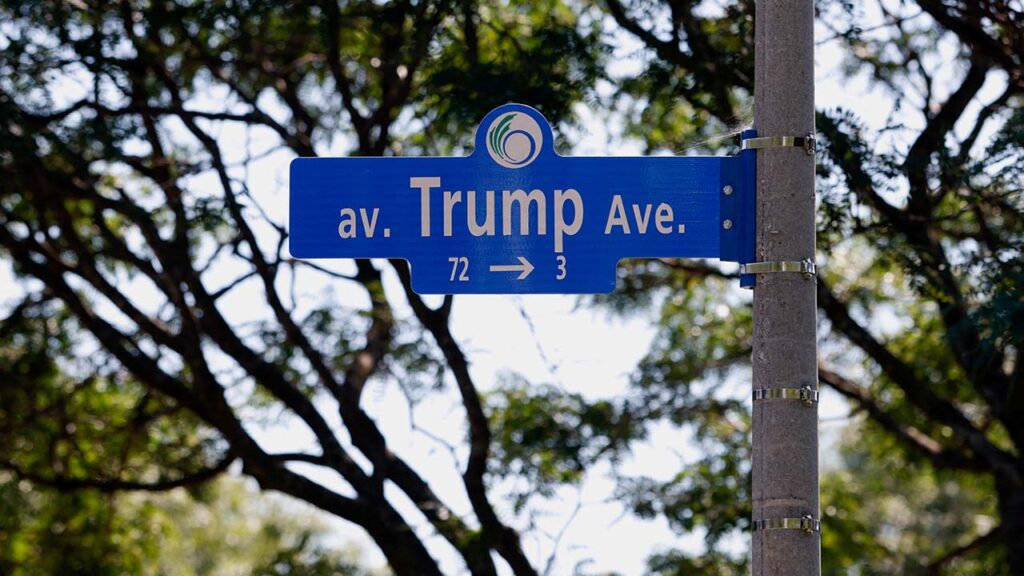
But Trump also appears determined to erect edifices that cannot be torn down after he is gone. He was enraged when his name was pulled down from residential buildings in New York City in protest after his first divisive political campaign in 2016, according to people close to him. Properties in other countries, including in Canada, followed suit.
Other presidents have had monuments built in their honor by future generations. There is no tradition in the United States of presidents naming buildings for themselves. Trump does not appear to expect anything like that will happen unless he builds the structures himself.
“Nobody will do it once I’m gone,” he recently told New York Magazine. “When I leave here, nobody will.”
—
This article originally appeared in The New York Times.
By Luke Broadwater and Maggie Haberman/Alex Kent
c. 2026 The New York Times Company








![[hubspot type=form portal=8576119 id=f5235c74-daca-46b2-b841-0fec24b5a509]](https://gvwire.com/wp-content/uploads/2026/09/GVH_LaborDaySavings_300x250_static.jpg)
