
|
Getting your Trinity Audio player ready...
|
TORONTO — Canadian and U.S. negotiators restarted intensive talks on Friday in Washington as a deadline to reach a trade deal by midnight neared.
Details of the talks, which President Donald Trump had earlier this week hailed as successful and described as a “good deal,” were unclear. But the discussions were focused on a number of issues that make up the broader mosaic of trade disagreements between the two countries.
The talks were precipitated by Trump’s July threat to impose new tariffs on some $20 billion worth of Canadian goods, on top of hefty tariffs already in place on major Canadian industries such as steel, lumber and automobiles.

That came against the backdrop of the Trump administration declining to renew the United States-Mexico-Canada free-trade agreement for the long term, forcing it into annual reviews and injecting volatility into the cornerstone of North American trade.
The original deadline for the new tariffs had been set for earlier this week, but Trump extended it to midnight Friday — meaning the tariffs would take effect at 12:01 a.m. Saturday — citing good progress in negotiations.
On the Canadian side, concessions were taking shape, highlighting the bind Prime Minister Mark Carney is in.
On a call with Canada’s provincial leaders Wednesday afternoon, Carney asked them to restore the sale of U.S. liquor. Most premiers had banned the sale last year in retaliation for U.S. tariffs on key Canadian industries, and the issue had become a sore point for the Trump administration.
Wab Kinew, the premier of Manitoba, told reporters Thursday that he respected Carney’s request but urged Canadians “if you see the American booze on the shelves, leave it there.”
“Do we have to go out and say this is the best deal ever? Do we have to cheerlead? Do we have to play to Donald Trump’s ego? No, I don’t think we do,” Kinew said of the emerging agreement.
Another apparent concession by Canada would remove retaliatory tariffs on U.S. cars. Canada could also abandon measures to limit or tax U.S. online streaming services and online news distribution, which are meant to protect and support Canadian competitors.
The talks are still very much underway and go well beyond tying off loose ends, according to people in the United States and Canada who are familiar with the negotiations, and spoke on condition of anonymity to discuss the diplomacy.
The sticking points center on the three key Canadian industries that Trump hit with tariffs of up to 50% last year: steel, aluminum and lumber. The United States has discussed reducing tariffs on some Canadian steel and aluminum exports to 25% from 50%, three people familiar with the plans said. That would still be about twice the rate Canada is seeking.
And only a certain volume of Canadian steel exports would qualify for the proposed lower tariff, another person familiar with the negotiations said. Domestically, the Trump administration is facing pushback to the proposal from U.S. steel mills, which have argued that the change would undercut their production.
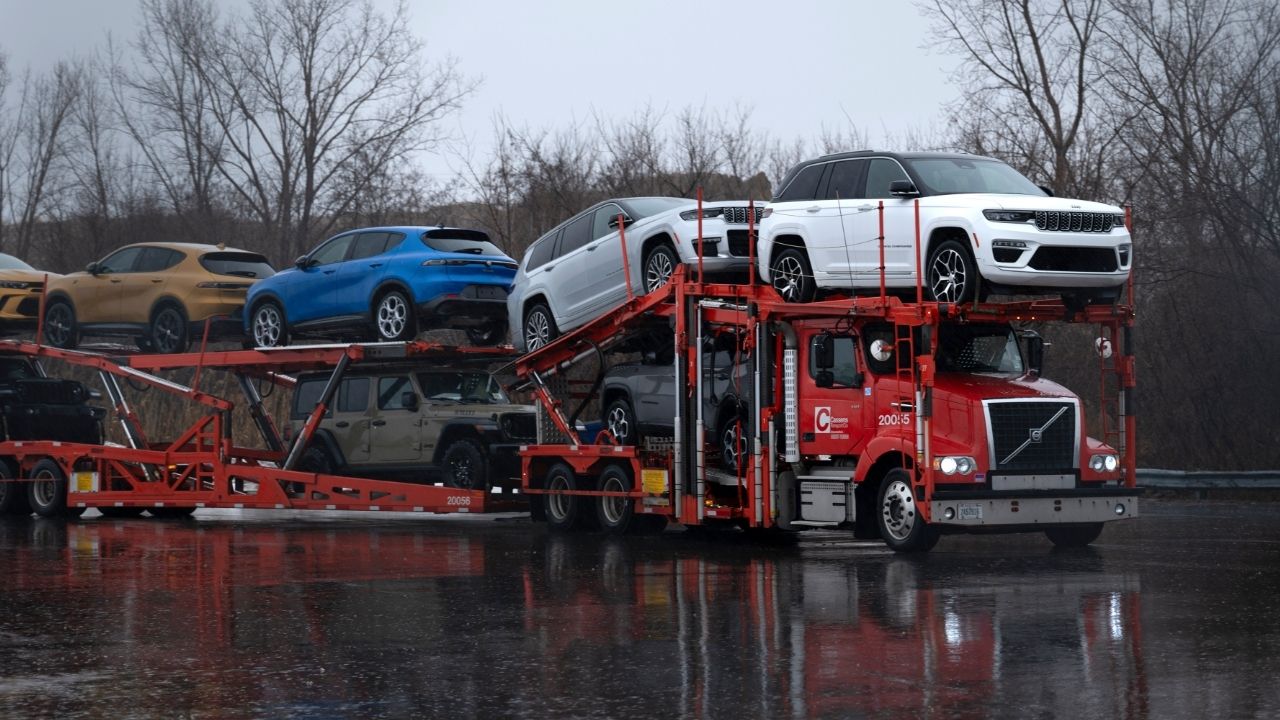
For the auto sector, a tariff that Trump imposed last year could be lowered to 15% from 25%, with a discount for the value of American parts, three other industry executives said.
Despite the more positive atmosphere of the past few days, the relationship between the two countries has rarely been more strained than during Trump’s second term.
The president, who last month called Canada’s leadership “nasty,” has repeatedly floated annexing Canada as the 51st state and questioned the country’s ability to be independent without favorable treatment from the United States.
Carney came to power last spring as a levelheaded expert financier expected to both stand up to Trump and strike a deal with him. He has spent the majority of his time in power trying to rapidly expand Canada’s trade and investment ties with other regions, particularly in Asia and Europe, to reduce the country’s dependence on the United States.
At home, he will face a challenge convincing the public and the premiers of provinces like Ontario and British Columbia that the emerging agreement is a good one for the country, even though it includes long-term pain in the form of continued, if lowered, tariffs for industries central to those provinces.
—
This article originally appeared in The New York Times.
By Matina Stevis-Gridneff/Ian Willms
c. 2026 The New York Times Company