



|
Getting your Trinity Audio player ready...
|
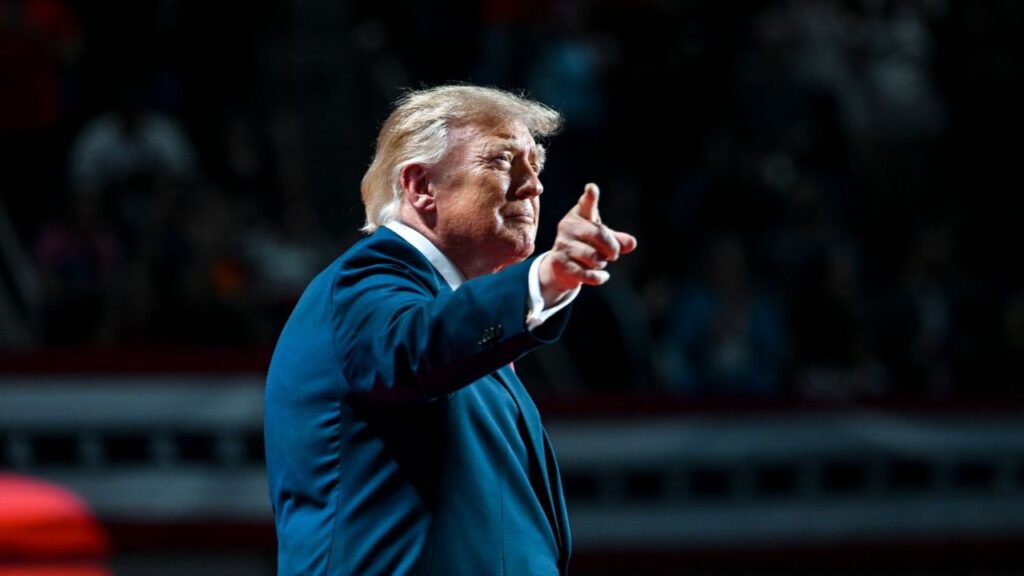
CARLISLE, Pa. — President Donald Trump said Wednesday that his administration was cracking down on immigrant truck drivers and would seek to replace them with veterans.
“We are going to take our veterans; we’re going to teach them a lot about driving trucks,” Trump said, to take the place of drivers without legal immigration status, which he claimed without providing evidence were causing many accidents.
The president added that “any American who has driven a heavy truck for our military will automatically be eligible for a commercial driver’s license.” He did not give details on the proposal.

Trump’s remarks, made during a military investment summit in Carlisle, Pennsylvania, appeared to reflect a broader administration push to curtail immigrant commercial licenses, including for legal residents. In March, about 200,000 immigrant drivers who had authorization to live and work in the United States lost their licenses.
An April 2025 executive order directed the Transportation Department to impose an English-language requirement for commercial drivers, and to review the licenses of foreign citizens who are authorized to work in the United States.
Trump has blamed semitruck crashes on immigrant drivers, though no comprehensive studies have been conducted on how many collisions involve them. On Wednesday, he repeated claims that many such drivers cannot read road signs and abuse drugs. To drive commercial trucks, foreign nationals must have work authorization and follow the same process as any other driver, including attending driving schools and passing tests.
The president and his administration have pointed to high-profile crashes to justify the crackdown.
On Wednesday, Trump cited a crash this month in Pennsylvania that resulted in the death of a state trooper. The Homeland Security Department said that the driver of a semitruck who crashed into the trooper was an immigrant from Haiti without authorization to live in the United States, but who had a commercial driver’s license issued in Massachusetts. A lawyer for the driver told a local news outlet that his client had been in the process of gaining asylum.
According to data from the Transportation Department’s motor safety agency, in the 12 months through September, there were 3,632 large truck crashes, down 15% from 4,292 in the same period a year earlier. The agency said in February that the administration was tightening restrictions after it had identified at least 17 fatal crashes it said involved commercial drivers who were not residents of the issuing state.
Trump singled out drivers who are immigrants without permanent legal status in his remarks Wednesday, though it was unclear how the administration would try to further target them.
The parallel effort to prohibit immigrants who are authorized to live and work in the country from obtaining truck driver’s licenses drew fierce criticism and legal challenges when it was announced last year. It targeted asylum seekers, refugees and recipients of Deferred Action for Childhood Arrivals, or DACA.
Last year, groups representing Sikhs in the United States that opposed the new requirements said that the administration was “perpetuating the myth” that immigrant drivers were unqualified or dangerous.
Fatal crashes involving large trucks have declined in recent years. But trucking remains a demanding job, and companies have struggled to find willing drivers. The job has attracted immigrants willing to spend long hours on the road to earn a potentially substantial wage soon after arriving in the United States.
Veterans are also drawn to the profession at a higher rate; at least 1 in 10 truck drivers is a veteran, double the rate of workers in general.
—
This article originally appeared in The New York Times.
By Aishvarya Kavi
c. 2026 The New York Times Company