
|
Getting your Trinity Audio player ready...
|
AVENAL — This year, the voters of Avenal, a community in California’s rural Central Valley, ousted their mayor and all but one member of their City Council.
Leaders of the recall celebrated the effort as democracy in action.
The message: Get out.

But more than three months after the election, the recalled officials still won’t leave, claiming the process was unlawful. At a meeting in June, they made it official, voting 3-0 to ignore the results.
Their refusal to cede power — highly unusual even in an era of election denialism — raises a host of legal and political questions and has triggered one of the messiest recall battles in modern California history.
Town halls have devolved into screaming matches. Residents have accused one another of spreading falsehoods and malicious artificial intelligence-generated memes, and of racially charged jabs. In the former oil boomtown turned migrant farming community, one recall supporter asked the ousted mayor, who emigrated from Tijuana as a teenager, if he needed something translated into Spanish.
Avenal now finds itself at the unlikely center of a debate that has plagued federal, state and local races across the country: What happens when elected officials refuse to follow democratic norms?
Some experts said the situation was a microcosm of a growing distrust of the elections process, fanned by President Donald Trump’s refusal to accept the results of the 2020 presidential race.
“It’s very concerning to me that we have a situation in our nation where if we don’t like election results, we say it’s rigged,” said Cathy Darling Allen, a retired election official and the chair of the board of the nonpartisan California Voter Foundation.
“That behavior is being modeled,” Allen added, “at the highest levels in our nation.”
Recalled officials are required by state law to leave office right after votes are certified. In Avenal, because four of the five council seats were vacated simultaneously, those positions would ordinarily have been filled by a special election.
But the recalled mayor, Alvaro Preciado — who also is a member of the council — maintains that the county was not authorized to run the election in the first place. He does not see himself as an election denier.
“I am not refusing to step down, I am just waiting for the due process to be completed,” Preciado said, referring to ongoing legal proceedings between the recall supporters, county and ousted officials.
Avenal sits roughly halfway between Los Angeles and San Francisco, tucked into the hills that many Californians see as a blur as they zip along Interstate 5. The city, with less than 14,000 people, has a landfill and a large state prison whose inmates make up just over a quarter of the population. A majority of residents identify as Hispanic or Latino. The city is the smallest of four in Kings County, a part of California known for its dairy, pistachios and attachment to the status quo.
The recall effort began more than a year ago, set off by a controversy over the local fire department. Rather than rely on Kings County, city leaders said they would set up their own, volunteer-run service. Residents of the isolated community panicked. Some accused city officials of making the decision behind closed doors.
Other grievances had also been accumulating. Dalila Barajas, 50, a longtime resident, was also fed up by what she called a lack of transparency, accountability and respect for the community.
“I’m like, ‘OK, the only way that this is going to get fixed is if we start a recall,” she said.
Barajas, a former county employee, joined with two other women: Veronica Loya, 56, who works for an environmental justice organization and fears that the city’s large landfill is toxic to the community; and Ginger Wallis, 50, whose family has lived in Avenal for generations and has close ties to the county fire department.
The women organized and rallied, and Barajas and Wallis knocked on the doors of more than 1,500 homes, collecting 650 signatures — 124 more than they needed — to trigger the recall, they said.
In April, more than 76% of voters supported recalling the mayor, Preciado, and three other council members, Leticia Gamez, David Reynosa and Pablo Hernandez. (The women spared the only other council member, Ricardo Verdugo, because they said they saw him as an ally.)
But at City Hall, a cramped building where residents still pay bills in person, business continued to proceed largely as usual.
“I said, ‘Well, something is not right, something was done illegal,’” said Preciado, 67, who has been an elected official in Avenal for 16 years.
He said he believed recall organizers had misled residents about what they were voting for, and obtained signatures from people who no longer lived in the city. He said he also did not trust the county to verify the signatures.
Both the county and recall organizers maintain that the election was conducted in accordance with state law.
Some of the ousted leaders and their supporters have accused recall proponents of being emboldened by the Trump administration to lead a partisan, racially motivated campaign. All of the recalled officials are Latino.
Recall organizers said they never discussed their party affiliations with one another, since they were focused on local issues, and they rejected the idea that the campaign was in any way racially motivated.
“That’s their cop-out,” said Loya, the recall organizer who works for an environmental justice group. “I’m Hispanic, I’m Latina,” she added, “and I’m proud.”
The conflict may take months to resolve.
The California attorney general has granted the recall organizers permission to sue the ousted officials in a quo warranto lawsuit, a rarely used legal remedy that could force the officials from office. That case is still making its way through the courts.
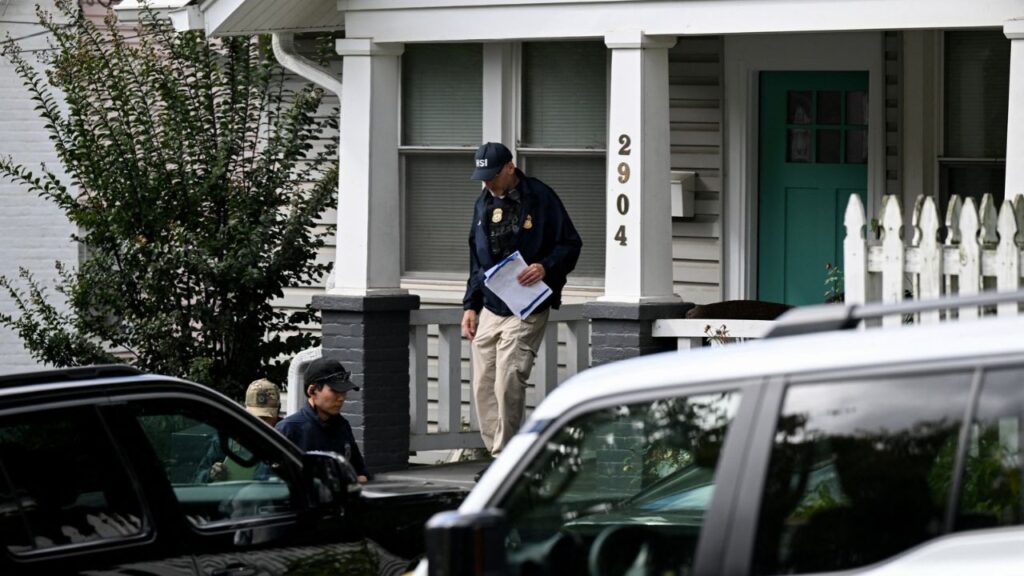
Separately, the district attorney’s office for Kings County has opened a criminal investigation, ordering raids on City Hall as well as on the homes of the recalled officials and the city manager. It has also demanded that the recalled officials stop spending taxpayers’ money.
Both Barajas and Wallis are now running for City Council.
—
This article originally appeared in The New York Times.
By Livia Albeck-Ripka and Philip Cheung/Philip Cheung
c. 2026 The New York Times Company