


|
Getting your Trinity Audio player ready...
|
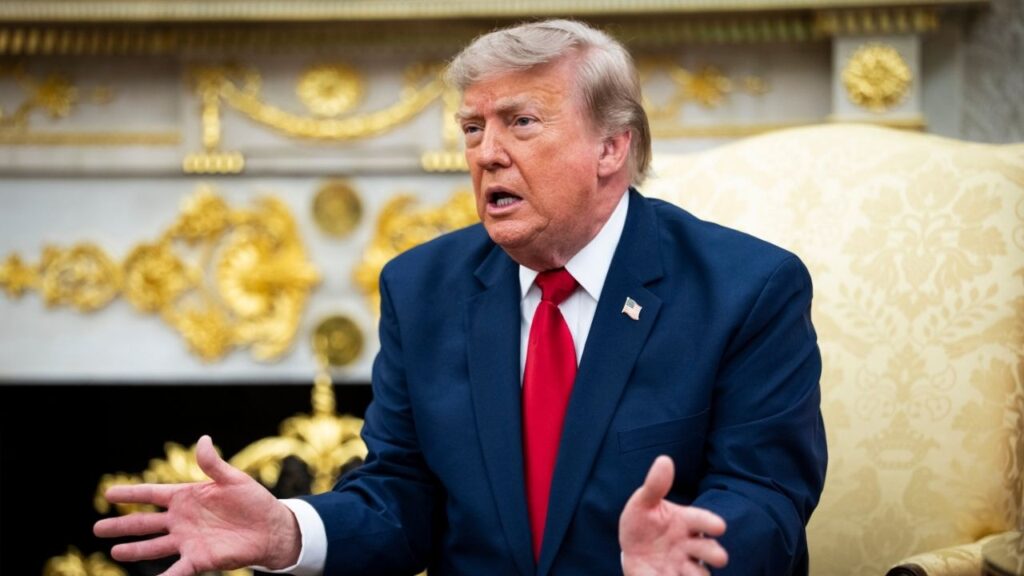
President Donald Trump warmly greeted Ali al-Zaidi, Iraq’s recently appointed prime minister, at the White House on Tuesday and predicted a new era of collaboration more than two decades after the United States entered the so-called forever wars in the Middle East.
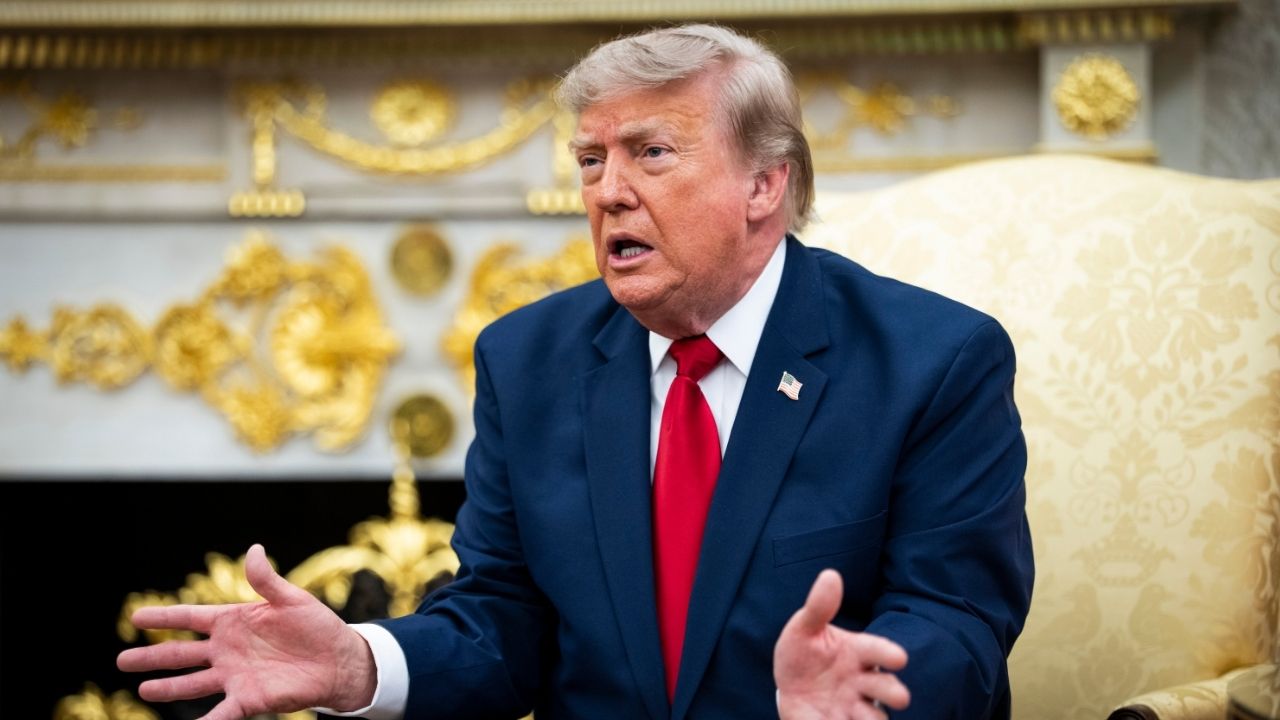
“We’re going to make some tremendous music together,” Trump told reporters as he sat with al-Zaidi in the heavily gilded Oval Office.
“We haven’t been dealing very much over the last four or five years with the previous administration,” the president said. The country has “tremendous potential because of their oil and because of other things, but because of their oil, and we’re going to be doing a lot of deals,” he added.

“We love Iraq,” Trump said earlier in the day as he greeted the prime minister at the entrance to the West Wing.
The meeting between the two leaders came at a precarious moment for Iraq and its decades-long role balancing the United States and Iran. While Iraq and Iran are neighbors, they have also battled each other.
For the past year, the Trump administration has been ratcheting up pressure on Baghdad to diminish Iran’s influence in Iraq, particularly by disarming Iran-aligned militias and sidelining them in Iraqi politics. The United States is also pushing hard for Baghdad to sever financial ties; Iraq has long been seen as a money-laundering hub for its heavily sanctioned and powerful neighbor.
In the months leading up to al-Zaidi’s appointment, the Trump administration cut funding to Iraqi security forces and took the previously unheard-of step of temporarily blocking Baghdad’s ability to transport its own dollars from U.S. banks into Iraq.
As Iraq’s most powerful neighbor and its most critical ally were at war, al-Zaidi was thrust onto the political scene — a wealthy businessperson with no political experience and no history of working in international affairs. He was a relative unknown even inside his own country.
Al-Zaidi, who owns a popular television station and holds lucrative state contracts for foodstuffs, is also an owner of Al-Janoob Islamic Bank. Iraq’s central bank banned Al-Janoob from U.S. dollar transactions in 2024 at the urging of the United States, because of suspicions that it was laundering money on behalf of Iran and allied Iraqi militias.
As a fellow businessperson entering politics, al-Zaidi has sought to position himself as a potential Trump partner. In his first weeks in office, his government persuaded the heads of three Iraqi militias to pledge to disarm. Iraq has since kicked off an anti-corruption drive, ordering the arrests of dozens from the country’s entrenched political elite, which is seen as key to Iran’s ability to maintain influence there.
Al-Zaidi will seek to finalize several energy and other economic deals, making the argument that increased U.S. investment in Iraq can help the country distance itself from Iran.
But he arrived in Washington less than a week after attending funeral ceremonies that Iraq’s government held for Iran’s slain supreme leader, Ayatollah Ali Khamenei, on its own soil, gatherings that were attended by hundreds of thousands of Iraqis. They were a stark reminder of the deep ties between the two nations.
Critics of al-Zaidi’s efforts to position himself as a Washington ally have not only pointed to questions about his banking past but also have argued that many of his gestures remain largely superficial.
The militias that pledged to disarm have yet to actually do so, and they are not among the forces actively cooperating with Iran militarily in its recent conflict with Washington. And several of the figures seen as most closely linked to Tehran somehow managed to disappear from their homes before the arrests were launched, something that was widely interpreted in Iraq’s political class as indicating that the people had been tipped off in order to protect them.
—
This article originally appeared in The New York Times.
By Maggie Haberman and Erika Solomon/Doug Mills
c. 2026 The New York Times Company