
|
Getting your Trinity Audio player ready...
|
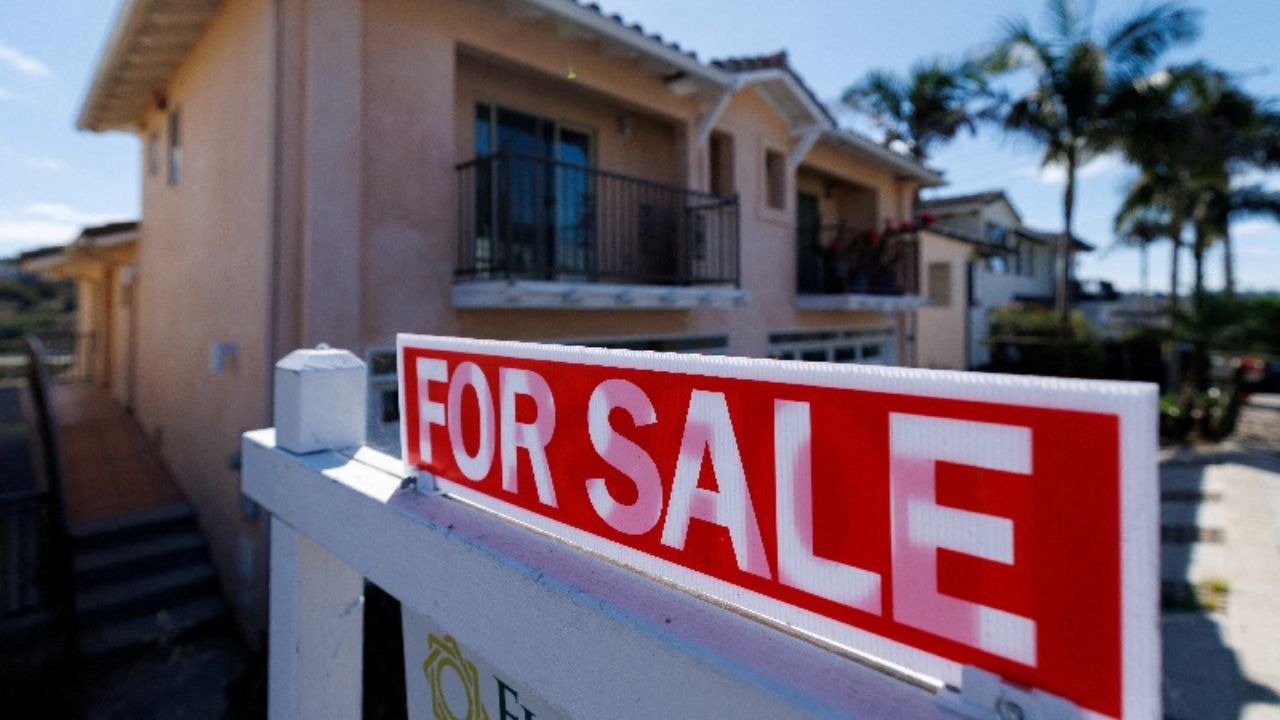
High mortgage rates will keep turnover in U.S. residential housing subdued this year and next with very modest price rises, according to property specialists surveyed by Reuters, thwarting the Trump administration’s aim to revive the market.
The benchmark 30-year mortgage rate, which underpins most U.S. home loans, has hovered around 6.6% in recent months. That is much higher than the average 4.3% in the previous decade and is not expected to fall meaningfully any time soon.
The Federal Reserve is no longer expected to cut interest rates this year, according to a separate Reuters poll of economists, while financial markets are pricing a December hike.

That suggests prospects for a market revival might be bleaker than the poll results suggest.
Median forecasts from the June 1 to June 11 survey showed the 30-year mortgage rate at 6.4% next quarter and 6.3% in the fourth. The 30-year mortgage rate is forecast to average more than 6.0% through 2028, roughly 25 basis points higher than in a survey taken three months ago.
Average home prices as measured by the S&P Cotality Case-Shiller 20-City Index were forecast to rise just 1.2% this year – even slower than last year’s 14-year low of 1.4% – and 2.0% next, weaker than March forecasts and well below U.S. inflation.
“We’ve gotten to a point where it is becoming increasingly challenging for the typical American to get on the housing ladder,” said James Knightley, chief international economist at ING. “The average mortgage for a home purchase is about $460,000…meaning you’re paying nearly $3,000 per month – more than 50% of the median after-tax pay of the average American.”
“As a result, the number of transactions has remained very low. In fact, we have the same level of transactions today as we did during the 2007-08 global financial crisis. That really underscores how challenged the housing market currently is.”
Existing home sales, which make up 90% of total transactions, were forecast to be steady at an average annualized 4.1 million-unit rate this quarter and next before edging up to slightly below 4.2 million in the final quarter of the year – well below the early 2021 peak of 6.6 million.
Mortgage rates have climbed roughly 50 basis points since the U.S. and Israeli war on Iran began in late February. Those have tracked the rise in benchmark 10-year Treasury bond yields on concerns that higher energy prices would boost consumer price inflation, which climbed to an annual 4.2% rate in May.
High mortgage rates and lofty home prices topped the poll’s list of hurdles for first-time buyers, with nearly two-thirds of analysts, or 12 of 19, saying purchasing affordability would worsen over the coming year.
Sluggish Market
Average U.S. home prices are about 55% above where they were before the pandemic, far outpacing income growth over the same period.
“We expect the market to remain fairly depressed for much of this year, simply because of affordability issues in most regions. Home prices are still pretty elevated across many regions in the U.S. – as are mortgage rates,” said Sal Guatieri, a senior economist at BMO Capital Markets.
“But the market is still relatively tight, simply because many current owners are locked in place – sitting on much lower mortgage rates than they would get at the moment if they had to move and get a new one. So they’re reluctant to make that move.”
Crystal Sunbury, senior real estate analyst at RSM, agreed.
“Maybe people are willing to give up that 3% mortgage rate for a 5% one – but they’re not necessarily willing to do that for a 6-6.5% mortgage,” she said, adding neither new construction nor existing home sales would likely deliver a meaningful boost to supply either.
–
(Reporting by Sarupya Ganguly; Polling by Indradip Ghosh and Nushaiba Iqbal; Editing by Jonathan Cable, Ross Finley and Hugh Lawson)