


|
Getting your Trinity Audio player ready...
|
The abrupt resignations of two congressmen announced Monday opened a new front in the ongoing battle between California and Texas over control of the House.
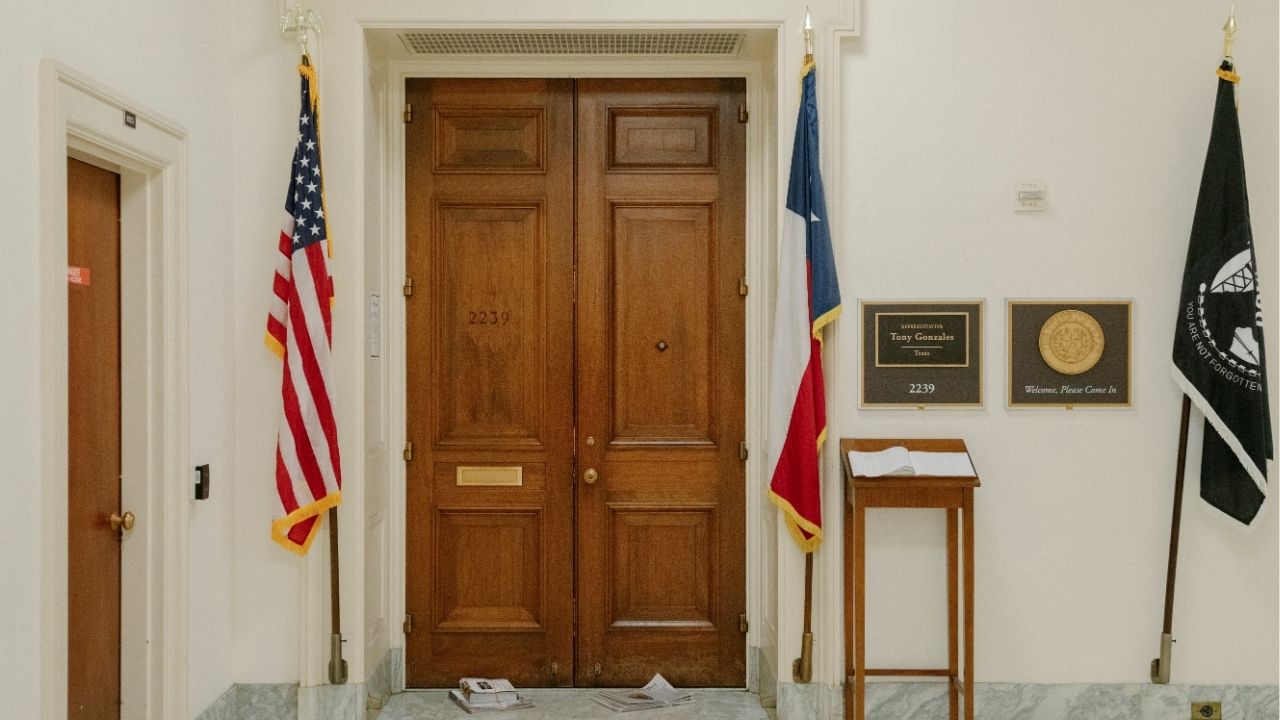
The administrations of Gov. Gavin Newsom of California and Gov. Greg Abbott of Texas wasted no time Tuesday discussing the possibility of filling their respective seats — one formerly held by a Bay Area Democrat, the other by a West Texas Republican, both accused of sexual misconduct — while eyeing each other, their aides said.
Neither has yet said what they plan to do.

The governors were prevented from taking any action until the resignations were official. The lawmakers had been under increasing pressure to resign amid accusations by female former staff members. Eric Swalwell of California has been accused of sexual assault. Tony Gonzales of Texas has been accused of engaging in a sexual relationship with a woman who later killed herself.
On Tuesday afternoon, Swalwell made his resignation official, effective immediately, in letters to Speaker Mike Johnson and to Newsom.
“I will fight the serious, false allegation made against me, however, I must take responsibility and ownership for the mistakes I did make,” Swalwell, who had been a candidate for governor, wrote in his letter to Johnson.
Gonzales sent Abbott a resignation letter, which was read on the House floor Tuesday, saying his resignation would take effect at the end of the day.
The potential for Abbott to a call special elections in close succession was a coda to months of aggressive partisan jockeying over House seats that consumed Texas last year. On Tuesday, Newsom called for a special election.
Abbott initiated the standoff last summer after pushing through a rare mid-decade redistricting, sought by President Donald Trump, that aimed at flipping five Democratic-held districts. Newsom responded with a California redistricting effort, approved by voters in a referendum, in order to nullify that advantage.
Republicans hold a slim majority in the House. That majority will not change after Swalwell and Gonzales depart. But a swiftly called special election in either state could provide either party a brief advantage.
In Texas, a special election would ordinarily be set by Abbott for the next regular election date, which is in November. But Abbott also has the power to order an emergency special election before then.
Whether he would do so was front of mind for party activists and candidates running for Gonzales’ district, which stretches from San Antonio to El Paso.
Some Democrats on Tuesday appeared eager for Abbott to go forward with an emergency special election, buoyed by recent election wins around the country, including in Republican areas of Texas.
“Abbott is really in a box,” said Matt Angle, the director of the Lone Star Project, which supports Democratic candidates in Texas. “If he calls a special promptly, as he should, then Democrats have an excellent chance to pick up that seat.”
The district, redrawn several years ago to favor a Republican, was not in play for Democrats until new accusations and text messages emerged this year detailing the extent of Gonzales’ pursuit of his own staff members.
But the district, large and mostly rural, is still a challenge for Democrats in a general election.
“We would love to have a special election,” Katy Padilla Stout, the Democratic candidate, said in an interview. “It would really give our campaign even more momentum and energy.”
Her Republican opponent, Brandon Herrera, said he was preparing for the possibility of a special election before November, but he did not expect one.
“I don’t think that’s going to happen,” he said in an interview. He pointed to Abbott’s decision to leave a Democratic seat vacant for several months in Houston last year as precedent for the governor to not rush into a special election.
But in that case, the vacant seat was in a heavily Democratic district, and holding it open provided Republicans with an advantage. Abbott did not call an emergency special election.
“Gov. Abbott is about to show us exactly how far he’ll go to help Donald Trump and Speaker Johnson hold on to power,” said Rep. Christian Menefee, who won the Houston seat in a special election after it had been vacant for nearly a year.
“I think everybody should watch what he does here,” he said of Abbott.
Newsom is not required to call a special election when a congressional seat becomes vacant this close to an election, under California Law.
But given the tight margins in the House, Democrats will likely want to fill Swalwell’s seat as soon as possible. He represented a heavily Democratic district in the San Francisco suburbs.
The timing of a potential special election is complex, and there is no way to consolidate it with the regularly scheduled primary, on June 2. With Swalwell’s resignation Tuesday, the primary could be held in the last two weeks of June, with a potential runoff in late August.
—
This article originally appeared in The New York Times.
By J. David Goodman and Laurel Rosenhall/Carolina Gutman
c. 2026 The New York Times Company