
|
Getting your Trinity Audio player ready...
|
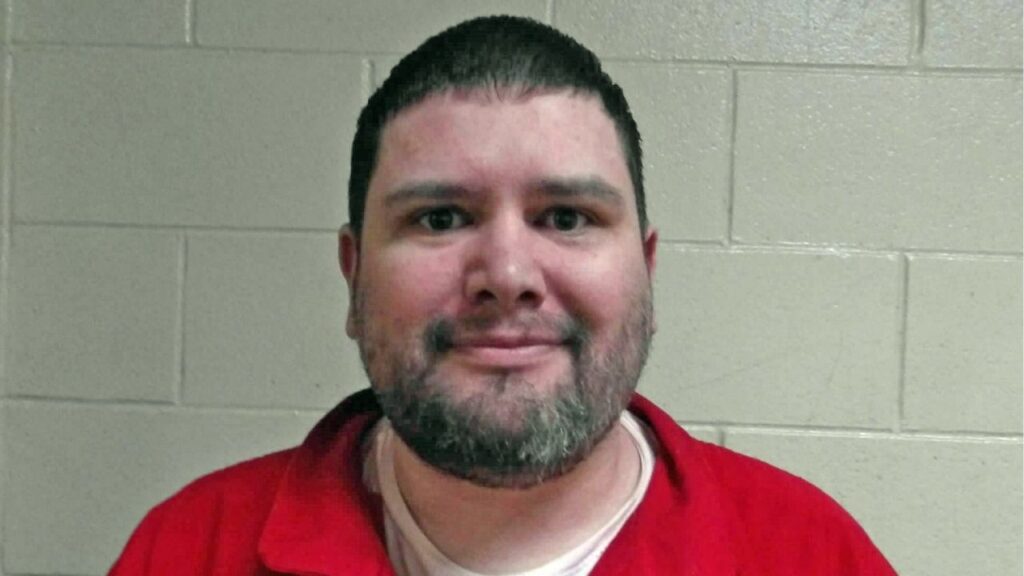
A former obstetrician-gynecologist at UCLA pleaded guilty on Tuesday to sexually abusing his patients and was sentenced to 11 years in prison.
The former doctor, James M. Heaps, 69, was already serving an 11-year sentence when a state appeals court overturned his conviction in February, ruling that he had not been given a fair trial. His decision to plead guilty spares his former patients from having to testify at another trial.
The Los Angeles County District Attorney’s Office said Heaps had pleaded guilty to 13 felony counts: six counts of sexual penetration of an unconscious person, five counts of sexual battery by fraud and two counts of sexual exploitation of a patient. The charges pertain to Heaps’ abuse of five former patients, although hundreds more have accused him of misconduct, the office said. Heaps was sentenced by Judge Charlaine F. Olmedo of Los Angeles County Superior Court.

John Manly, a lawyer who represents more than 100 of Heaps’ former patients, said the outcome of the case was “bittersweet” because many of his clients believed Heaps should have received a longer sentence.
“Nevertheless, he pleaded guilty and it vindicates what our clients are saying,” Manly said.
On Tuesday, one of Heaps’ former patients expressed relief that the case was over and that Heaps had been sentenced to prison again.
“While no sentence can restore what was taken from me or from any survivor, this matters,” the former patient told reporters outside the courthouse, according to video posted by KTLA-TV. “It matters because we showed up. We reported. We refused to be silent.”
Vicki I. Podberesky, Heaps’ lawyer, declined to comment on the guilty plea but said that, with credits for good time, Heaps would serve about half of his 11-year sentence and would then be placed on parole. He will also have to register as a sex offender, the district attorney’s office said.
UCLA has already paid about $700 million to settle claims of sexual misconduct against Heaps, who was affiliated with the university in various roles from 1983 to 2018.
Heaps was initially charged in 2019, convicted in 2022 and sentenced to 11 years in prison in 2023.
In February, a three-judge panel on the California Court of Appeal ruled that Heaps was denied a fair trial in 2022 because the trial judge, Michael D. Carter, never told Heaps’ lawyer or the prosecutors on the case about a note that the jury had sent while it was deliberating.
The “Note to Judge” said that a recently seated alternate juror had “expressed to us that his limited English interfered with his understanding of the testimony, resulting in every case being the same, and his mind is already made up.”
Under the California Code of Civil Procedure, people who lack “sufficient knowledge of the English language” cannot serve on trial juries. The appeals court ruled that Heaps’ conviction must be overturned.
“We recognize the burden on the trial court and, regrettably, on the witnesses, in requiring retrial of a case involving multiple victims and delving into the conduct of intimate medical examinations,” the appeals court wrote. “The importance of the constitutional right to counsel at critical junctures in a criminal trial gives us no other choice.”
The district attorney’s office said in a statement at the time that it planned to retry Heaps “as soon as possible.”
On Tuesday, Nathan J. Hochman, the Los Angeles County district attorney, said at a news conference that he was gratified that Heaps had said the word “guilty” aloud in court. He praised the former patients who came forward to describe the abuse they had endured.
“This case is an example of resilience,” Hochman said.
—
This article originally appeared in The New York Times.
By Michael Levenson
c. 2026 The New York Times Company