
|
Getting your Trinity Audio player ready...
|
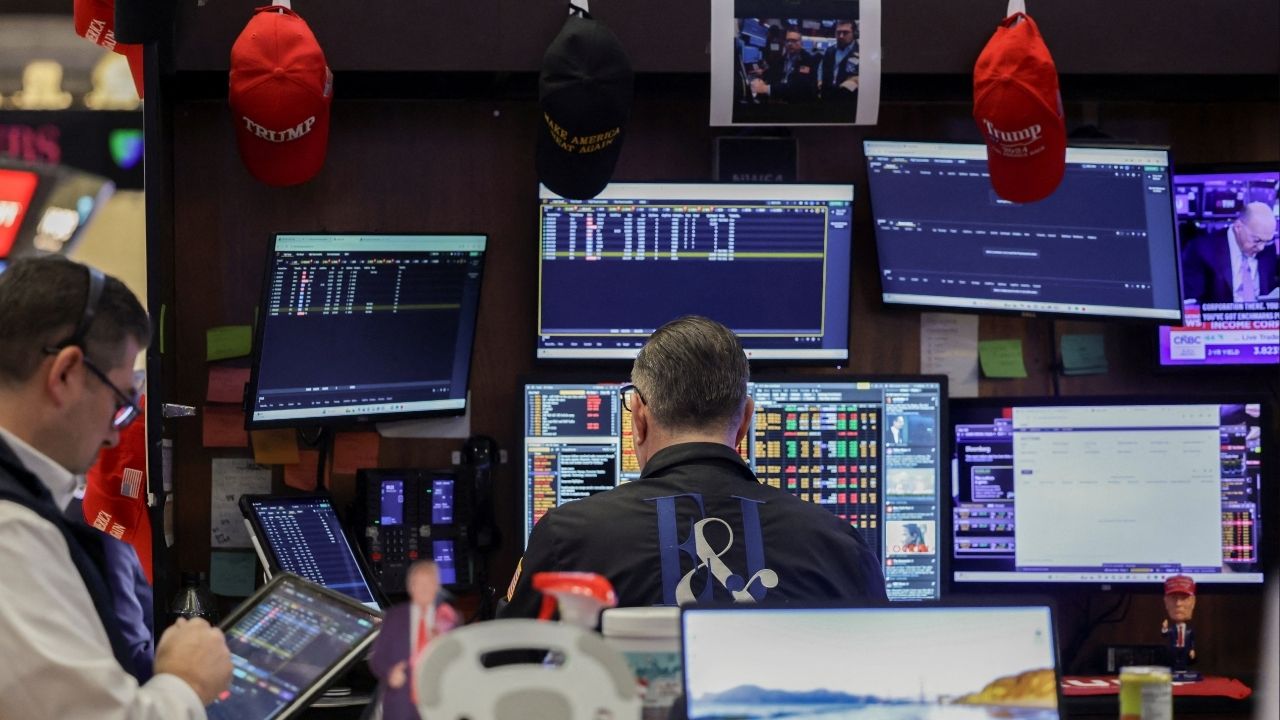
Wall Street’s main indexes fell on Tuesday as investors parsed comments from the U.S. and Iran for any clues on what might come next in the Middle East conflict, before President Donald Trump’s deadline for Iran to reopen the Strait of Hormuz.
A U.S. official told Reuters that the country had struck military targets on Iran’s Kharg Island, a hub of Iran’s oil exports, while Iran said it would no longer hold back from hitting infrastructure of its Gulf neighbors.
It also warned that the Bab El-Mandeb waterway, another critical chokepoint, could be closed if the situation goes out of control. The comments come ahead of Trump’s Tuesday deadline to reopen the Strait of Hormuz, which Tehran showed no sign of agreeing to.

“What you’re seeing with the market reaction is an acknowledgement that an end is not necessarily as close as people had hoped,” said Chris Zaccarelli, chief investment officer for Northlight Asset Management.
“The conflict is more likely to continue with these attacks or increasing rhetoric from both sides … that puts traders back in an uneasy position and expecting a more worse outcome in terms of continuation.”
In the market, tech stocks weighed heavily. The S&P 500 information technology index was down 1.7%, with Apple down 3.8%. The stock was the biggest drag on all three indexes.
A 3% gain in Broadcom after the chipmaker signed a long-term deal with Alphabet’s Google to develop its AI chips and other components helped limit declines.
On the flip side, energy stocks on the S&P 500 added 1.8%.
However, a 7.7% jump in UnitedHealth kept a lid on declines on the Dow. Peers Humana gained 4.5% and CVS Health added 3.7%, after the U.S. said on Monday it would raise payments to private insurers offering Medicare Advantage plans to older adults, an increase from the near-flat change proposed earlier.
At 10:08 a.m. ET, the Dow Jones Industrial Average fell 408.87 points, or 0.88%, to 46,261.01, the S&P 500 lost 66.46 points, or 0.99%, to 6,546.61 and the Nasdaq Composite lost 326.15 points, or 1.45%, to 21,677.16.
Wall Street’s main indexes closed higher on Monday, marking the fourth consecutive session of gains for the S&P 500 and the Nasdaq, as investors digested the Middle East developments and positioned for the upcoming quarterly earnings season.
This week, markets will scrutinize some inflation readings to see if the elevated crude prices stemming from the conflict have impacted price pressures in the economy.
The Iran war has complicated the interest rate outlook for the Federal Reserve as it grapples with fears of revived inflation against the backdrop of a resilient labor market.
Comments from Fed policymakers Austan Goolsbee, Philip Jefferson and Mary Daly will be parsed throughout the day for clues on the future policy path.
Among other movers, Intel shares added 2.2% after the chipmaker said it would join Elon Musk’s Terafab AI chip complex project along with SpaceX, Tesla and xAI.
Declining issues outnumbered advancers by a 2.42-to-1 ratio on the NYSE and by a 3.08-to-1 ratio on the Nasdaq.
The S&P 500 posted no new 52-week highs and four new lows, while the Nasdaq Composite recorded 26 new highs and 63 new lows.
—
(Reporting by Purvi Agarwal and Avinash P in Bengaluru; Editing by Maju Samuel)