

|
Getting your Trinity Audio player ready...
|
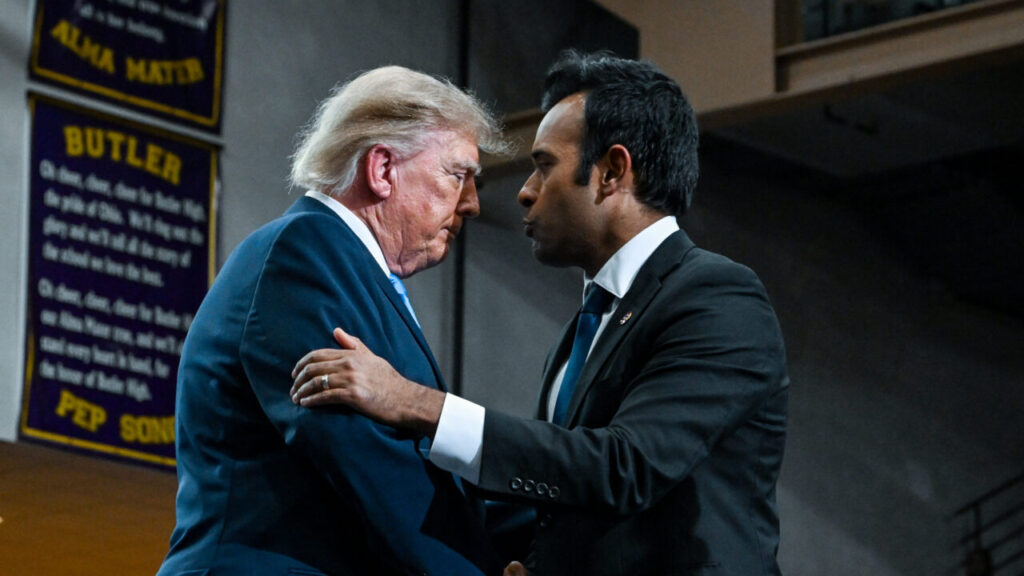
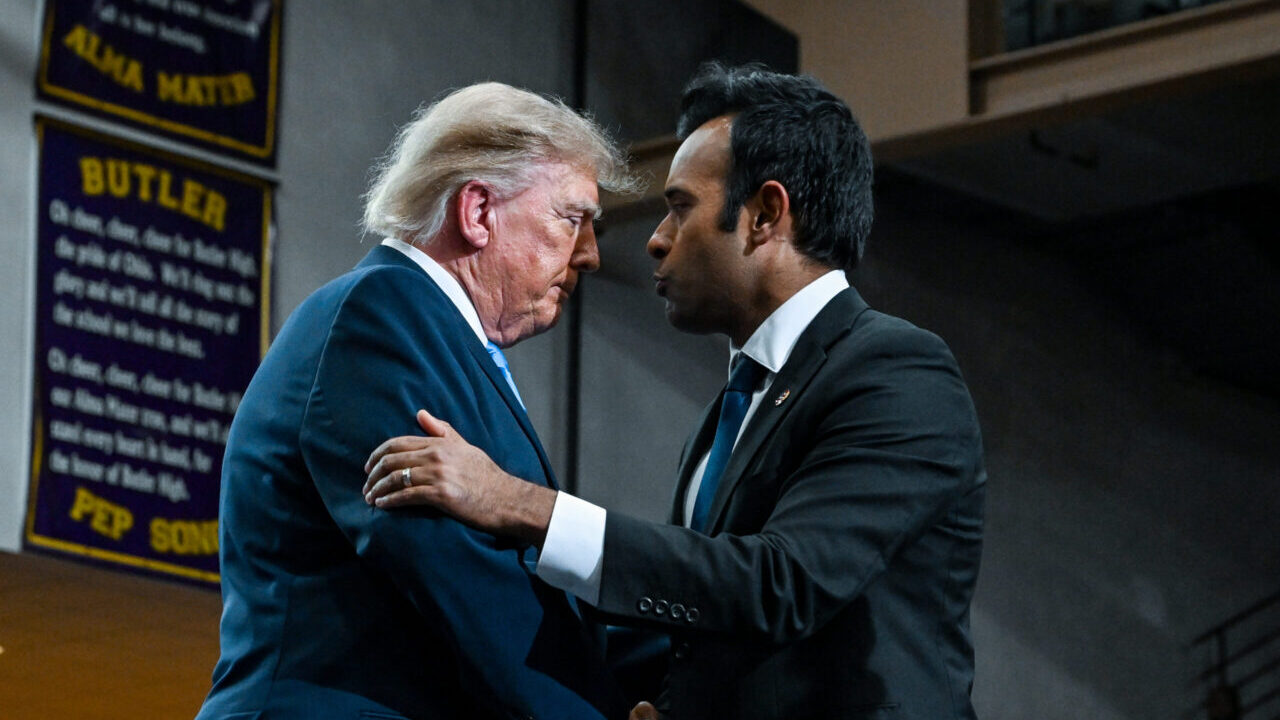
It’s quite a feat, in this numb and debased era, to create a political advertisement so shocking and indecent that people from across the political spectrum feel the need to denounce it. The Ohio gubernatorial candidate Vivek Ramaswamy, who has long fashioned himself as a kind of Donald Trump 2.0 — younger and brainier but just as brash — has managed it.

By Michelle Goldberg
The New York Times
Opinion
By releasing what may be the most disgusting ad in American political history, he’s done more than just reveal his own low character. He’s opened a kind of proxy debate on the right about whether a post-Trump conservatism should try to reclaim some baseline morality or continue along its current smashmouth course.
As you might know by now, the story behind Ramaswamy’s ad involves child sexual abuse. His Democratic opponent, Amy Acton, was 12 when her stepfather, Cledith Arthur, known as Bud, was arrested and indicted on charges of raping her, though he skipped town before he could be tried. Acton’s mother, Donna Arthur, stood by him and lost custody of her children; she never saw her daughter again. (Bud Arthur died in 2004.)

In 2020, when Acton was serving as Ohio’s health director, Donna Arthur, fashioning herself as a concerned Christian, gave an interview to the anti-abortion group Operation Rescue attacking her estranged daughter. It was deeply if unintentionally self-incriminating. Arthur speculated that Acton got the idea to say Bud Arthur raped her from his daughter from a previous marriage, who’d made a similar claim. By Donna Arthur’s own account, then, she brought a man accused of sexually abusing his child into her children’s home.
Now Ramaswamy’s campaign has dug up this elderly woman to make a video calling her daughter a liar who can’t be trusted to lead the state. At first, the ad featuring Arthur circulated online, without attribution. As outrage about it grew, Ramaswamy’s campaign admitted that it created the spot, and then, in Trumpian style, doubled down, saying it would spend millions to air it on television and promote it online.
Ramaswamy Shows Us Who He Is
By tacitly siding with a man indicted on charges of child rape, Ramaswamy has shown us all who he is. But he’s also given conservatives space to reckon with the ethical degradation of Trumpism, though without quite admitting that that’s what they’re doing.
Take, for example, the conservative magazine National Review. Early in 2016, it put out an issue with the words “Against Trump” emblazoned in gold on its cover. “Donald Trump is a menace to American conservatism who would take the work of generations and trample it underfoot on behalf of a populism as heedless and crude as the Donald himself,” said the lead editorial.
Over the following decade, some of the issue’s contributors remained anti-Trump stalwarts, but several — along with the magazine as a whole — turned into apologists and bootlickers for the president. As long as Trump offered the right new peaks of political power, many of his onetime conservative critics were happy to swallow their qualms. Now, as the whole gaudy edifice of MAGA crumbles — with Trump so unpopular that Republicans risk losing states like Texas and Kansas — at least some of his enablers may be feeling ashamed.
Denouncing the Ramaswamy ad gives conservatives a chance to try to drag their movement out of the Trumpist gutter. National Review, tellingly, has helped lead the charge. It ran a sober article backing up Acton’s story, and then several columns lambasting Ramaswamy, including one titled, “When Character Was Obliterated.”
The conservative broadcaster Erick Erickson has taken a similar line. He was one of the contributors to “Against Trump” who then turned around and endorsed Trump for reelection. “I still struggle on the character issue,” he wrote in 2019, but argued, “We cannot have the Trump administration policies without President Trump, and there is much to like.” Now Erickson is back to believing that character is crucial. “We keep being told we must surrender our decency to win and then we lament how indecent the country is becoming,” he wrote about Ramaswamy, as if he had not been one of the ones counseling such surrender.

Will Conservatives Decide That Moral Depravity Is Disqualifying?
If conservatives were to suddenly decide that moral depravity is disqualifying, it would be bad news for Trump and those closest to him. It’s not surprising, then, that on Wednesday, JD Vance praised Ramaswamy’s “audacity” in running the spot, declaring himself “disgusted” by Republicans who are “whining” about it.
Trump, on Thursday, celebrated the ad on Truth Social, writing, “I only wish the mothers of my opponents would be so brave as to come forward and explain that their son or daughter is a liar, and much worse.” Both men seem to understand that Republicans who criticize Ramaswamy are also implicitly criticizing them.
That’s particularly true of Vance, because he and Ramaswamy are such similar figures. The two men were friends at Yale Law School. Both worked in venture capital and developed ties to the tech right before positioning themselves as inheritors of the MAGA movement.
Both have to contend with anti-Indian bigotry — Vance’s wife is Indian American — which has cost Ramaswamy some far-right support. And both are charmless, awkwardly imitating the president’s cruel provocations without his dark charisma or comic timing. If Ramaswamy loses a state as red as Ohio despite Trump’s imprimatur, Vance might start to look like a bad bet in 2028.
Seventy-two years ago, Joseph Welch, the attorney representing the U.S. Army, rebuked Joseph McCarthy with the immortal line, “Have you no sense of decency, sir, at long last?” Despairing observers have been asking the same thing of the Republican Party for the last 10 years. Both Ramaswamy and Vance better hope that the answer is still no.
—
This article originally appeared in The New York Times.
By Michelle Goldberg/Kenny Holston/Jessica Phelps
c.2026 The New York Times Company