
|
Getting your Trinity Audio player ready...
|
PALO ALTO, Calif. — Jeff Dean, Google’s chief scientist, and three other artificial intelligence researchers are leaving the company to form their own startup, a move that exposes the changing power structure inside Google and shows there is still plenty of venture money willing to back new AI ideas.
Dean, Google’s 30th employee, is widely regarded as one of the most important figures in the history of the company. He played a key role in creating the global computer network powering its search business and was one of the company’s early leaders in AI research.
His profile inside Google appeared to wane in recent years as other executives, including cofounder Sergey Brin, asserted control over Google’s all-in bet on AI. But Dean remained one of the key engineers driving the creation of the company’s most important technologies.

His new company, called Discovery Loop, joins a growing list of prominent startups chasing a goal that has obsessed Silicon Valley researchers for decades. Dean and his collaborators want to build AI that can improve itself with little or no help from humans.
They believe that this mind-bending process, called recursive self-improvement, can significantly accelerate the development of AI. The same techniques, they say, can then help design new kinds of computer hardware, discover new drugs, create new materials and speed other forms of scientific discovery.
“We think there is opportunity for AI to more fully automate what has traditionally been a very human-intensive experimental loop,” Dean said in an interview at his home in Silicon Valley. “You will get both a higher quantity and a higher quality of experiments, and that will lead to scientific breakthroughs and advances.”
As Google battles to match the AI delivered by smaller companies like OpenAI and Anthropic, prominent researchers, lured by a deep pool of venture funding and the chance to run their own companies, continue to leave the tech giant.
Over the past year, Google lost several top researchers, including Peter Norvig, who spent 25 years as Google’s head of research, to AI start-ups such as Recursive Superintelligence, one of the many other companies focused on recursive self-improvement.
“It is just a very different environment inside a startup. It is much more fast-paced and focused,” said Tim Rocktäschel, who left Google this year to help found Recursive Superintelligence. “You are a smaller team. There is much less bureaucracy and politics.”
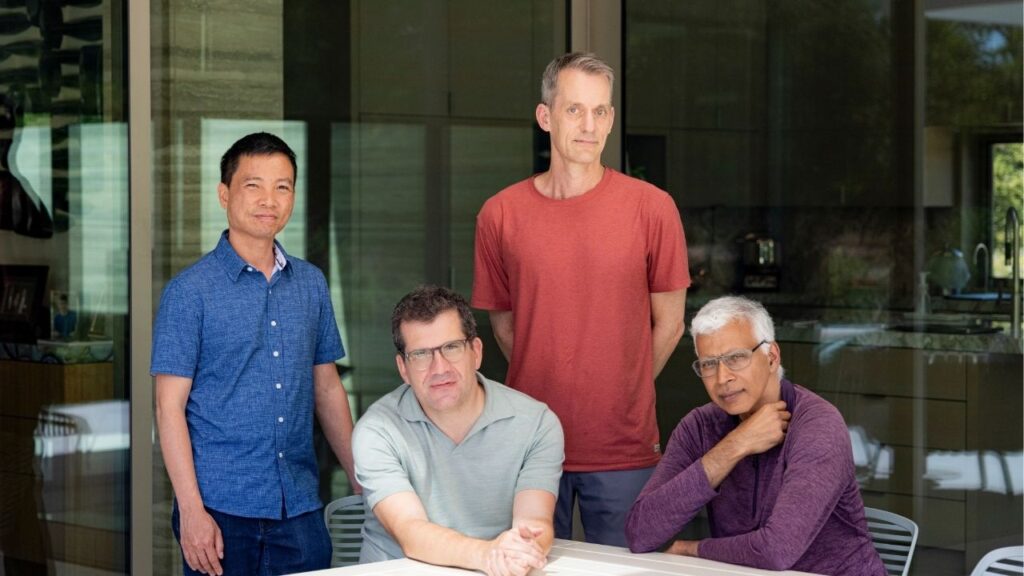
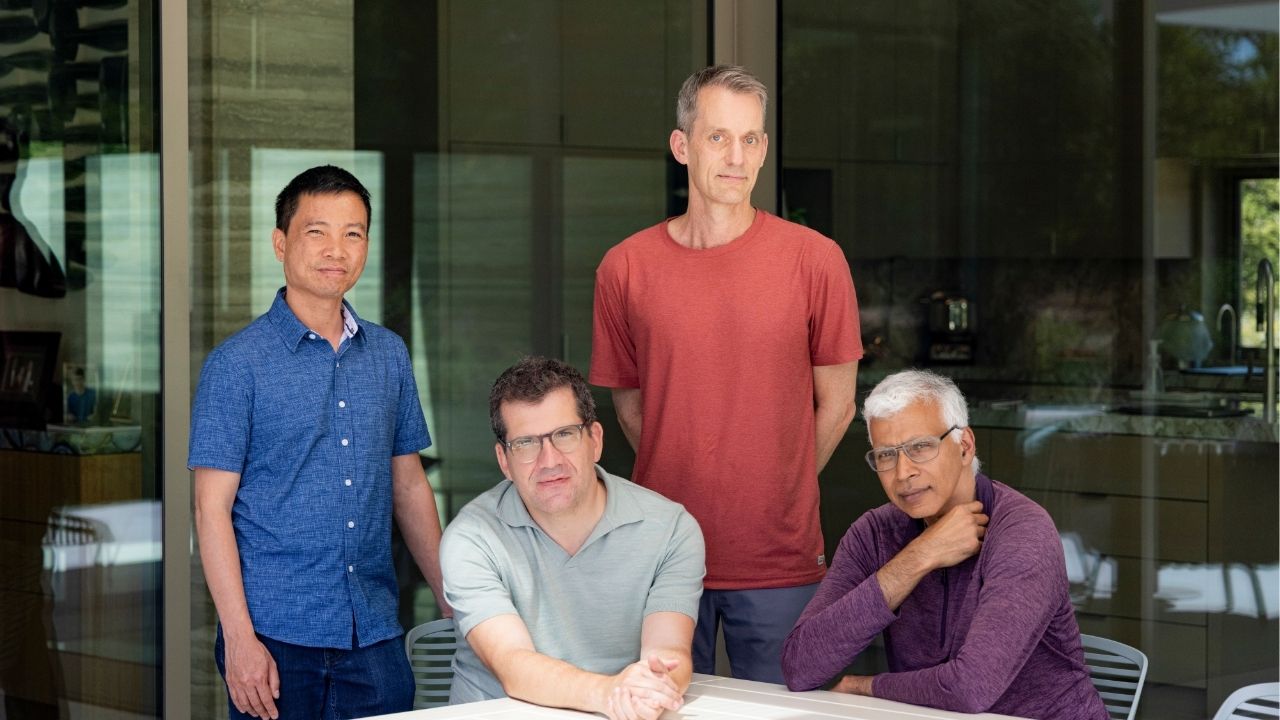
Dean, 58, is expected to leave Google in the next few days for his new job as the startup’s CEO. He will be joined by Sanjay Ghemawat, his close collaborator of more than two decades; Quoc Le, whose research helped inspire the creation of today’s AI chatbots; and Oriol Vinyals, who had overseen the design of Google’s chatbot technologies with Dean since 2023.
The new company is backed by seed funding from Radical Ventures, Khosla Ventures and several Silicon Valley investors, including Google’s parent company. The departing Google researchers declined to reveal how much money their startup has raised, but they appear to be leaving Google on good terms. Google’s parent company, Alphabet, has also agreed to provide the computing power they need to build their AI technologies for at least the next year, Dean said.
“Over 27 years, Jeff and Sanjay helped to drive some of the most significant technology transitions, from our early search infrastructure to the neural networks that helped create the modern AI era,” Google CEO Sundar Pichai said in a statement. “On a personal note, it’s been a privilege to work alongside Jeff and Sanjay.”
Google will collaborate with the new startup, Pichai said.
Vinyals said he believed it was important to have the freedom to shape their own company. “Having extreme focus is very powerful,” he said in an interview. “The ultimate form of extreme focus is when it is the only thing that matters — when it aligns with the mission of the company.”
Dean joined Google in 1999. Along with Ghemawat and others, he designed the enormously complex software systems that allowed Google’s search engine to reliably and efficiently respond to search queries from billions of people across the world.
With names like MapReduce, BigTable and Spanner, these systems served as a template for the rest of the industry, showing companies like Amazon and Meta how to juggle traffic from a global audience. Dean and Ghemawat are the only two Google employees to be named a “senior fellow,” the company’s highest technical honor.
In 2011, Dean led the creation of Google Brain, an AI research lab that touched off an industrywide push toward AI. The lab’s early hires included Le and Vinyals, who helped develop a language translation technology, later called Google Translate, that proved to be a significant milestone in the race to AI.
But after Google’s team of researchers, including Le and Vinyals, helped to pioneer the technology that drives today’s chatbots, the company was slow to realize its potential. Months after OpenAI released ChatGPT, jump-starting the AI boom in late 2022, the tech giant merged Google Brain with DeepMind, its London-based research lab.
DeepMind founder Demis Hassabis led the new lab, called Google DeepMind, while Dean and Vinyals oversaw the design of Gemini, the company’s answer to ChatGPT. In 2024, a third pioneering researcher, Noam Shazeer, joined them in this role, before departing the company less than two months ago to join OpenAI.
When Brin returned to Google, the company accelerated its AI work, but its technologies, by some measurements, continue to trail those produced by U.S. startups like Anthropic and OpenAI — or even Chinese companies like Moonshot and Z.ai.
Dean said that unlike Google, his new company would operate as a public benefit corporation, or PBC, which is a for-profit corporation designed to create public and social good. Anthropic, OpenAI and other AI companies have adopted a similar structure.
“There is a lot of good that can be done in the world if we can distribute scientific discoveries broadly,” he said. “We might make decisions that are not necessarily in the company’s purist financial interests.”
—
This article originally appeared in The New York Times.
By Cade Metz/Jason Henry
c. 2026 The New York Times Company