|
Getting your Trinity Audio player ready...
|
Will Lawrence, one of the founders of the Sunrise Movement, a progressive environmentalist group, was supposed to be unelectable in the purple House district in Michigan held by a Republican, Tom Barrett.

By Michelle Goldberg
Opinion
When he pulled ahead in his primary, a headline on the influential political site Punchbowl said, “Democrats’ Nightmare in Michigan.” Rep. Hillary Scholten, a centrist Michigan Democrat, told Axios, “He can’t win.” During the general election, Republicans gloated when Lawrence’s old social media posts emerged, including one calling nuclear family homes an “isolating, individualistic, violent way of organizing society” and another dreaming of a world of “free and open migration.” I worried that the left might have cost Democrats a swing seat.
Voters Unite to Stop AI Data Centers
But when I met Lawrence last summer in the 7th District — a largely white middle-class place with lots of rural and exurban areas — he insisted that outsiders were misreading the environment. “People are tired of these corporate-funded Republicans and corporate-funded Democrats,” he said. He would win people over, he argued, with opposition to the war in Iran and, crucially, to the spread of data centers. “Stopping these AI data centers has been a huge uniting issue across people of all political persuasions,” he said.

Republican political action committees, flush with tech money, spent more against Lawrence than any other Democratic House candidate. Mailers called him “the most radical Democratic candidate in America” and warned of the socialist menace. (He’d been a member of the Democratic Socialists of America until July.) It didn’t matter: Lawrence won by just over 3 points.
Tuesday night’s blue tsunami carried so many Democrats to victory that we can’t attribute every win to candidate skill or strategy, especially a relatively narrow one like Lawrence’s. (In Iowa, a Democrat who’d suspended his statehouse campaign because of health problems was elected anyway.)
But many of the triumphant Democratic underdogs were united by their opposition to Silicon Valley’s priorities. They promised to stand up to the domineering tech titans who’ve clustered around Donald Trump, arrogating to themselves the right to define America’s future. The election was an epic repudiation of the president, but it was also a democratic rebuke of Silicon Valley by voters who felt their ability to write their own destinies slipping away.
Elon Musk Spent $400 Million Backing Republicans
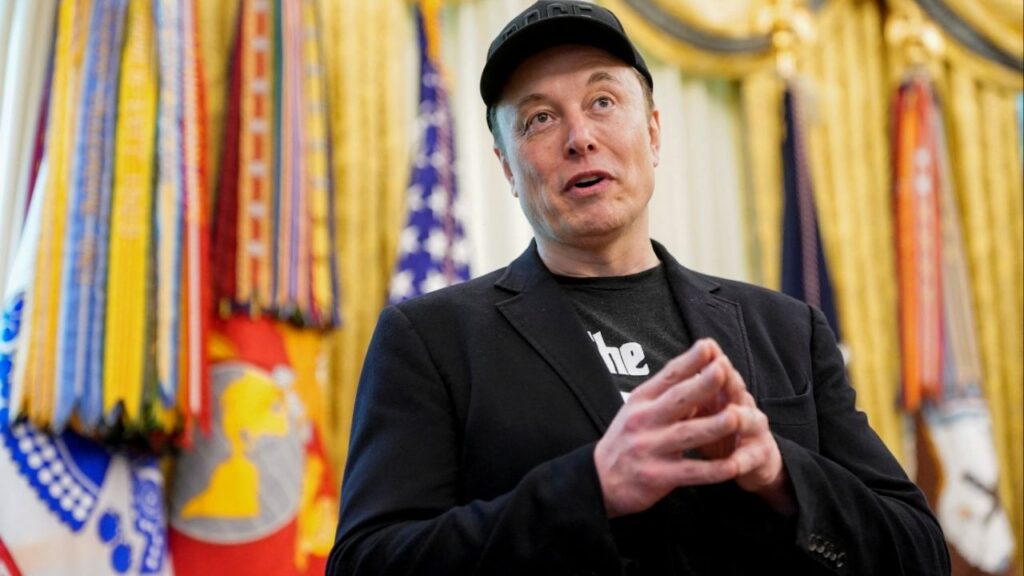
After Trump, there was no bigger loser on Tuesday than Elon Musk, who spent over $400 million backing Republicans. He poured more than half of that sum into Texas, his home since 2020, when he left California out of anger at regulation and COVID-19 restrictions.
He later moved most of his business empire to Texas and even built his own town, Starbase, there. Musk almost single-handedly funded the Senate campaign of Texas’ widely despised attorney general, Ken Paxton. He tweeted obsessively about James Talarico, Paxton’s opponent, amplifying conspiracy theories that Talarico was in a mental hospital when he was really sick with the flu.
Talarico, in turn, sometimes seemed to be running as much against Musk as against Paxton. Even before he won the Democratic nomination, he railed against Musk’s greed, saying: “The reason poverty exists in the wealthiest country on earth is not because we can’t feed the poor. It’s because we can’t satisfy the rich. But what we can do is tax trillionaires out of existence.”
Last month he told a packed rally in Austin, Texas — until recently a tech bro Valhalla — that Musk was trying to buy himself the state. “Elon Musk wants our land,” said Talarico. “He wants our water. He wants our tax dollars. He wants his very own personal United States senator.”
Incoming Texas Governor Targeted Musk
It wasn’t just Talarico. Gina Hinojosa, the Democratic state representative who stunned the political world by unseating Texas’ governor, Greg Abbott, made opposition to data centers and the power of tech barons a centerpiece of her campaign. She took aim at Abbott’s relationship with Musk, whose companies have received more than $1.6 billion in tax incentives and over $100 million in government grants from Texas. In October, Hinojosa sued to force Abbott to release his office’s communications with Musk and his companies. At one of her final rallies she said, of Abbott’s relationship with Musk, “I think Greg Abbott is embarrassed that he sold us out.”
After Tuesday’s blue wave, shares in SpaceX and Tesla plunged even as the broader stock market soared. The stocks of data center operators also fell as investors sized up a hostile political climate.
Across the country, there were more than 40 ballot initiatives that would either restrict or allow data center development. Data center opponents are on track to win all but one of them. (The facilities are apparently still welcome in Harwood, North Dakota.)
Meanwhile, Congress is preparing investigations into the tech overlords who’ve spent the past two years sucking up to the president — and, more important, paying him off. On the social platform X, in response to a call for “live televised trials of Big Tech executives,” Sen. Ed Markey, D-Mass., wrote, “They are going to need to plant new forests for all of the subpoenas we’ll be printing.”
On Wednesday, I spoke to Lawrence again and asked what he’d say to Democrats who I expect will soon be receiving overtures from a newly conciliatory tech industry.
“I’d say, ‘beware,’ because these tech oligarchs are dramatically unpopular,” he said. “If we want to be a party of the working class, these are the Rockefellers and Carnegies of our day. These are the richest and most powerful people who are accustomed to operating with complete impunity, and they need to be brought to heel.”
Democrats emerged from the midterms with a mandate to do just that.
—
This article originally appeared in The New York Times.
By Michelle Goldberg
c.2026 The New York Times Company