

|
Getting your Trinity Audio player ready...
|
For America’s two major political parties, Nov. 3 is shaping up to be an Election Day of mutual distrust. The proof is in the deluge of litigation already filed in courthouses around the country.
The Trump administration is heading into the midterms fixated on the unfounded claim that voter registration by noncitizens is a widespread problem. The Democrats, noting that President Donald Trump tried to overturn his 2020 election loss — and that he recently encouraged his followers to “cheat like hell” in the midterms — are bracing for what they say will be an onslaught of Republican tactics, from the intimidation of voters to the potential seizure of ballots.
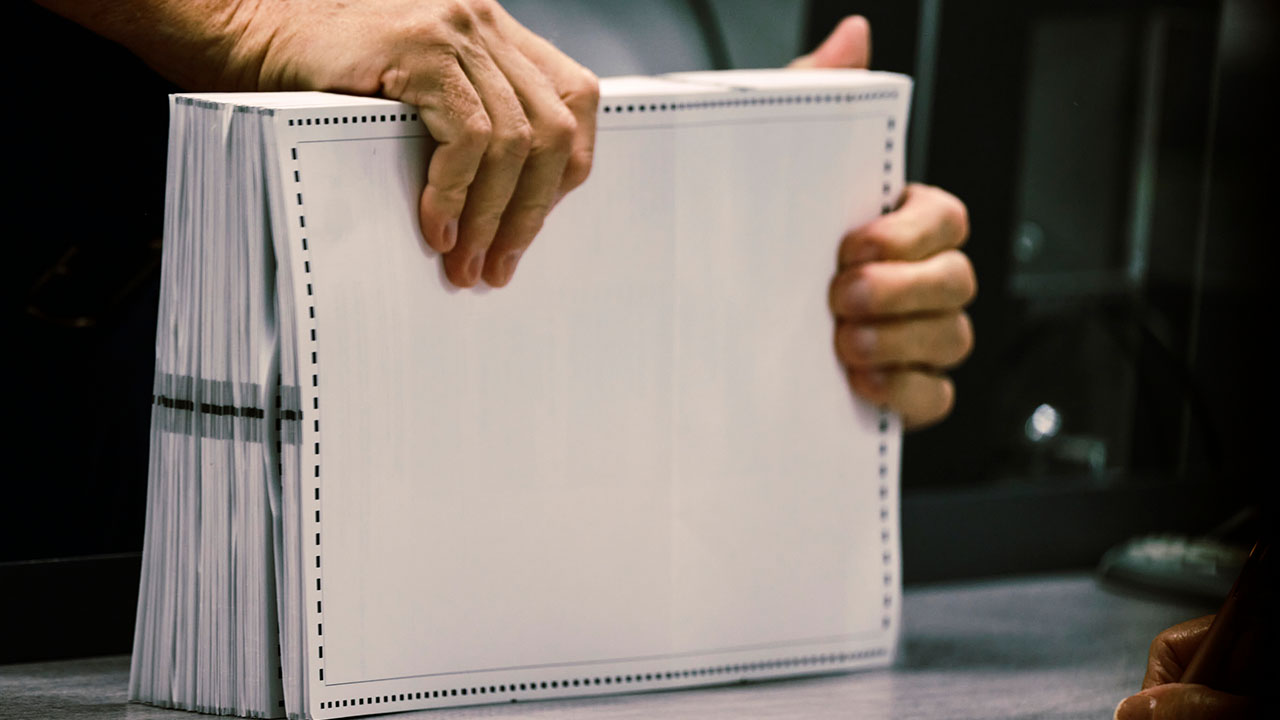
The specific contours of these anxieties are evident in the scores of election-related lawsuits filed by the two parties and their allies. They are concerned with matters as granular as the proper way to seal a ballot envelope in North Carolina and as sweeping as the role of the federal government in an election system that is, per the Constitution, administered by the states.

Some of the litigation hints at the kinds of postelection legal fights that could erupt in court, not to mention rhetorical fights in the court of public opinion, if election results are challenged. Election lawyers are already bracing for the possibility.
“I say this with regret, that we’re becoming increasingly litigious,” Jeh C. Johnson, a lawyer and former Homeland Security secretary, said at a recent Georgia forum on election integrity. “There’s a whole bar out there now of election law experts that have to be on the ready on election night.”
The amount of election-related litigation filed in the United States has jumped significantly since 2000, when a U.S. Supreme Court ruling handed that year’s contested presidential election to George W. Bush. From 1996 to 1999, there was an average of 94 election lawsuits per year, according to research from Rick Hasen, a law professor at UCLA. From 2000 to 2024, the country averaged 283 cases.
The Republican National Committee alone has said that it currently has 179 “active election integrity cases” in 37 states.
“Secure elections increase voter confidence, and voter confidence drives turnout. That’s why the RNC is fighting for transparency, accountability, and enforcement of our election laws,” said Mike Hurst, RNC general counsel. “Every eligible voter deserves to know their vote is protected, the rules are followed, and the outcome can be trusted.”
Several rulings have already made their mark on the coming election. A U.S. Supreme Court decision in April gutted a federal law protecting minority voting power, allowing multiple states to redraw their electoral maps to favor Republicans. In September, the court stymied the Trump administration’s plans to use the U.S. Postal Service to restrict mail-in voting, while a separate ruling handed Trump a victory by allowing states to use a federal database to check for ineligible voters.
Despite a lack of widespread evidence, the claim that noncitizens have registered to vote or have voted in U.S. elections has become one of the signature concerns of the second Trump administration. In July, the president stated that the Department of Homeland Security had found “approximately 278,000 noncitizens who are registered to vote in federal elections” across four states.
A generation of research shows that registration and voting by noncitizens are extremely rare. Still, Republicans have aggressively used the courts to try to protect the system from ineligible voters — a strategy that Democrats say is a ruse to impose strict rules that make it harder for eligible voters to cast ballots.
Republicans contend that these moves are a matter of common sense: In North Carolina, for instance, they claimed victory this year in a lawsuit requiring that the state election board remove people from the voter rolls who admit they are not citizens on a jury questionnaire. In Arizona, the RNC has challenged a lower court’s decision to block a state proof-of-citizenship requirement. The U.S. Supreme Court has agreed to hear the case after the November election.
One of the most ambitious efforts to smoke out ineligible voters has come from Trump’s Justice Department, which has demanded that all states turn over their unredacted voter registration lists. Some states declined to do so, citing privacy concerns and the Constitution, which empowers the states and Congress, not the executive branch, to administer elections. The Justice Department sued those states, but so far, courts have dismissed 26 of the lawsuits, according to the Brennan Center for Justice, a voting rights and democracy group. Many of those rulings have been appealed.
To Elisabeth Frost, chair of the litigation department at Elias Law Group, a Washington firm that has handled many high-profile cases for the Democratic Party, the lawsuits seeking to force states to turn over their voter rolls show an administration that is “obsessed with getting voter data in any way, shape or form it can.”
Frost said she feared that this data, if obtained, could be used to remove legitimate voters from the rolls. She said the administration could also use it to spin false and confusing narratives to cast doubt on, or formally challenge, Democratic victories in November.
On numerous occasions after the 2020 election, Trump’s allies presented flawed data in lawsuits seeking to challenge his election loss to Joe Biden. This year, even the failure to obtain the data might be weaponized against Democrats, Frost said.
She imagined postelection scenarios in which the administration could try to cast aspersions on Democratic wins by saying, “We tried to get this data, and the states didn’t give it to us, and so no one should believe the results.”
The Justice Department has said that the state voter rolls would allow the department to cross-reference names with federal databases, ostensibly including the database known as SAVE, which was the subject of a recent Supreme Court decision.
Critics have noted that checking voters’ citizenship status against SAVE, short for Systematic Alien Verification for Entitlements, has resulted in numerous errors.
This week in Arizona, the Maricopa County attorney announced that an investigation into 60 alleged noncitizen voters identified with the help of the SAVE database found that 52 were U.S. citizens, with the eight others (among them five independents, two Republicans and one Democrat) having voted in a smattering of elections dating back to 2012.
The county attorney, a Republican, acknowledged this was not enough to swing any election and chalked it up to a glitch in the state’s driver’s license renewal system.
Even so, the Supreme Court ruled on Sept. 25 that states could use the database if they wished.
Legal experts have said that the impact of this decision on the midterms is likely to be limited, because federal law establishes a 90-day “quiet period” before elections, in which election officials may not “systematically remove” voters from the rolls.
But the removal of individual names on a case-by-case basis is still allowed. Lori Ringhand, an election law expert at the University of Georgia’s law school, wondered if some states might be emboldened to remove a large number of voters from the rolls while claiming that the removals were performed on a case-by-case basis, not “systematically.”
“There’s going to be a gray zone there,” she said. “I would not be surprised if a state tries to push the envelope on that.”
Another effort that has received less attention involves a number of lawsuits filed by the RNC and its allies that seek to rescind the voting rights of U.S. citizens living abroad who have never lived in the country, including the children of U.S. military members who turn 18 overseas while their parents are deployed.
So far, Republicans have won one such lawsuit in North Carolina and saw suits dismissed in Michigan and Nebraska, with similar suits pending in several other states.
And this week, the Democratic National Committee sued the Defense Department, arguing that it violated federal law by implementing changes to a form offered to overseas residents that make it harder for such residents to register to vote. (The Office of Management and Budget was also named in the lawsuit, which argues the office allowed the changes to go through without the requisite public notice.)
While the number of voters who fall in this category is relatively small, the lawsuits are part of a broader recent trend in which Republicans have been challenging the status of overseas voters.
In one standout case, a Republican candidate for the North Carolina Supreme Court tried to get tens of thousands of votes thrown out after he lost his 2024 race to a Democratic rival by fewer than 800 votes. Among the contested voters were members of the military and about 300 of the overseas voters referred to as “never residents.”
The challenge took months to resolve in the courts, and some observers wondered at the time whether the case was laying the groundwork for similar challenges in future elections.
Jane Kleeb, vice chair of the DNC, raised the possibility that Republicans could try to use the courts to invalidate the ballots of overseas voters, or some other tranche of voters, after Nov. 3.
“North Carolina may have been a test case for them,” she said.
As for the Democrats and their allies, election law observers said it was possible that the party’s postelection lawsuits might focus on last-minute voter purges, a long-standing concern. A Kentucky lawsuit that was filed by a progressive group, and that resolved in August, forced changes to a Kentucky state voter purge law.
Democrats and others on the left have already filed a number of lawsuits that demonstrate some of their most pressing concerns heading into Election Day.
A lawsuit filed last month by civil rights groups and labor unions stated that the Trump administration’s immigration enforcement actions, along with suggestions that it might send armed agents to polling sites, amounted to illegal voter intimidation.
Another suit, from the DNC, has demanded records from the government related to the potential stationing of federal agents at polling places.
A second DNC lawsuit raises the concern that the Trump administration could try to block counting or certification after Nov. 3. The suit asks the Department of Justice to turn over public records “concerning any planned seizure of ballots, voting machines and other voting system components.” So far, the administration has turned over no documents in that case.
Derek T. Muller, a law professor at the University of Notre Dame’s law school, said that these last two lawsuits in particular were seemingly meant to signal Democratic concerns to the public.
“Some complaints are designed to assure the public, or your base, about certain things that the party notices,” Muller said. “At the same time, it does show that the party is aware of these concerns, and it’s preparing in the event that something changes after the election.”
—
This article originally appeared in The New York Times.
By: Richard Fausset/Zack Wittman
c.2026 The New York Times Company