
|
Getting your Trinity Audio player ready...
|
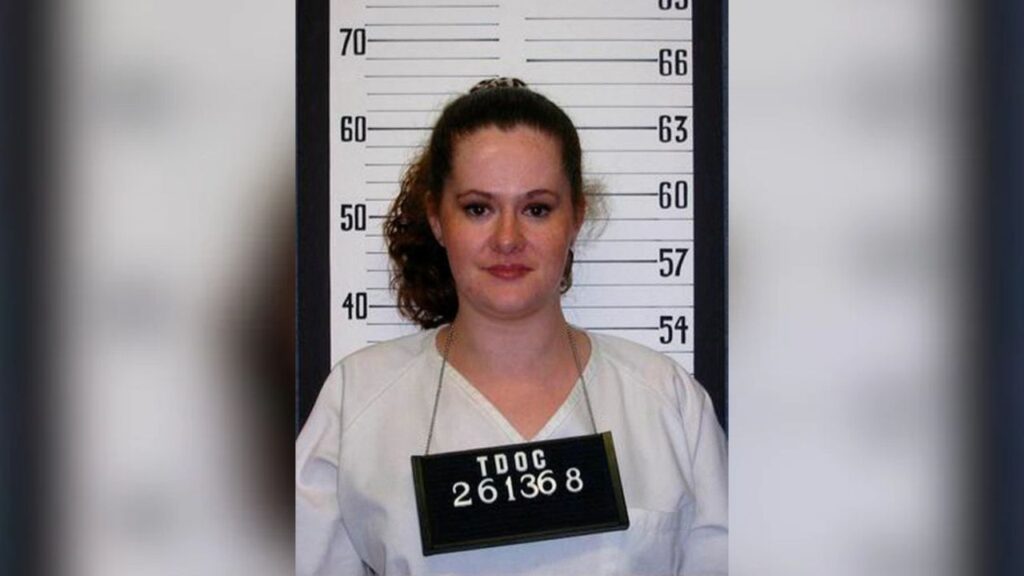
As the wait dragged on Wednesday night for word about Christa Pike’s fate, concern mounted that an execution in Tennessee had gone terribly wrong yet again.
The memories were fresh of a botched attempt just four months earlier, as a doctor spent 90 minutes poking another condemned inmate with needles and slicing open his chest in search of a vein before the state called off the execution. Pike’s lawyers had cautioned that she had health issues that could create similar complications.
Still, the state pushed ahead, administering two doses of the drug pentobarbital, and Pike did not die. She remains in critical condition, her prognosis unclear.

Pike’s survival struck many as shocking and almost inconceivable. But a bungled process ending in pain and confusion seemed all but predictable to lawyers, activists and other experts who argued officials in Tennessee had ignored warning signs, adding another unsettling chapter to a flawed history with capital punishment.
“This is exactly what we have been saying for months and months and months was going to happen,” said Kit Thomas, a federal public defender working on death row cases in Nashville, Tennessee. “It’s surprising, and also not surprising at all.”
The failures with Pike’s execution have underscored the challenges and compromises that face states like Tennessee, where officials have remained resolved to maintain the death penalty. The state has carried out four executions since 2025.
Across the country, public support for capital punishment has faltered, and the drugs needed for lethal injections have become harder to obtain.
As problems arose with attempted lethal injections in Tennessee, critics repeatedly expressed concerns about the qualifications of the officials, doctors and staff members involved in the executions and the quality and provenance of the drugs used.
They have also condemned secrecy encoded in law that was designed to protect the people and companies involved in the process from threats and protests. Critics argue those rules have effectively prevented the public from having even a rudimentary understanding of the process.
“There’s very little that the government does in secrecy that they do well,” said Jody Barrett, a Republican state lawmaker and a persistent critic of the lack of transparency in the death penalty protocol.
Gov. Bill Lee, a Republican, said Thursday that it appeared that state correction officials had followed the protocol with Pike, who was convicted of murdering a classmate in 1995. But he has called off another execution scheduled for later this year and has asked for a “thorough and comprehensive” independent review of lethal injection procedures.
“The people of Tennessee have determined that capital punishment is the appropriate sentence for the most heinous of crimes,” Lee said in a news conference Thursday. “The people of Tennessee expect those sentences will be carried out in a manner that’s not only legal and constitutional but effective, and that didn’t happen.”
For opponents of capital punishment, Pike’s case provided more evidence that executions were an outdated and barbaric practice that needed to be left behind. Conversely, supporters see each failure as undermining the state’s ability to preserve a punishment they regard as a just and necessary response to the worst crimes.
For more than two decades, lethal injections have been the default method of execution for much of the country. But several states have had to resort to secretive measures and alternatives as the ability to continue with lethal injections was disrupted after high-profile cases of botched executions and major pharmaceutical companies began refusing to sell their products to state corrections departments.
Other states turned to different methods, like nitrogen gas or firing squads, which has presented new constitutional hurdles to navigate. But Tennessee has stuck with lethal injections, even as officials have been dogged by growing unease about flaws with the method and the state’s ability to effectively carry it out.
Over the past decade, older death row inmates have even opted for the electric chair over lethal injection. Tennessee law allows condemned inmates whose crime took place before a 1999 cutoff to choose electrocution, and several of them have done so, with their lawyers citing fear of pain and the possibility of complications with lethal injection as their rationale.
Lee paused executions and ordered an investigation in 2022 after learning the state had failed to properly test lethal injection drugs that were set to be used in an execution. The state did not test for the presence of toxins that could have caused serious complications, including respiratory failure.
The review, led by a former U.S. attorney, found chronic oversights and failures by the Tennessee Department of Correction to follow its own protocols with the drugs.
After that, the state switched from a protocol involving three drugs to relying on a single drug, pentobarbital, and it resumed executions in 2025.
Advocates for death row inmates argued that correction officials had opted for streamlined procedures that were harder to run afoul of, rather than adopt more substantial changes suggested by the review. They also contend that officials take advantage of the protections from disclosing information afforded to them by law.
“They can rely on that secrecy,” Thomas said. “It’s pervasive.”
Advocates had expressed alarm last year after the state executed Byron Black, a 69-year-old man convicted of killing his girlfriend and her two daughters, despite him having a heart implant with a defibrillation function that could shock him as he died. Witnesses said Black, who had intellectual disabilities and numerous health issues, appeared severely distressed, saying, “It’s hurting so bad.”
Concerns about lethal injection intensified more widely after the failed attempted execution in May of Tony Carruthers, who had been sentenced to death for three murders in 1994.
Staff members poked Carruthers repeatedly with needles, on both arms and then in his feet, as they tried to find a vein, according to his lawyer. Then came a shot of lidocaine as a doctor sliced into his chest to try to reach a larger, deeper vein, leaving him groaning in pain.
After 90 minutes, the phone in the death chamber rang. They were ordered to stop.
Carruthers was still struggling and had full feeling and mobility on one side of his body, Maria DeLiberato, his lawyer, said in an interview Thursday. She added that his legal team was working to have an outside doctor examine him.
Lee has delayed any further attempts to execute Carruthers by a year, but he declined to pursue a more thorough review of his botched execution. State correction officials affirmed their confidence in their procedures.
—
This article originally appeared in The New York Times.
By Rick Rojas
c. 2026 The New York Times Company