
|
Getting your Trinity Audio player ready...
|
WASHINGTON — The House voted late Tuesday evening to block California from setting strict limits on harmful air pollution from ships docked at state ports.
The 216-211 vote was the latest salvo by Republicans against the state’s pioneering environmental policies. President Donald Trump and his allies in Congress already barred California last year from imposing its landmark ban on sales of new gasoline-powered vehicles by 2035.
The Clean Air Act authorizes California to set pollution standards that are stricter than federal rules, as long as it receives permission from the Environmental Protection Agency. Under the Biden administration, the EPA granted the state waivers to set tighter limits for ships, cars, trucks and even lawn-and-garden equipment like lawn mowers and leaf blowers.

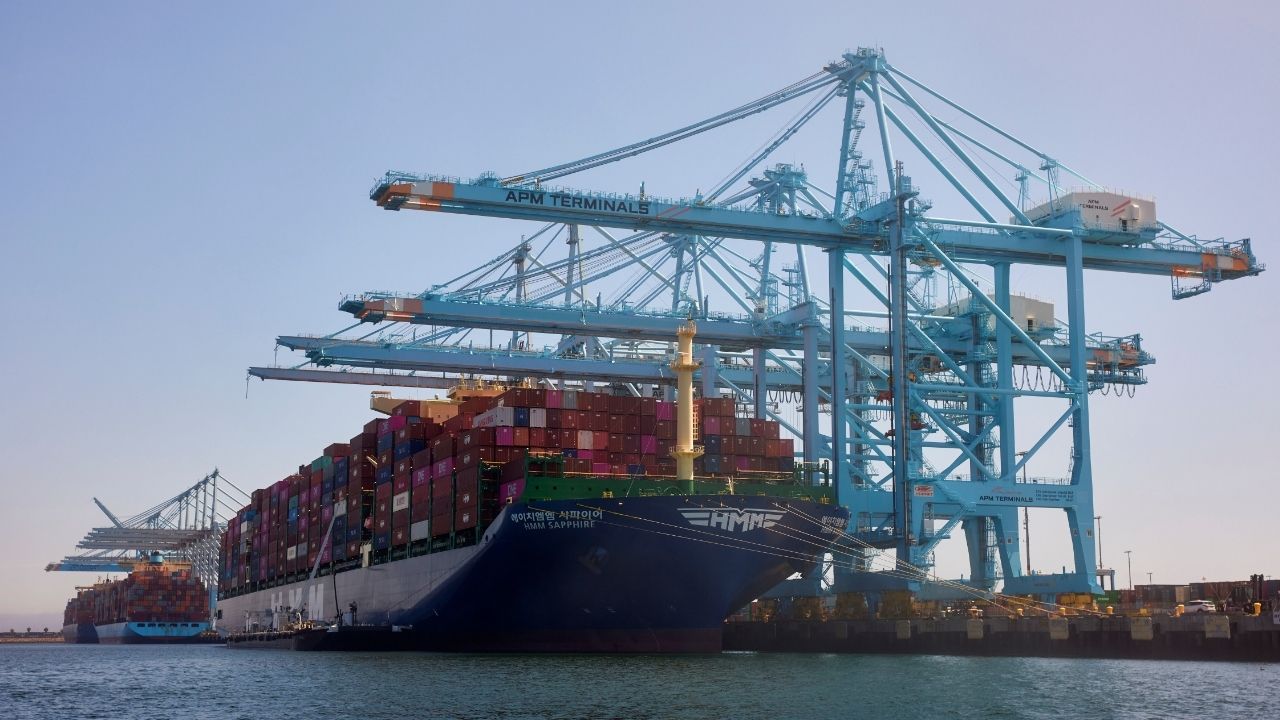
But Republicans have been trying to overturn the waivers. The resolution the House passed Tuesday would revoke a waiver that allowed California to enforce the clean ship rules, which were designed to protect the health of communities near ports in Los Angeles, Long Beach and Richmond.
When enormous container ships and cruise ships dock, they typically keep diesel engines running around the clock to power operations on board. The diesel exhaust contains soot, smog and cancer-causing chemicals that can drift into nearby neighborhoods.
The rules that lawmakers targeted Tuesday would require ship operators to turn off diesel engines and plug into local power grids while docked. If that isn’t possible, dock operators would need to use equipment to capture nearly all the pollution from a ship before it is released into the air.
Rep. Vince Fong, R-Calif., introduced the resolution to bar the clean ship rules under the Congressional Review Act. That would allow the Senate to pass the resolution by a simple majority vote, rather than the 60 votes needed for most legislation to clear the filibuster. It is unclear when, or whether, the upper chamber will act.
“California should not be able to impose costly shipping mandates that drive up prices across the nation, disrupt our supply chain and put our energy security at risk,” Fong said Tuesday on the House floor.
He said the rules imposed expensive and “unworkable” requirements on California ports that handle 40% of the nation’s containerized imports.
Environmental and public health experts strongly disagreed with these assertions. They noted that state regulators projected the rule would prevent 237 premature deaths, 75 hospital admissions and 122 emergency room visits by 2032, yielding $2.3 billion in public health benefits compared with $2.2 billion in compliance costs for industry.
“States have the right to protect their residents from deadly air pollution,” Will Barrett, assistant vice president of nationwide clean air advocacy at the American Lung Association, said in a statement. “The Lung Association is deeply opposed to this inappropriate action to undermine lifesaving clean air protections for some of our most vulnerable communities.”
California Gov. Gavin Newsom, a Democrat, sharply criticized the vote on social media late Tuesday.
“House Republicans just voted to choke port communities and harm our children with dirtier air,” Newsom wrote. “Why? To give Big Oil another handout.”
Rep. James Gallagher, R-Calif., has introduced a second resolution to bar pollution limits for ships sailing in state waters, rather than those docked at ports. The House is expected to vote on that resolution Thursday.
The legality of the effort to claw back the waivers is in dispute. A federal judge ruled earlier this month that Lee Zeldin, the administrator of the EPA, acted improperly when he asked Congress in June to review and repeal four waivers.
In a stinging opinion, Judge Beryl Howell of the U.S. District Court in Washington said Zeldin wrongly characterized the waivers as rules subject to the Congressional Review Act. And in a follow-up order Saturday, she said Zeldin also erred in July when he sent Congress two additional waivers, including one authorizing the clean ship rules.
Howell, who was appointed by President Barack Obama, added that the Trump administration appeared to be working in concert with oil and gas industry groups like the American Petroleum Institute, which supported its stance in court filings.
“The torch carried by trade associations for the petroleum industry is now being lifted by EPA,” she wrote.
The Justice Department appealed the ruling hours before the House voted Tuesday.
California has also sued to reverse the rescission of the waiver for the car emissions rules. That litigation is ongoing in U.S. District Court for the Northern District of California.
—
This article originally appeared in The New York Times.
By Maxine Joselow/Maggie Shannon
c. 2026 The New York Times Company