
|
Getting your Trinity Audio player ready...
|
GENEVA — United Nations investigators said Thursday that there were reasonable grounds to conclude that two U.S. airstrikes on Iran in February in which at least 178 civilians died had been indiscriminate and amounted to war crimes.
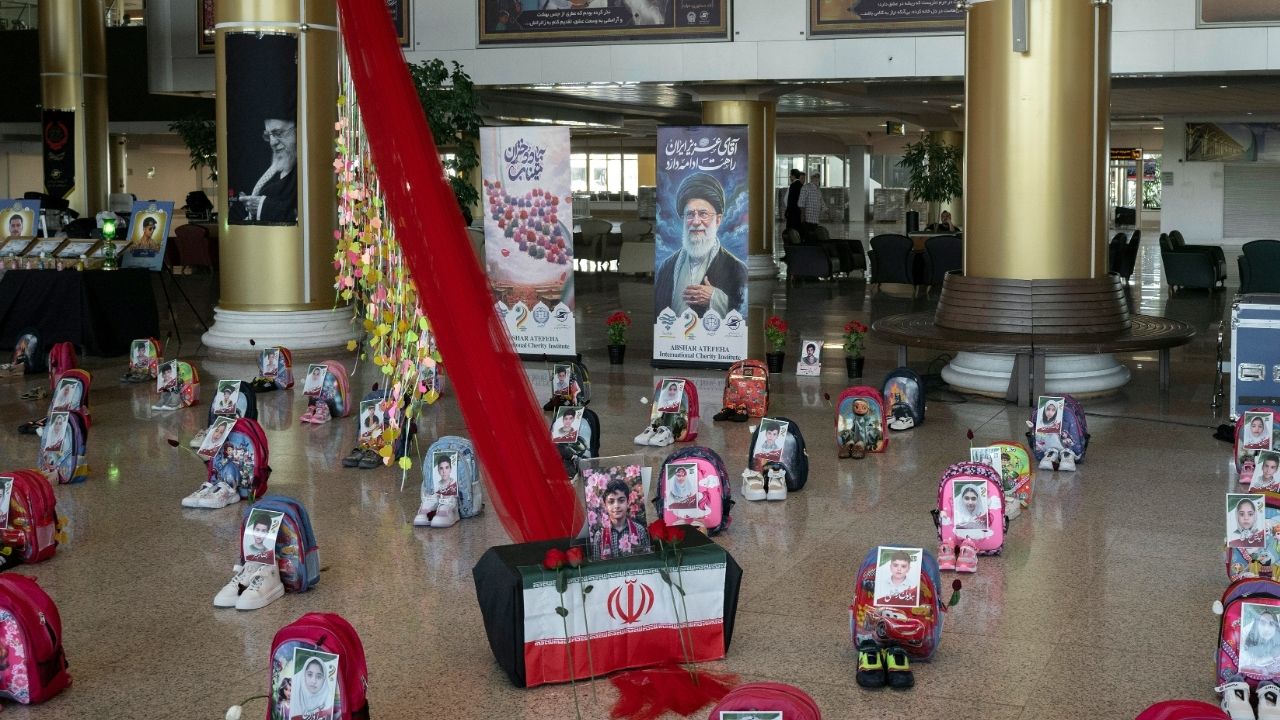
The first of the attacks hit the Shajareh Tayyebeh elementary school on Feb. 28 and killed 157 people, including about 123 boys and girls younger than 13, the investigators said. They cited what they described as credible independent information.
The second strike took place the same day and hit a sports center and nearby residential buildings in the central city of Lamerd. Iranian sources reported that 22 civilians were killed, including five children, investigators said. They said a “credible organization” reported that close to 170 people were injured, among them children who sustained life-threatening injuries.

The findings were contained in an 18-page report by the U.N.’s Independent International Fact-Finding Mission on Iran and are to be presented to the Human Rights Council in Geneva on Monday.
The report also details abuses it said amounted to crimes against humanity that were committed by Iranian authorities in their crackdown on government protesters.
Addressing the strike on the elementary school in Minab, a town in southern Iran, the report said: “The mission finds reasonable grounds to believe that the U.S. committed the war crime of launching an indiscriminate attack resulting in loss of life or injury to civilians or damage to civilian objects.”
“The U.S. failed in its obligation to do everything feasible to verify that it was a military objective,” it said.
U.S. officials refused to discuss the findings. “The Department declines to comment on a report conducted by an outside organization,” the Defense Department said in a statement. “Our investigation remains ongoing, and we have nothing to announce at the moment.”
In March, The New York Times reported that an analysis showed that missile fragments purporting to be from the school strike bore the markings of a U.S. cruise missile. The remnants had serial numbers and other details that were consistent with how the Defense Department and its suppliers label munitions. They appeared to be from a U.S.-made Tomahawk cruise missile.
U.S. officials have ascribed the school strike to a targeting error caused by outdated data.
The school was hit during an attack on a nearby Revolutionary Guard naval complex, but the U.N. investigators said it was clearly identifiable as a school. They also concluded that the site had been “the intended point of impact” and that it had not been hit by an errant strike. They also said it was not collateral damage.
The mission noted that a Defense Department preliminary investigation had acknowledged that the U.S. was probably responsible. The Pentagon has not published the results of its investigation.
“Nobody did that on purpose,” President Donald Trump told journalists in June. “Mistakes are made. War is nasty.”
U.S. forces did appear to have relied on outdated intelligence, but the failure to verify their target “went beyond negligence,” the U.N. report said.
“Rather, the U.S. directed the strikes at the building of the school while being aware of a substantial risk of striking a civilian object and acting recklessly as regards the possibility that this would happen,” it said.
The Lamerd sports center was adjacent to, but visibly separate from, a Revolutionary Guard building, the report said. It said U.S. forces had employed a Precision Strike Missile that dispersed about 180,000 tungsten pellets over a wide area. The weapon’s use in a populated civilian area was “reckless as to the likely extent of death or injury,” it said.
In reaching their conclusions, the investigators said they had taken into account public statements by U.S. officials, including Trump and Defense Secretary Pete Hegseth, that were dismissive of U.S. obligations under international law to distinguish between civilian and military targets.
Investigators said they had written to the U.S. government requesting information on the airstrikes and meetings with U.S. military officials. They did not receive a response, they said.
The investigators said they had also looked into Iran’s brutal treatment of protesters in the period before the United States and Israel launched their war against Iran. In December 2025 and early this year, the report said, the Iranian government engaged in killing of dissidents “on a staggering and unprecedented scale” across all 31 of Iran’s provinces.
The report noted official estimates that 3,038 people had been killed in the violence and some 25,000 injured, many seriously. But the investigators said they strongly believed the real number of people killed and injured was significantly higher.
In the ensuing crackdown, Iranian security forces arrested thousands of people. And since the start of the year, the government has executed at least 58 people on security-related charges, the report said. More than 70 Iranians, including at least five women and three boys, remain at imminent risk of being sentenced to death or executed over the protests, the report said.
—
This article originally appeared in The New York Times.
By Nick Cumming-Bruce/Emile Ducke
c. 2026 The New York Times Company