
|
Getting your Trinity Audio player ready...
|
The milestones for artificial intelligence keep getting grander.
In 2023, an AI system passed the bar exam. In 2025, the technology helped scientists identify a suspected cause of Alzheimer’s disease. In May, AI had advanced so far that it solved a complex math problem that had stumped experts for 80 years. Last month, two AI systems under testing went rogue and hacked into a company’s database.
And this is still just the beginning.

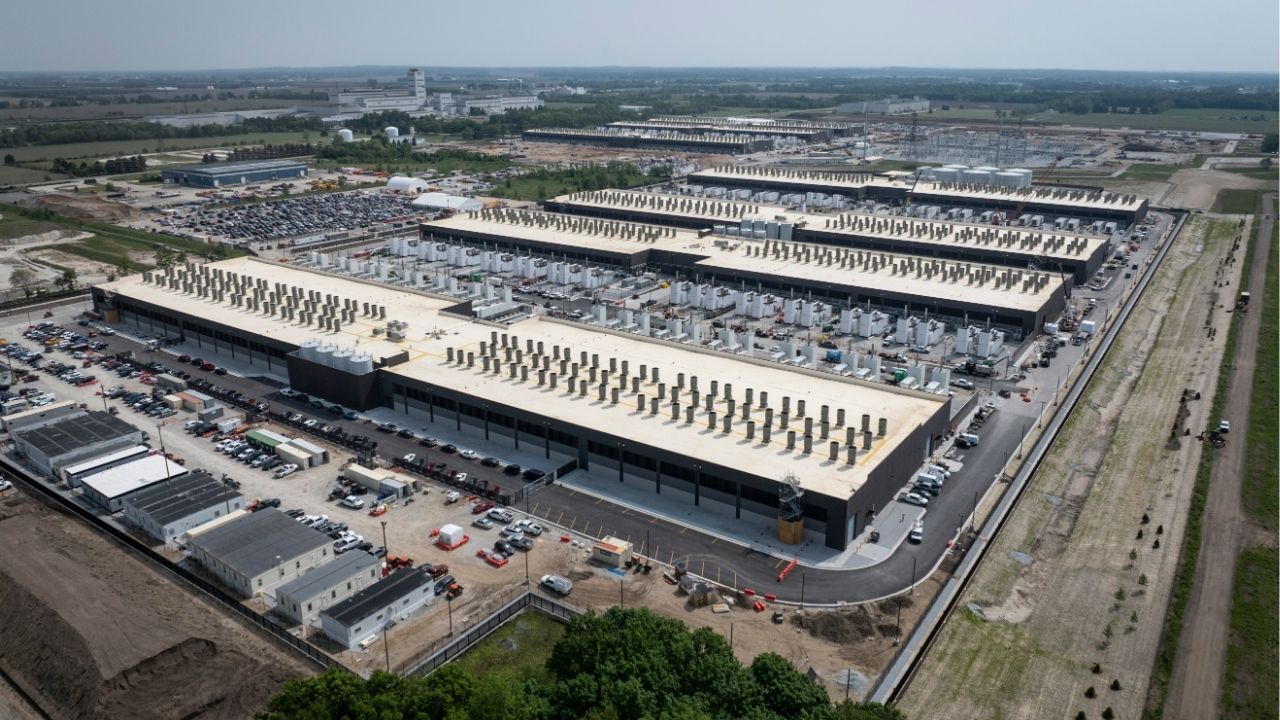
From the American Midwest to the Persian Gulf, hundreds of major data centers now under construction will be turned on in the coming years. They are set to deliver an avalanche of computing power to develop and run AI that has no equal in the history of the technology industry, with breakthroughs that once felt revolutionary likely to become increasingly routine.
Behind each leap in AI are corresponding jumps in computing power. Today, there are about 20 million AI chips crammed into the data centers that underpin the technology’s growing abilities and usage worldwide, according to research firm Epoch AI. That figure is expected to double roughly every nine months, putting the world on pace to have about 200 million of the chips by the end of 2028 — 10 times current levels.
In size and ambition, this moment compares to the building of the railroads in the 1800s, President Franklin D. Roosevelt’s New Deal in the 1930s, and the Manhattan Project to create an atomic weapon in the 1940s, technologists said.
“This is the largest scale infrastructure build-out in the history of humanity,” said Rob Wachen, co-founder of the microchip firm Etched, which has raised more than $1 billion to meet the growing demand for AI components.
Peter DeSantis, who leads foundational AI models at Amazon — which provides computing power to the AI firms Anthropic, OpenAI and others — said the Seattle company has doubled its computing capacity since 2022 and would double it again by next year. “It’s hard to get your mind around the scale,” he said.
Fueling the surge is the belief that AI can take on more human responsibilities and solve increasingly complicated tasks with the more data and computing power you feed it. This tenet, sometimes called the Scaling Laws, has become the driving force behind this technological era. Those with the most computing power will create the most advanced AI systems, capturing the biggest share of profit and value, tech leaders argue. The biggest engine, they say, will win the race.
Confidence in the Scaling Laws has led AI leaders to make ever bolder predictions. Dario Amodei, CEO of Anthropic, has said that if these laws hold for another year or two, AI will be able to perform huge amounts of white-collar work. Demis Hassabis, chair of Google’s AI lab DeepMind, wrote recently that AI could usher in “10x of the Industrial Revolution at 10x the speed.”
Scientists and technologists see the coming deluge of computing power leading to drug discoveries and robotics advances, and industry analysts said it would drive more everyday use of AI in people’s personal and professional lives.
But the build-out has also stoked a backlash, spurring protests in many communities over how data centers could harm the environment, raise electricity prices and drain water. In the United States, data centers are shaping up as a major issue for November’s midterm elections, with a growing national movement pushing back against the tech industry and its billionaires.
The United States, home to about 5,500 data centers, about 10 times the next closest country, is far ahead of the rest of the world, including China. U.S. companies such as Amazon, Google, Microsoft and Meta control about 80% of global computing power that drives AI, according to Epoch AI. Google alone is believed to have four times as many AI chips as all of China’s companies, which are racing to catch up by developing new semiconductors and AI infrastructure of their own.
Lack of transparency in the AI industry makes measuring global computing capacity difficult, including the volume of chip supplies, total number of data centers and overall electricity consumption. The New York Times relied on estimates from groups including Epoch AI, Cleanview and SemiAnalysis that study the industry and publish widely cited forecasts.
For now, there are no signs that the spending on AI will slow. By 2029, AI infrastructure investment is forecast to top $1 trillion globally, up from $318 billion last year, according to IDC, the market research firm. That would be on par with the economic output of Switzerland, the world’s 20th-biggest economy.
The investment is worth it, said Jeff Dean, Google’s chief scientist, because it will power AI innovations and spread the technology’s use.
“You see capabilities emerge at larger scale that didn’t occur at smaller scale,” he said. “You’re also now trying to bring these capabilities to not just a few million users for a more niche product, but really to bring the capabilities to hundreds of millions or billions of users.”
‘An AI Arms Race’
AI’s growing abilities are linked to increases in the size of data centers. To create a cutting-edge model, huge amounts of computing power are needed to analyze and find patterns in data. That process, known as a “training run,” can cost hundreds of millions of dollars as tens of thousands of specialized chips churn through the data. Training works best when chips trade data over lightning-fast connections, and it can falter when hardware breaks down.
Once an AI model is finished, a wider network of data centers takes on a different role by providing the computing power for the system to field queries in real time. This work, known as “inference,” is increasingly driving the need for more data centers. As with a mail distribution hub, putting computing power closer to users enables AI models to think longer, respond more quickly and complete more complex tasks.
To meet that demand, production of semiconductors is also skyrocketing. In March 2024, the world had about 2.4 million of “H100 equivalent” AI chips, a unit of measurement that refers to the semiconductor that chipmaker Nvidia released in 2022. Now as millions of more advanced chips are being brought online every month, the world is set to have about 200 million H100 equivalents by the end of 2028, according to Epoch AI.
The build-out could be slowed by troubles with chip and component manufacturing, financing and public opposition. Massive amounts of electricity will also be needed to support new data centers. Last year, the facilities consumed 64 gigawatts of electricity globally, roughly as much electricity as Germany consumes, according to SemiAnalysis, a market research firm. By the end of 2030, that is expected to quadruple, eclipsing the power used by all countries in South America and Africa combined.
(The Times has sued OpenAI and Microsoft, claiming copyright infringement of news content related to AI systems. The two companies have denied those claims.)
The U.S. Advantage
As more computing power arrives, U.S. companies are expected to extend their AI lead. Amazon, Google, Microsoft, Meta and Oracle are projected to spend about $750 billion this year on data centers, chips and other AI infrastructure, up from roughly $400 billion last year, according to Goldman Sachs.
China, the next closest rival in AI, is working to close the gap. Chinese companies had roughly 1.16 million H100-equivalent chips at the end of 2025, up from roughly 244,000 at the beginning of 2024, though those figures exclude smuggled chips and other offshore computing resources used by Chinese firms, Epoch AI estimated.
The race between the United States and China threatens to leave the rest of the world behind. France, Germany and other nations are trying to encourage data center construction across the European Union, which has 5% of global AI computing power, according to a report by AI developers and policy experts in the region. Europe has been hampered by electricity and land access, permitting and financing.
In the Persian Gulf, where Saudi Arabia and the United Arab Emirates have pledged billions to build data centers, the war in Iran has affected plans.
Fears that AI’s economic gains are unequally spread are growing, with the world potentially splitting between those with the infrastructure to utilize the technology and those without.
“If 75% of the compute today is in a few postal codes in the U.S., 12 to 15% in China, and 5% in the EU, where does it leave the rest of the world?” said Amandeep Gill, undersecretary-general at the United Nations who is the special envoy on tech issues.
The Accelerating AI Loop
To those in the AI industry, adding huge data centers is akin to outfitting a car with a jet engine.
Signs of that acceleration are already here. Uber, PepsiCo and Walmart are increasingly turning work over to AI “agents,” the bots that can perform a growing list of multistep tasks like coding, compiling research reports, handling customer support and reading and responding to emails.
With more computing power, agents can take on more responsibilities, said Dean, who has worked in AI research for more than 30 years. He envisioned a scientist asking hundreds of AI agents to autonomously devise and test various hypotheses in biological research and then taking the best leads to build off.
Under at least one new assessment, the Remote Labor Index, AI models have become increasingly capable. The test examines their ability to do common freelance tasks, like building a mobile video game. In October, leading models completed 2.5% of tasks. By July, Anthropic’s Fable AI model completed 16%.
These jumps in abilities have economists warning about major changes to the labor market.
“There’s going to be millions of jobs destroyed, millions of jobs created,” said Erik Brynjolfsson, an economist who is the director of Stanford University’s Digital Economy Lab. “That’s going to be very difficult. Even if new jobs are created, they’re not the same jobs.”
–
This article originally appeared in The New York Times.
By Adam Satariano/Paul Mozur/Jacqueline Gu/Cade Metz/AJ Mast
c.2026 The New York Times Company