
|
Getting your Trinity Audio player ready...
|
The White House has begun drafting a new executive order that could further cement President Donald Trump’s ability to control billions of dollars in scientific grants and expand the administration’s pressure campaign against elite universities.
Discussed at a highly contentious meeting at the White House on Friday, the order aims to create a new external committee with the power to veto awards in the National Institutes of Health’s vast research portfolio that do not conform to Trump’s political agenda, according to people with knowledge of the effort.
During the meeting, Trump repeatedly complained about his administration’s failure to bring Harvard University in particular to heel. The administration has been unable to hammer out a deal with the nation’s oldest and wealthiest university, a central plank of his broader push against “woke” ideology in higher education.

The White House has also lost a pair of lawsuits to Harvard, including one ruling that blocked cuts to the university’s existing federal research grants. The government has said it plans to appeal.
Inside the White House, some of Trump’s top lieutenants have expressed frustration about a perceived slowdown in the administration’s attempt to force conservative cultural changes on academia.
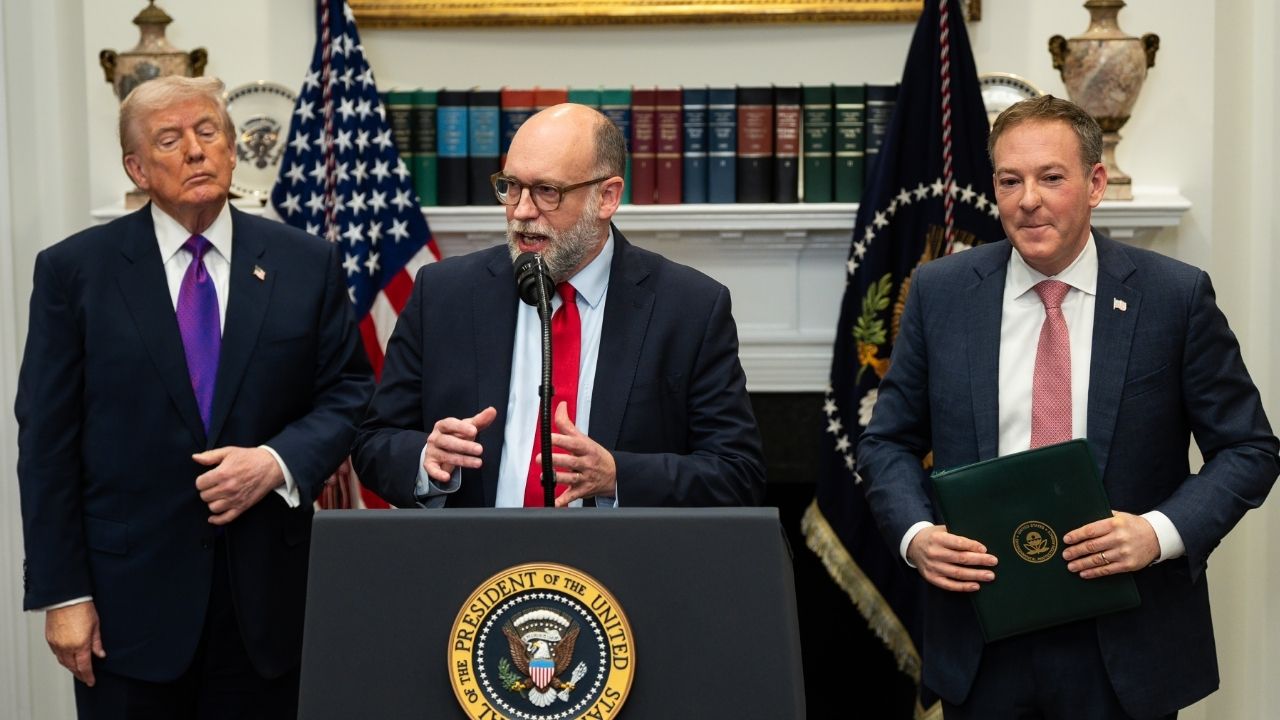
The meeting, in the Oval Office, was called in part to discuss why the NIH hadn’t done enough to push the administration’s agenda on academia in general and Ivy League schools in particular, said two administration officials familiar with the planning.
The meeting was first reported by The Washington Post. Officials at the Office of Management and Budget, which is drafting the executive order, declined to comment. A spokesperson for the NIH, Joshua Pradko, declined to discuss details of the meeting.
“NIH remains committed to its mission of funding biomedical research to benefit the health of the American people,” Pradko said in a text message.
Referring to reports that Russell Vought, director of the OMB, wants to rescind NIH funding, Pradko added, “There will be no rescissions to NIH grant monies. All NIH grant monies will be spent.”
If the order moves forward, it would mark the latest attempt by the Trump administration to usurp the scientific autonomy of the NIH, a $48 billion agency that distributes a majority of its budget to labs across the country for research into areas such as heart disease, cancer and infectious diseases.
Traditionally, the NIH selects projects based on expert review of their scientific merit. But Trump has sought through a series of recent directives in his second term to bring that process under political review, arguing in part that the government has been funding “woke” liberal priorities.
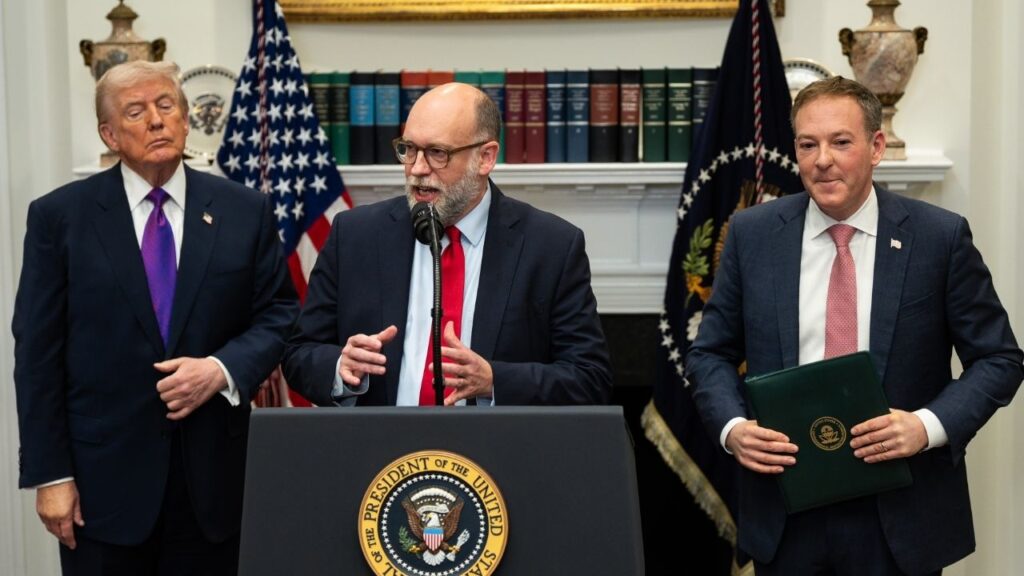
Friday’s meeting brought to a head months of conflict between two of the attendees: Vought, who wants to impose greater political control over NIH grant approvals, and Dr. Jay Bhattacharya, the NIH director, who is resisting those efforts, according to two people close to Bhattacharya.
Their relationship has grown so contentious that Vought had refused to meet with Bhattacharya, the people said. During the session Friday, Vought accused the NIH director of funding projects that were in conflict with administration priorities.
One of Trump’s executive orders, issued on his first day back in office, ended all administration programs involving “diversity, equity and inclusion.” It has had far-reaching effects on NIH studies, including those investigating “health disparities” — why populations defined by factors such as race or socioeconomic status may be prone to certain diseases or to suffer worse outcomes.
The Harvard confrontation has placed Bhattacharya in an awkward position. Dr. Alan M. Garber, president of Harvard University, is his mentor and longtime friend. Both are physicians and health economists; they have authored academic papers together and remain close, according to The Harvard Crimson.
On Friday, Vought also sought access to funds for the current fiscal year that have not yet been spent. He did not succeed. The fundamental disagreement, however, appears to reflect a philosophical difference: Vought wants to cut federal spending for research; Bhattacharya does not.
Nor does Congress, which overruled Trump’s proposal to cut biomedical research spending last year.
Moreover, Bhattacharya opposes Vought’s push to give political appointees the final say over all federal spending, not just health and scientific research.
A proposed rule earlier this year would have integrated political review into the entire federal grant-making process, calling for “ending government sponsorship of gender ideology and other radical doctrines.”
The changes were widely denounced by the scientific and medical research community, and drew bipartisan rebuke in Congress, where lawmakers blocked the White House from proceeding.
The White House has issued a number of executive orders to halt scientific research into areas that conflict with administration priorities. Thousands of grants were terminated for being in conflict with these priorities.
Even before Friday’s meeting, the administration was entangled in multiple lawsuits that challenged those actions.
Last week, a class-action lawsuit was filed in California district court by the American Civil Liberties Union on behalf of scientists alleging that the NIH was unconstitutionally censoring scientific research.
The lawsuit, on behalf of researchers who study health disparities, Alzheimer’s disease and sexual harassment, among other topics, argued that measures the agency was already using to screen grants for compliance with political priorities were a violation of the free speech rights of scientists.
“What the First Amendment does not allow is the government’s use of its funding power to target or silence the expression of disfavored viewpoints within the biomedical research community,” the lawsuit said.
—
This article originally appeared in The New York Times.
By Carolyn Y. Johnson, Sheryl Gay Stolberg, Tony Romm and Michael C. Bender/Tierney L. Cross
c. 2026 The New York Times Company