


|
Getting your Trinity Audio player ready...
|
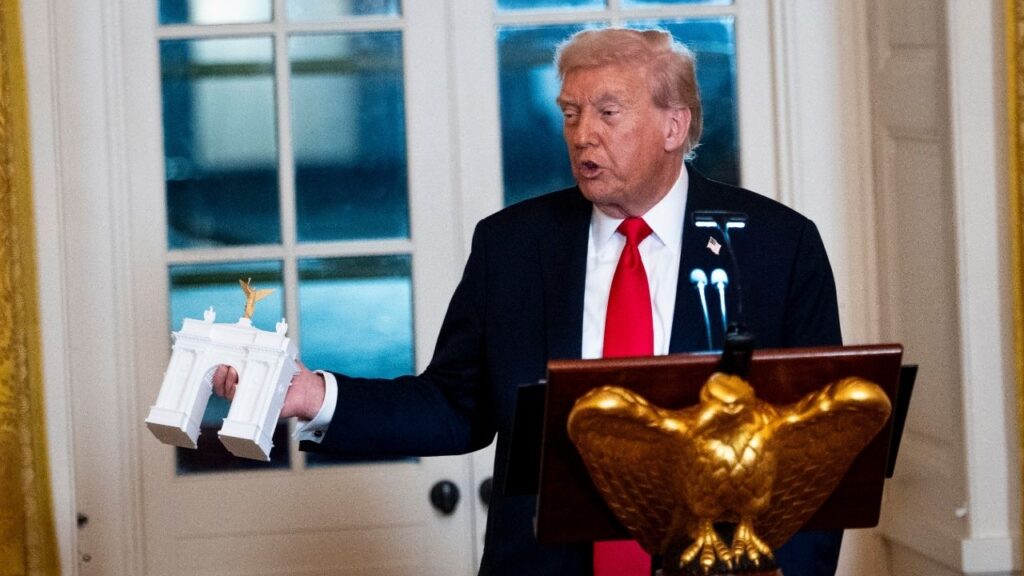
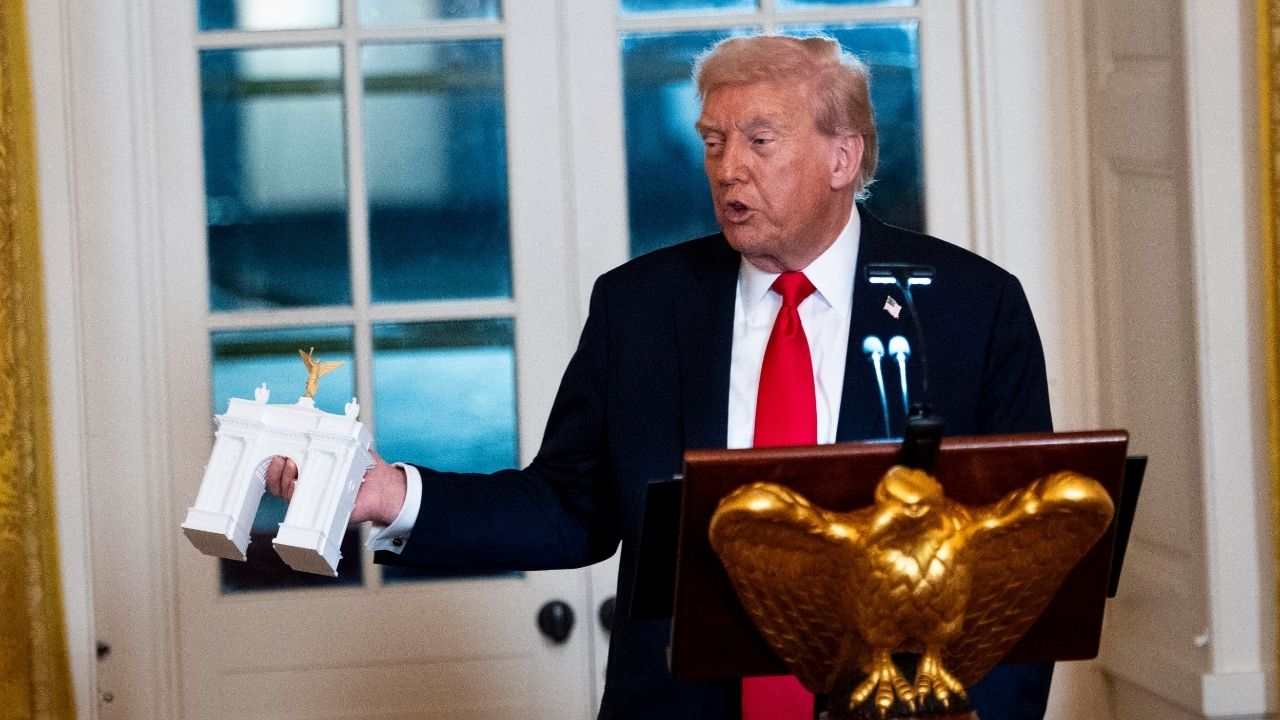
WASHINGTON — President Donald Trump said on Sunday his planned 250-foot triumphal arch in Washington would be built to host “large numbers of drones,” snipers and ammunition, as the administration appeared prepared to justify another construction project by citing national security.
Trump said the arch would be “a top grade Military Complex/Triumphal Arch, to house, store, and have the rapid ability to use large numbers of drones, plus Snipers, on both the roof and plaza areas, and additionally have and hold large quantities of sniper ammunition in storage.” The proposal would appear to place an arsenal and military staging ground in the center of the nation’s capital.
“There will be no facility like this anywhere in the World,” Trump said in a social media post.

The administration has been rushing to clear the final hurdles to construct the arch in recent days, brushing aside concerns from architects, historians and veterans who say it could disrupt the area between the Lincoln Memorial and Arlington National Cemetery. Now, Trump appears prepared to return to a familiar playbook he has used to circumvent normal processes and defend some of his more contentious projects in court.
The White House did not immediately answer questions about the sudden need for a giant arch to host drones in a region with a high concentration of military bases and facilities. The Department of Defense declined to provide additional comment beyond Trump’s social media post.
After initially emphasizing that his ballroom was necessary mainly to host bigger crowds for social events at the White House, Trump shifted his argument as the $400 million project faced legal scrutiny. He switched to arguing that the construction was a national security imperative because it included a major upgrade to the bunker beneath the now-demolished East Wing. That argument has appeared persuasive in the Supreme Court hearings over the project.
Trump has invoked national security concerns for a host of reasons since returning to office. He has cited it as the reason for deploying the military to the U.S.-Mexico border, stripping union rights from thousands of federal workers, pausing the construction of wind farms off the East Coast and exempting oil and gas drilling in the Gulf of Mexico from protections for endangered species of whales.
Even before he said the arch would be turned into a drone-dispatching sniper station, the project had faced scrutiny. When a panel stacked with Trump allies earlier this year gave preliminary approval to the project, it also suggested significant changes to the construction plans.
And the Federal Aviation Administration released a hazard study this past week requesting the arch have a constant flame atop the structure to make it safe for planes to pass by in one of the busiest airspaces in the country. The arch would sit along a flight path less than a mile from Ronald Reagan National Airport.
Nicolas Sansone, an attorney with the Public Citizen Litigation Group, which is representing a group of Vietnam War veterans who have sued to stop construction, said Trump was “trying to paper over a patently unlawful project by giving it a veneer of national security justification.”
The project, he said, continues to be illegal “with or without this concocted justification.” Sansone added: “It simply has no legal foundation whatsoever unless and until Congress passes a law saying he can build it.”
—
This article originally appeared in The New York Times.
By Zolan Kanno-Youngs/Doug Mills
c. 2026 The New York Times Company