

|
Getting your Trinity Audio player ready...
|
Republicans are sharply divided over a new plan being drafted by the Trump administration that would allow stay-at-home spouses to collect childcare subsidy payments from a federal program intended to assist working parents.
Some commentators and lawmakers called the policy, which could help realize a vision of stay-at-home motherhood championed by Vice President JD Vance, a “grand slam,” “no-brainer” and “President Trump’s greatest legacy.”
Others eviscerated it as “socialism,” “rank politics” and “stupid.”

The split reaction reflects one of the emerging fractures in Donald Trump’s MAGA coalition. Traditional Republicans, religious conservatives and America First populists have jostled for influence with the pronatalist movement, which aims for women to have more children and stay home to raise them, and supporters of Health Secretary Robert F. Kennedy Jr.’s Make America Healthy Again movement.
And the role of the federal government in shaping family policy has proved to be a key flashpoint.
When news of the plan broke over Labor Day weekend, Rachel Campos-Duffy, the co-host of “Fox & Friends,” declared on air, “I think this might be my favorite policy, like, ever, that Trump has brought.”
Campos-Duffy, the wife of Transportation Secretary Sean Duffy and a mother of nine, is a prominent voice in the pronatalist movement. She and others in the movement said the proposed subsidy would be the administration’s largest step toward achieving pronatalists’ goals.
Conservative podcasts, broadcasts and social media buzzed with excitement. A coterie of conservative lawmakers, some of whom have tried but failed to push through legislation to pay stay-at-home parents, including Sen. Eric Schmitt of Missouri and Rep. Anna Paulina Luna of Florida, cheered their support.
But many on the right, even those who embrace Vance’s promotion of traditional families, said that handing out government money to parents so they could stay at home would go against core conservative tenets. They also maintained that the proposal contradicted the administration’s efforts to require Americans to work to get other forms of federal support.
“Add work requirements here, but take them away there, just to use the power of the state to promote the family?” said Douglas Holtz-Eakin, an economist who served under President George W. Bush and now runs the American Action Forum, a conservative think tank. “A traditional conservative would say this is none of the government’s business.”
And Erick Erickson, the conservative pundit and radio host, wrote on social media, “Didn’t realize how many conservatives want to be or want their wives to be welfare queens, dependent on a government handout.”
If carried out, the transformation of the childcare subsidy program would be the federal government’s most concrete policy for advancing the family structure championed by Vance, who since his days as an Ohio senator has called to reform childcare subsidies and to promote stay-at-home parents.
Under the draft proposal being considered by the Trump administration, parents who stay home with their children could get a payment from an existing Health and Human Services Department fund set up to help low-income and working-class parents afford childcare so they could work or go to school, The New York Times previously reported. The current program typically provides annual subsidies of about $9,000 per child.
The proposed change to open the program to stay-at-home parents, which originated in the White House, has not yet been finalized or released.
News of the proposal was immediately met with some sharp criticism on the right, revealing a willingness among some conservatives to challenge Vance, who is seen as a likely presidential contender in 2028.
Critics of the proposal said that the administration’s proposal was at stark odds with its push for work requirements for federal benefits.
Trump’s signature domestic policy law, passed last year, included strict new work requirements for certain recipients of Medicaid and expanded work requirements for recipients of federal food assistance benefits. Those changes have already contributed to a loss of about 5 million recipients of food assistance and are projected to cause more than 5 million people to lose health insurance.
“When JD steps out and has a government expansion program, a government handout, we should be calling it out,” said Marc Short, who served as chief of staff to Vice President Mike Pence. “I don’t question his commitment to nuclear family. I just question a policy that stinks.”
An administration official, who discussed the draft proposal on the condition of anonymity, wrote in a text message that the discussion of the proposal was based on speculation. The official said that the draft rule would apply work requirements to households but “not every individual in the household,” and that it would strengthen anti-fraud measures.
In a fiery keynote speech on Sept. 10 at the Republican midterm convention in Dallas, Vance celebrated “the nuclear family.” He did not specifically mention the childcare proposal, but claimed that Democrats were “radicals who wish to abolish my family and the thousands and millions of other families all across our country.”
Some defenders of the subsidy for stay-at-home parents acknowledged that was an imperfect policy, but said that it would serve to redirect current federal funding toward a conservative goal.
Kevin Roberts, president of the Heritage Foundation, the influential conservative think tank, wrote on social media: “The welfare state already exists. The subsidies already exist. And conservatives do not have the votes to dismantle either. Until that changes, taxpayer dollars should reward family formation, not subsidize its decline. That is the conservative option.”
Beccah Williams, a married, stay-at-home mother in Edon, Ohio, said the reworked program could help her family.
“The $9,000 a year would definitely help a lot with groceries and being able to stay home,” she said. “I feel like it’s important to have one parent that stays home. It goes by so fast.”
Williams, who said she voted for Trump, said she had looked into applying for the childcare subsidies when her son, Isaiah, was born six years ago and she was employed in a package factory. But she learned that her joint household income, which included that of her husband, a dockworker, was too high to qualify.
Williams instead arranged free childcare with her sister-in-law for two years, until her daughter, Madelyn, was born.
When her sister-in-law went back to work, the family could not afford childcare. So Williams quit her job, reducing the family’s income so much that the children are now on Medicaid and Madelyn is on a government voucher program for women, infants and children, known as WIC.
“I’m kind of stuck in a way that I can’t get a full-time job because childcare costs too much, but when I’m not working we don’t have that income,” said Williams, adding that a federal subsidy “wouldn’t make up for the lost paycheck, but it’s better than what it is now, which is zero.”
Since the 1990s, the $12 billion Child Care and Development Fund has subsidized the care of children up to age 13, offsetting the costs for caring for about 1.3 million children. There are also about 400,000 children on waitlists for the subsidies.
Under the current rules, most of the money is distributed to states, which in turn disburse it to parents, usually in the form of vouchers or direct payments to childcare providers.
To qualify, parents must prove that their income is lower than 85% of their state’s median income and that they are working, in school or receiving job training. Some states set a lower threshold of 60% of the state’s median income.
Under the proposed rule changes, the same pot of money would also be used to pay married parents who meet the income requirements when one parent works and the other cares for the child. The money would be intended to help offset the lost income of the stay-at-home parent.
Opening up the subsidy program to stay-at-home parents could tilt the resources away from working parents, particularly one-parent households, critics have said. About 80% of families that receive the subsidy have single working parents, most of them mothers.
The change could be especially dramatic in states such as Utah, Idaho and Wyoming, where state lawmakers have already pushed policies providing incentives for stay-at-home parents. The blueprint for the new Health and Human Services plan was taken in part from a 2022 proposal by Utah Gov. Spencer Cox, a Republican, according to two people familiar with the draft, who spoke on the condition of anonymity to describe internal discussions.
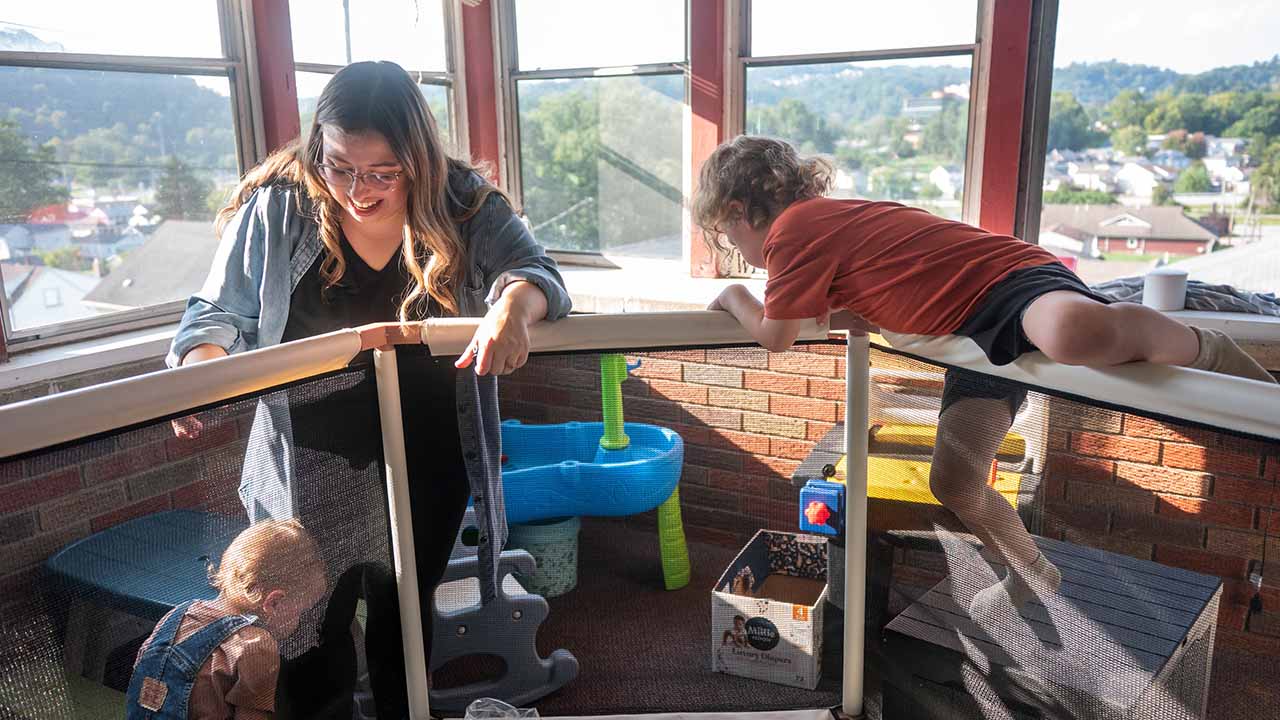
In Wheeling, West Virginia, Gianna Morgan, a former kindergarten teacher who left work three years ago when the first of her two sons was born, said that her husband’s income as a psychologist for a nonprofit community mental health center might put her family “just on the edge” of qualifying for the subsidy.
But she said that she opposed the change to the program.
“Most of the moms around here rely on this program to work,” said Morgan, who described herself as a Democrat. “Even though I’m a stay-at-home mom, I can’t support this. I absolutely think that stay-at-home moms should get support, but not at the expense of working moms.”
“We’d all be competing for limited resources,” she said. “Instead of pitting moms against each other, they should find a way to support all parents.”
—
This article originally appeared in The New York Times.
By: Coral Davenport/Stephanie Strasburg
c.2026 The New York Times Company