

|
Getting your Trinity Audio player ready...
|
When Waldo Moraga watched farmers in Chile season after season apply sulfuric acid to their crops to balance pH, he saw firsthand the effect the chemical can have on farmworkers and the soil.
In that country, he saw not only injuries to farmworkers from the heavy mineral chemical but also the impact it has on the soil.
He saw how overuse reduced biodiversity in soils.

“For 18 years, I did sulfuric acid and I saw soil turn into dirt,” Moraga said. “So farmers have to stop using it because it’s killing the microbes and they have put more and more fertilizers every year to get the same results because they have no helpers in the soil to help the crop.”
What he saw in Chile led him to create his company, Eco2Mix, which uses a much softer alternative to do what sulfuric acid does.
Addressing the High pH in Fresno Soil
The high pH of Fresno’s soil often requires acidic treatment to bring it down. Sulfuric acid has long been used to reduce alkalinity in soils and unlock essential nutrients. It also helps reduce salinity. The acid’s use is highly regulated under state and federal standards.
Moraga said his carbonic acid application can do what sulfuric can with fewer downsides.
Using carbon dioxide from ammonia plants, ethanol plants, and other emitters, Moraga can inject the gas into water, creating carbonic acid — essentially soda water — to lower pH as farmers irrigate.
Now, a California grant to study the effect of carbonic acid use on pistachio orchards, done in conjunction with Fresno State and American Pistachio Growers, will measure what Moraga has hypothesized after 10 years of operation in the U.S. — that farms using carbonic acid will not only produce healthier soils, but also help sequester carbon.
The effort comes as part of a broader effort to measure and institute regenerative soil practices statewide, said Sangeeta Bansal, assistant professor at Fresno State.
“Every small improvement that we might see in pistachios in soil health and irrigation management could have a significant economic and also environmental benefit for growers, so that’s the ultimate goal,” Bansal said.

Will Research Validate Moraga’s Hypotheses?
The $500,000 grant from the California Energy Commission will help cover the cost of applying carbonic acid to six pistachio farms in the Central Valley.
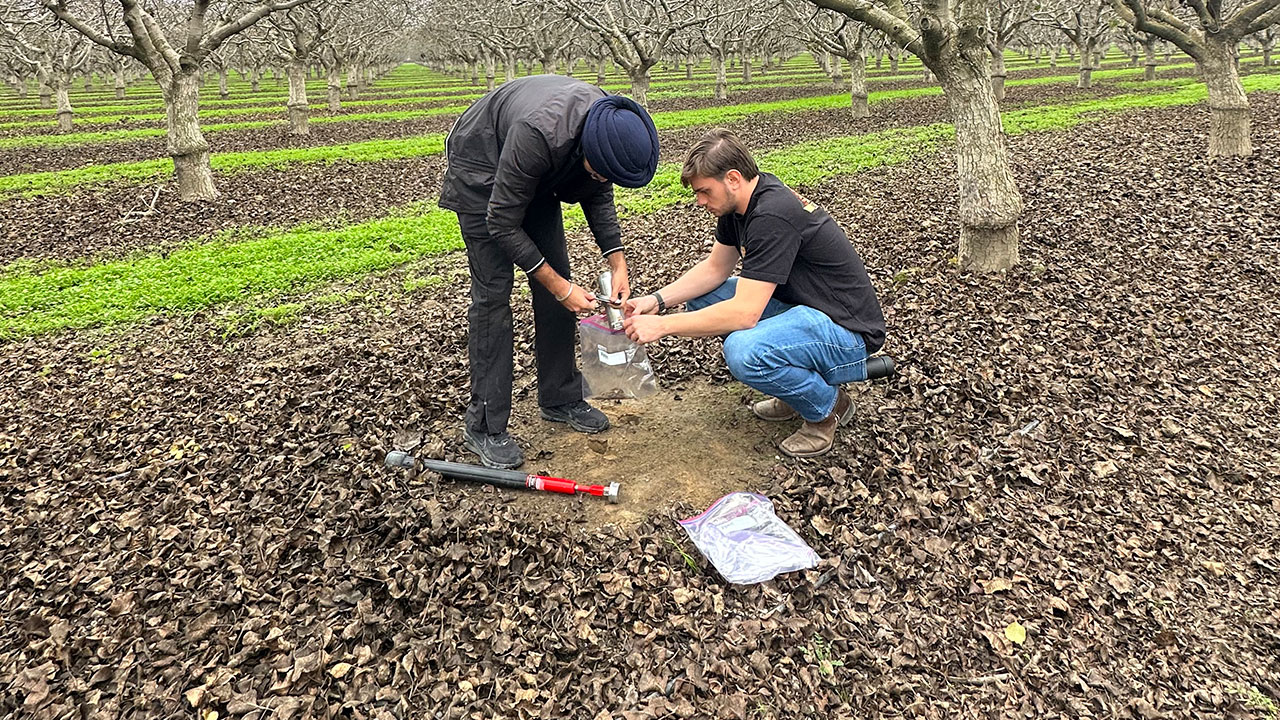
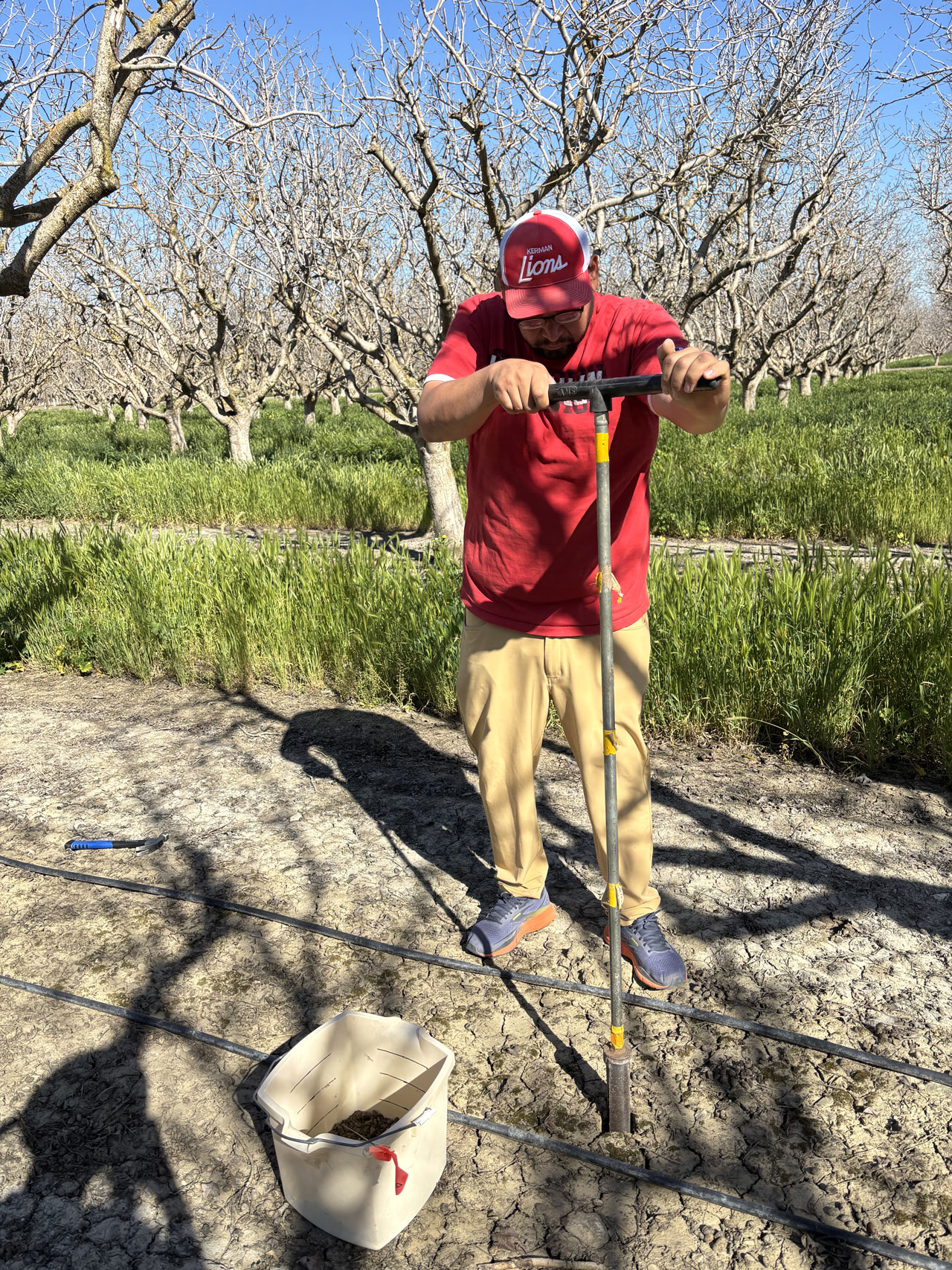
Until October 2028, Fresno State researchers and professors, as well as Eco2Mix researchers, will compare soil health between parts of the farm treated with sulfuric acid, parts treated with carbonic acid, and the control. Considering the cost and availability of sulfuric acid versus carbonic acid — many farmers have told Bansal they’re not using sulfuric acid this year because of the cost — she said researchers will also be looking at the economics of the two different applications.
The research will find out if Moraga’s hypotheses after 10 years of work are factual.
Eco2Mix has expanded rapidly since its inception. In 2018, while Moraga was still in Chile, he had about eight systems running in California.
Now, he has about 160 systems across the Central Valley, the Central Coast and at some golf courses in Florida.
More Earthworms, Soil Life With Carbonic Acid
For the farms that have been with him for several years, Moraga said they report more earthworms and soil life after switching to carbonic acid. He says continued usage of sulfuric leaves a microbiome that tolerates sulfur.
The carbon byproduct with carbonic acid can be beneficial for soil life. He’s also seen reduced needs for nitrogen in the soil.
“What we have seen is that when we use carbonic acid, we stimulate and feed all the microbiome that is in the soil,” Moraga said.
They’ll also look at how long carbon remains in the soil, whether it’s a few seasons or more permanently.
Moraga said if 10% of irrigated acres in California switch to carbonic acid, that could displace as much as 30 million tons of CO2 every year, putting it into the soil rather than emitted by carbon producers.
“We’re measuring not only the carbon sequestration, how we’re improving the total carbon in the soil, how much microbial activity, how are we influencing the nutrient uptake from plant, how much nitrogen we can reduce on the application for farmers,” Moraga said.
California Expanding Regenerative Soil Practices
Researchers chose pistachios because of the prevalence of the crop in California, Bansal said. Eco2Mix partnered with American Pistachio Growers to apply for the grant.
Growers within that organization were chosen as sites for the pilot program.
Over time, Bansal said they want to expand to almonds and vineyard crops.
Combined with other strategies, such as low-tillage practices and usage of cover crops and biochar, the application of softer chemicals such as carbonic acid will expand regenerative soil practices in the state.
Coming from the Midwest, Bansal said the term “regenerative soil practices” have been around since before the 1990s.
What makes those practices harder to study in California is the wide variety of climates, soils, and crops across the state.
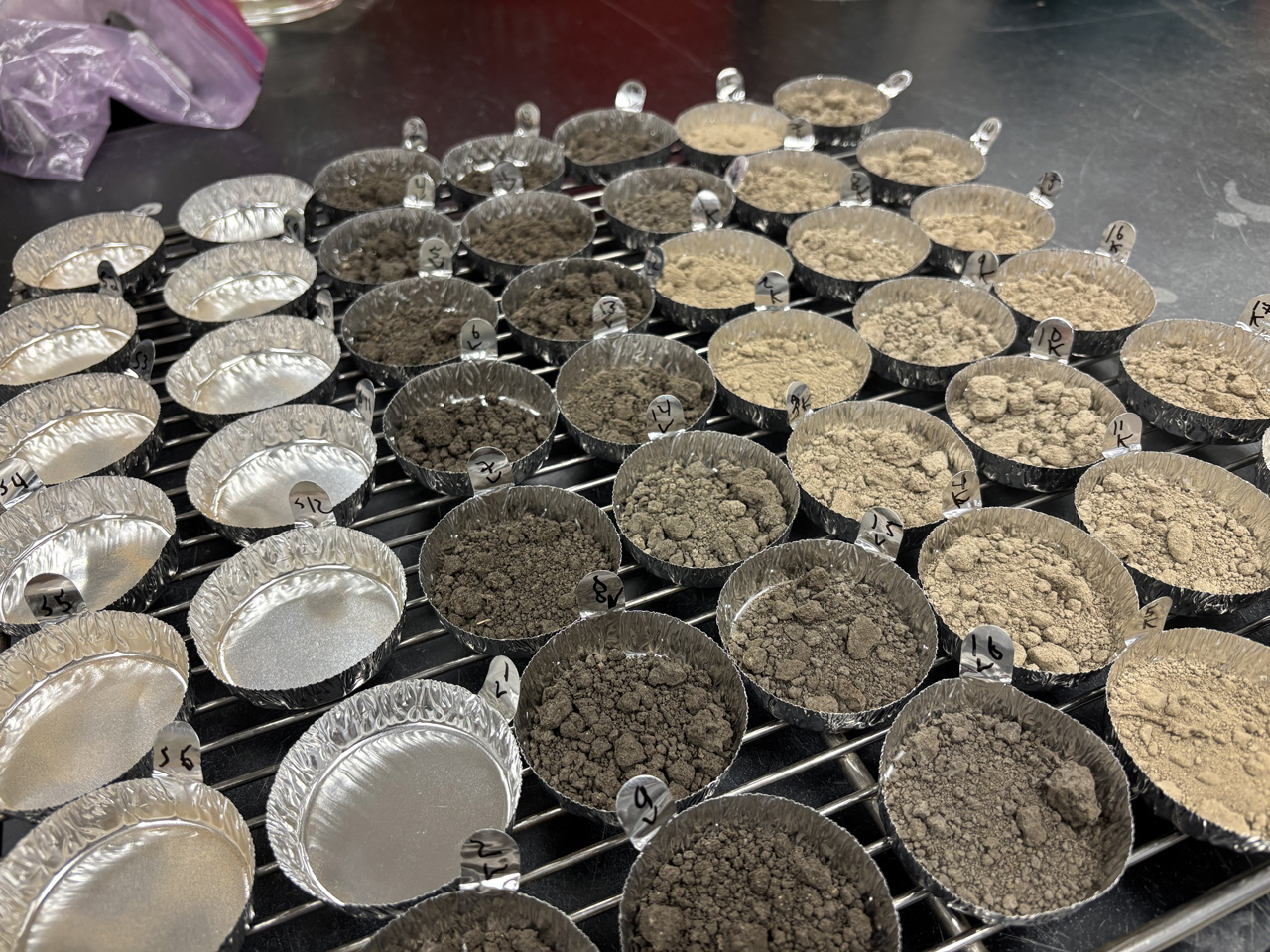
To come up with proper benchmarks, those variables need to be isolated and studied, Bansal said. For Cornell’s Soil Health Assessment, they might gather 3,000 different samples just for one climatic region and crop type.
In California, she thinks a proper scientific soil assessment for a crop could need 10,000 different samples considering the differences in California’s ecosystems.
“In California, we have, I think, about 12 to 15 different soil types,” Bansal said. “So we have to develop soil health for all of those different soil types. So in terms of crops grown here and then different climate conditions, different soil types, that’s one of the challenges that we don’t have benchmarks in California.”