
|
Getting your Trinity Audio player ready...
|
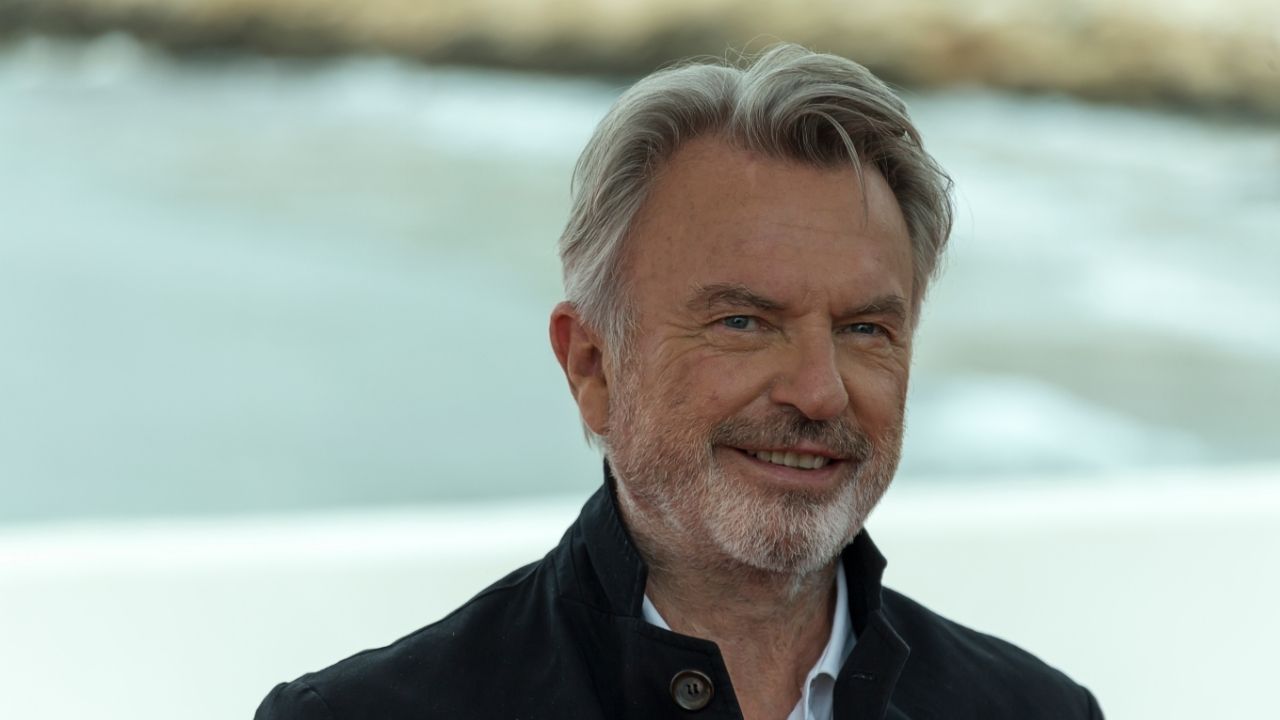
Sam Neill, the versatile New Zealand screen actor who appeared in more than 150 productions over a five-decade career, and who was perhaps best known for his star turn as the adventuresome paleontologist Dr. Alan Grant in the “Jurassic Park” series, died Monday in Sydney. He was 78.
His family announced the death in a post on Instagram but did not provide further details. Neill was diagnosed with angioimmunoblastic T-cell lymphoma in March 2022 and had been treated for it for years. His family said in the statement that he was “cancer free” when he died.
Born in Northern Ireland and raised in New Zealand, Neill, whose acting career began in the late 1960s, combined a credible Everyman quality with rugged good looks and a hard-to-place accent. He was cast in dozens of productions spanning genres, formats and continents.

Neill first came to international attention with the 1979 Australian period drama “My Brilliant Career” playing a frontier rancher. Critics heralded him for nuanced portrayals, describing his “cryptic brusqueness” in one role and his “avuncular suavity tinged with a dignified sadness” in another.
His credits included the New Zealand films “The Piano” (1993) and “Hunt For the Wilderpeople” (2016); the Hollywood blockbusters “Jurassic Park” (1993) and its sequels, and “Thor: Love and Thunder” (2022); and two seasons of the British television series “Peaky Blinders.”
“I’d like to think I’m able to suggest ambiguities and complexities in the people I play, because I think all of us have hidden aspects or contradictory qualities,” he told The Dominion Post, a New Zealand newspaper, in 2007. “I think that’s what makes us interesting as human beings, and that’s what makes human beings interesting to play.”
Australia’s prime minister, Anthony Albanese, mourned Neill, who he said had “starred in so many beloved Australian stories” and “earned a special place in Australian hearts.”
“Wry and dry, thoughtful and laconic, Sam fought illness with the same dignity, humor and conviction that gave strength to his every performance,” Albanese wrote on social media.
Nigel John Dermot Neill was born to Dermot Neill, a New Zealander who served as a British army officer, and his English wife, Priscilla (Ingham) Neill, on their kitchen table in Omagh, a town in County Tyrone, Northern Ireland, on Sept. 14, 1947.
At 7, he relocated with his family to New Zealand’s bucolic South Island, where he attended Cashmere Primary School before boarding at Medbury School and Christ’s College, one of New Zealand’s toniest schools, in Christchurch. There, he was a “very ordinary student” who was “irredeemably lazy,” he wrote in his 2023 memoir “Did I Ever Tell You This?”, and who appeared in a handful of school productions.
Neill faced obstacles among his new classmates: a childhood stutter; what he perceived to be an embarrassingly grand British accent; and the name “Nigel,” which he had been given at birth. “To land in a pretty rough playground in a New Zealand primary school with a plum in the voice and Nigel for a name was asking for trouble,” he wrote.
At 11, he changed his name to Sam, taking inspiration from characters in Western movies. It was, he added, “probably the best decision I made in my life. Sam is easy to say, sounds friendly, sounds a bit blokey and has a touch of the Labrador about it.”
He attended the University of Canterbury in Christchurch before transferring to the University of Victoria in Wellington, where he graduated in 1970 with a bachelor’s degree in English literature. “Acting was about the only thing that I was good at in school,” he later told The Chicago Tribune.
He began work as a stage actor, performing initially with the Downstage Theater Company for 35 New Zealand dollars a week and a nightly plate of lasagna. He then traveled the country with the New Zealand Players Drama Quartet, performing Shakespeare and other great theatrical works to schoolchildren.
Seeking more stable employment, Neill joined New Zealand’s National Film Unit, a publicly owned production company, where he directed a series of documentary shorts. During this time, he appeared in “Ashes,” a 1975 short film, and as the lead in the 1977 thriller “Sleeping Dogs,” which would become New Zealand’s highest-grossing film at the time.
While promoting “Sleeping Dogs” in Australia, Neill was cast in “My Brilliant Career,” for which he was paid roughly three times his National Film Unit salary. It would be the first in a string of Australian productions for him. Neill quickly acquired an agent, quit his job in New Zealand and moved to Sydney. British movie and stage star James Mason, an early admirer, also offered to help establish his international career.
Over the next years, Neill appeared in feature films in Europe and North America before making his Hollywood debut, playing the Antichrist in “Omen III: The Awakening” in 1981. He was nominated for two Emmys, for the 1998 miniseries “Merlin” and the 2017 documentary “New Zealand: Earth’s Mythical Islands,” which he narrated, and three Golden Globes, for performances in the television series “Reilly: Ace of Spies” (1983), “One Against the Wind” (1992) and “Merlin.”
He was made an Distinguished Companion of the New Zealand Order of Merit in 2007, making him eligible for a knighthood. In 2009, he declined the honor, telling The Sydney Morning Herald: “All modesty aside, I find the idea of a title for myself just too grand at this time of my life.”
Neill eventually reneged on this decision, in 2022 becoming “Knight Companion,” allowing him to be styled Sir.
Despite his international success, he maintained close ties to New Zealand, spending most of his time in Central Otago, where from 1993 he began making wine under the label Two Paddocks. His wines were generally well regarded by critics, but he attempted to take a democratic approach to pricing, telling The Guardian: “I’d hate to think my wine was only being drunk by property developers.”
Neill is survived by his siblings — Michael, an academic, and Juliet, a drama teacher — and his children, including a son from his 11-year relationship with actress Lisa Harrow and two daughters from his marriage to makeup artist Noriko Watanabe, from whom he separated in 2017.
—
This article originally appeared in The New York Times.
By The New York Times
c. 2026 The New York Times Company